Understanding Autistic Masking: The Hidden Work Behind "Looking Fine"
What autistic masking is, why it happens, how it differs from ordinary social adjustment, and how it connects to stress, burnout, and delayed diagnosis.
OwnmindedPublished 11 min read
AI-generated illustration
Introduction
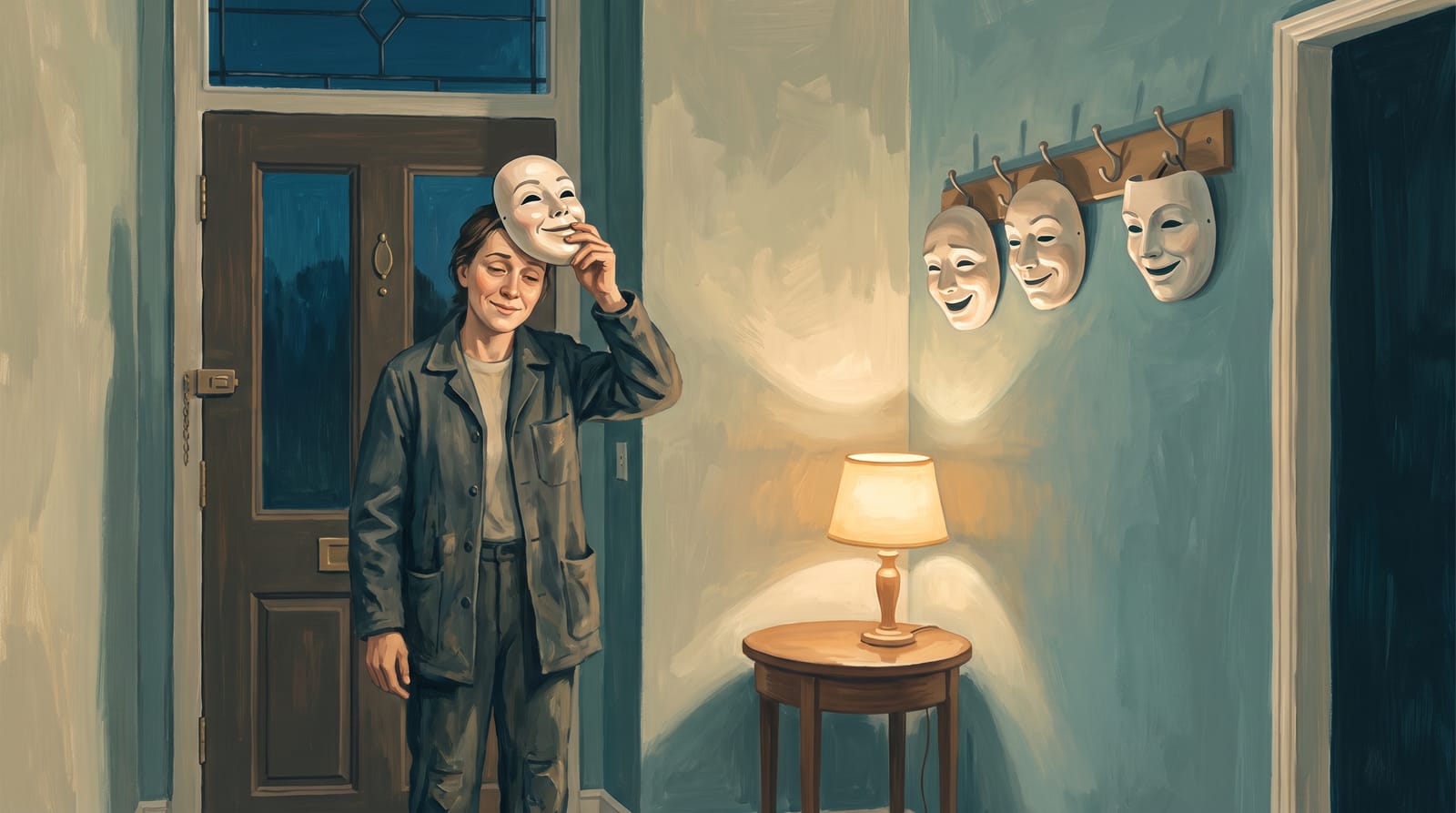
Many autistic adults learn early that the world rewards certain ways of moving, speaking, and reacting—and punishes others. Masking is the effort of hiding or softening autistic traits so that social situations feel safer, jobs feel possible, or relationships feel less fragile. From the outside, a masked autistic person may seem confident, chatty, or “not that autistic.” Inside, that performance often costs a great deal.
This article explains what masking is, why it happens, how it differs from ordinary social adjustment, and how it connects to stress, burnout, and delayed diagnosis. It is written for autistic adults, loved ones, and anyone who wants a clear, evidence-informed picture—not to blame autistic people for adapting, but to name the load that often goes unseen.
What Masking Is
Masking—also called camouflaging or social camouflaging—means consciously or unconsciously hiding natural autistic responses and copying expected social behavior. Researchers describe it as falling into three overlapping patterns:
Social masking includes scripting or rehearsing what to say before conversations, mimicking facial expressions and gestures, using a practiced tone or laugh, and suppressing direct communication styles in favor of small talk that can feel empty or confusing.
Sensory masking includes tolerating noise, bright lights, crowds, or uncomfortable textures without complaint—and staying in overwhelming environments to avoid seeming “difficult.” Many autistic people describe enduring sensory pain with a smile, then collapsing privately at home.
Emotional masking includes hiding distress, shutdowns, or anxiety until they become a crisis, appearing calm while internally overwhelmed, and not asking for help because it feels risky or has not been safe in the past.
Masking is not dishonesty. It is most often a survival strategy in environments not designed for autistic brains and bodies. After years of practice, many people describe it as automatic—running continuously in the background like software they can no longer switch off.
Is This Different From What Everyone Does?
A common response to masking is: “Doesn’t everyone put on a social face?”
Partly yes—and the distinction matters. Most people adjust how they present themselves in different settings. But autistic masking differs in several important ways.
For non-autistic people, social adjustment tends to be unconscious, flexible, and low-effort. It draws on habits built over a lifetime and frees up mental energy for conversation itself.
For autistic people, masking usually requires sustained, conscious effort: monitoring body language, suppressing natural movement or sound, running internal scripts, and managing sensory input—all at once, throughout the entire interaction. A study of 223 autistic adults found that the more stigma participants perceived, the more they camouflaged their traits (Perry et al., 2022).
The after-effects are also different. Non-autistic social adjustment may be tiring; autistic masking frequently produces what many describe as a “social hangover”—exhaustion, shutdown, or emotional depletion that can last hours to days.
Why People Mask
Masking does not appear out of nowhere. It is shaped by experience, often beginning in childhood.
Safety. Many autistic people were bullied, excluded, or corrected for behaviors that felt natural to them—stimming, asking direct questions, needing quiet. Masking develops as protection against those consequences.
Belonging. Connection matters to most people, including autistic adults who may be misread as cold or rude when they are simply being direct. Masking can feel like the price of friendship or partnership in a world built around neurotypical communication norms.
Work and school. Offices and classrooms often reward eye contact, quick banter, and sitting still under fluorescent lights. Autistic traits may be interpreted as “unprofessional” or “difficult,” pushing people to mask to access the same opportunities others take for granted.
Stigma and fear of judgment. When being openly autistic carries social risk—in healthcare settings, job interviews, or new relationships—many people learn to hide their traits not because they want to, but because the alternative has cost them in the past.
For many people, masking becomes so habitual that they are no longer aware of doing it. They may only notice it in retrospect, after a crash of exhaustion that seems out of proportion to the day.
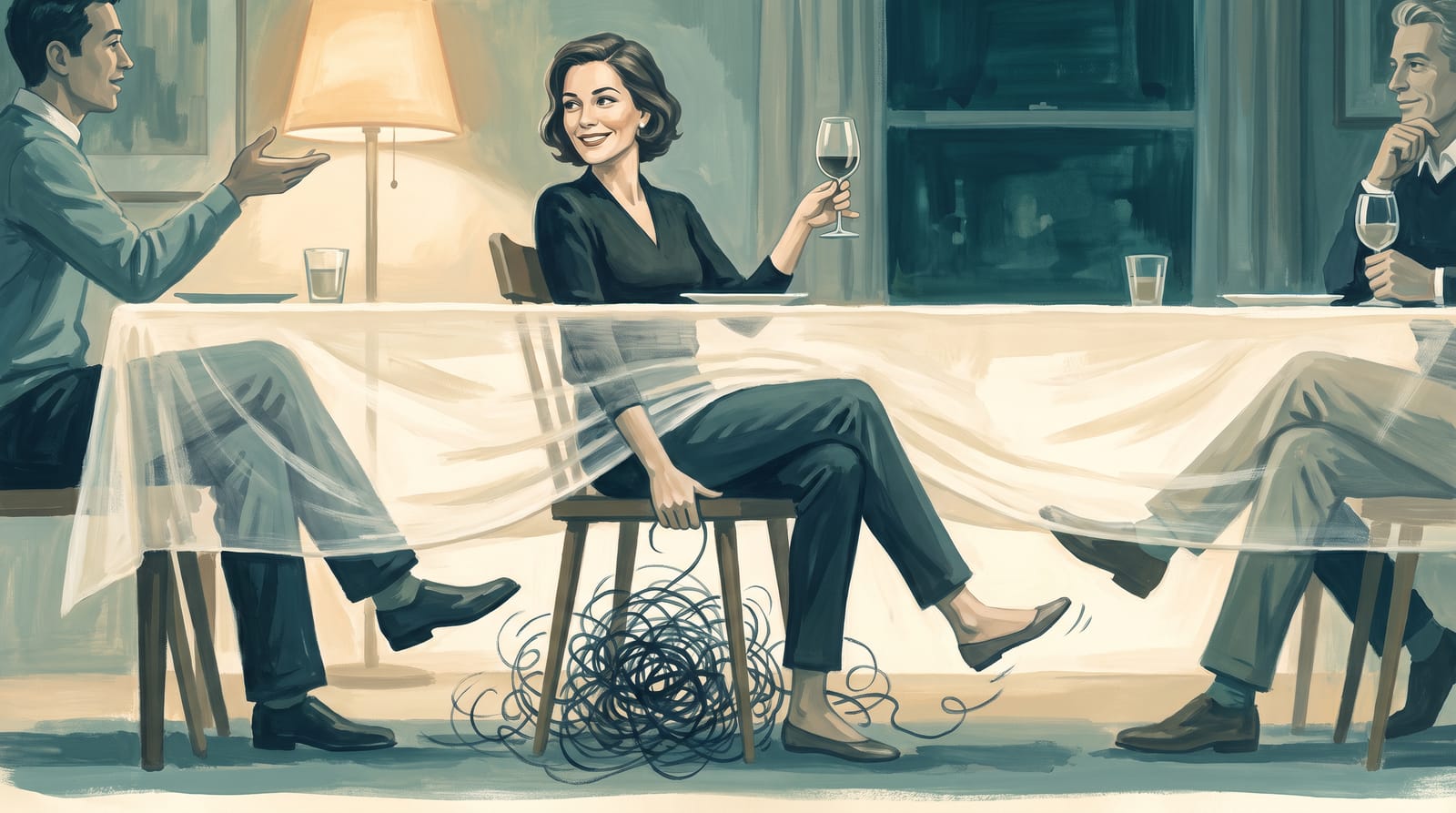
Examples: What Masking Can Look Like Day to Day
AI-generated illustration
At work. Jordan prepares for a team stand-up by writing bullet phrases the night before—not because they cannot think on their feet, but because spontaneous speech under time pressure is draining. In the meeting they smile, nod, and use the same upbeat tone as colleagues, even when the room’s noise makes their skin crawl. Afterward they eat lunch alone in a stairwell to recover. Coworkers see a cooperative teammate; Jordan feels scraped hollow.
In a relationship. Sam’s partner loves crowded restaurants. Sam agrees repeatedly, then arrives home depleted from noise, smell, and the work of decoding sarcasm all evening. Sam has not explained their sensory limits clearly, fearing they will sound “difficult.” The mask is yes in public and collapse in private.
At the doctor. Alex learned to make “appropriate” eye contact and to understate pain so as not to seem “dramatic.” The clinician notes “good insight” and moves on, missing how hard Alex worked to appear calm. The mask hides the very symptoms that need support—a pattern researchers describe as common in autistic adults encountering healthcare professionals unfamiliar with high-masking presentations.
In childhood. A bright student copies friends’ gestures and laughs at jokes they do not understand, because being the “odd one out” led to isolation before. Teachers report “no behavior concerns” while the child arrives home exhausted and mute. Years later, no professional thinks to question whether something was being hidden.
These examples are composites, but they illustrate a consistent pattern: the visible self and the actual cost diverge.
Masking, Stress, and Autistic Burnout
Chronic masking is mentally and physically expensive. A 2025 ecological momentary assessment study—in which 87 autistic adults logged their experiences via a smartphone app across 28 days—found that higher masking was directly linked to higher perceived stress during the same period, accounting for 32% of the variance in stress scores (Scheeren et al., 2025). Participants masked more than twice as much when with other people as when alone, and significantly less in the company of other autistic adults than around non-autistic people.
Over months and years, this chronic load can contribute to autistic burnout: a state of severe exhaustion that goes beyond ordinary tiredness. Common features include:
- Extreme fatigue that does not resolve with rest
- Increased sensitivity to sensory input
- Difficulty with memory, organization, and motivation
- Loss of skills that used to feel manageable—such as speech, cooking, or navigating daily routines
- Emotional numbness or withdrawal from activities and relationships
- Heightened anxiety, shutdowns, or meltdowns after periods of “holding it together”
Burnout is not a character flaw or a sign of weakness. It is what happens when a person’s nervous system has been asked to sustain an unsustainable performance for too long without adequate recovery.
A 2025 systematic review of social camouflaging in autistic adults found it carries both costs and benefits: it can protect against stigma and help people connect, but it is also linked to anxiety, depression, confusion about identity, and delayed or missed diagnosis (Summerill & Summers, 2025). Research has also identified camouflaging as an independent risk marker for suicidality in autistic adults (Cassidy et al., 2018)—an important signal that long-term masking is not a neutral coping strategy.
When burnout arrives, autistic traits may suddenly become visible to others for the first time—not because the person has changed, but because there is no energy left to hide.
Late Diagnosis and Why Masking Hides Autism
Many autistic people—particularly women, non-binary individuals, and people from marginalized communities—are diagnosed much later than expected, often in their 30s, 40s, or beyond. A central reason is that effective masking makes autism harder to see, even to trained professionals.
Autistic women are more likely to be misdiagnosed with anxiety disorders, depression, or borderline personality disorder before their autism is identified. Research consistently shows that women tend to mask more than men in social contexts, and clinicians often attribute fewer autistic traits to women than women report experiencing themselves (Cook et al., 2021). Stronger societal pressure for women to be socially fluent and emotionally available compounds this: effective masking is mistaken for absence of autism, and camouflaging predicts a later age of diagnosis in autistic women (Milner et al., 2024).
Misdiagnosis is not the only consequence. A systematic review of the literature found that long-term masking is associated with identity confusion: when someone has spent decades performing a version of themselves constructed for other people’s comfort, they may genuinely not know who they are without the mask. A late diagnosis often brings a complex mixture of relief—finally, an explanation—and grief for years of misunderstanding and missed support.
Effective masking also makes it easier for healthcare professionals to overlook autism during clinical encounters. An autistic adult in a medical appointment may appear composed, articulate, and socially appropriate—not because they are not struggling, but because they have spent a lifetime practicing exactly that.
A Balanced View: Strengths, Choice, and What Helps
Masking is not the whole story of autistic experience. Many autistic people also describe genuine strengths: deep concentration, strong pattern recognition, analytical thinking, direct and honest communication, and intense areas of expertise built on real passion. These are not masks. They are authentic.
The goal of understanding masking is not to pressure everyone toward immediate unmasking in every setting. For many people, masking remains a necessary tool in environments that are not yet safe or accepting. The goal is:
- To name the effort so it is no longer invisible to the people around autistic adults, or to autistic people themselves
- To build workplaces, healthcare settings, and relationships where fewer adaptations are demanded for basic safety and dignity
- To support genuine choice: when to mask, when to rest, and when to ask for accommodations rather than absorbing the cost alone
Small, practical steps can reduce the load: built-in recovery time after socially demanding situations, sensory tools such as noise-cancelling headphones or adjusted lighting, written communication options in work settings, and access to communities where less masking is required.
Research supports this last point directly. A systematic review of 52 qualitative studies found that contact with other autistic people was beneficial to emotional well-being for a majority of autistic adults (Watts et al., 2024). And in the ecological momentary assessment study described earlier, being around other autistic adults was associated with less masking and, in turn, less stress in real time (Scheeren et al., 2025). Being around people who share your neurotype—or who genuinely accept yours—is not a luxury. It is a meaningful contributor to mental health.
Key Takeaways
- Masking means hiding or altering autistic traits to meet social or environmental expectations; it typically develops under pressure to fit in or stay safe, often starting in childhood.
- It includes social masking (scripting, mimicking), sensory masking (tolerating discomfort without complaint), and emotional masking (hiding distress).
- Autistic masking differs from ordinary social adjustment in its cognitive load, sensory demands, and exhausting after-effects.
- Reasons include bullying, workplace norms, desire for connection, stigma, and stereotypes that prevent autism from being recognized—especially in women and marginalized groups.
- Research shows masking is directly associated with higher stress in real time and, over time, with anxiety, depression, burnout, identity confusion, and increased suicidal ideation.
- Late diagnosis is often connected to effective masking; women and others who camouflage convincingly are frequently misdiagnosed with other conditions before autism is identified.
- The goal is not forced unmasking but safer environments, genuine choice, and reduced load—for autistic people and the people who support them.
References
Cassidy, S., Bradley, L., Shaw, R., & Baron-Cohen, S. (2018). Risk markers for suicidality in autistic adults. Molecular Autism, 9, 42. https://doi.org/10.1186/s13229-018-0226-4
Cook, J. M., Hull, L., Crane, L., & Mandy, W. (2021). Camouflaging in autism: A systematic review. Clinical Psychology Review, 89, 102080. https://doi.org/10.1016/j.cpr.2021.102080
Milner, V., Colvert, E., Hull, L., Cook, J., Ali, D., Mandy, W., & Happé, F. (2024). Does camouflaging predict age at autism diagnosis? A comparison of autistic men and women. Autism Research, 17(3), 626–636. https://doi.org/10.1002/aur.3059
Perry, E., Mandy, W., Hull, L., & Cage, E. (2022). Understanding camouflaging as a response to autism-related stigma: A social identity theory approach. Journal of Autism and Developmental Disorders, 52(2), 800–810. https://doi.org/10.1007/s10803-021-04987-w
Scheeren, A. M., Nieuwenhuis, S., Crane, L., Roke, Y., & Begeer, S. (2025). Masking, social context and perceived stress in autistic adults: An ecological momentary assessment study. Autism, 29(12), 3002–3013. https://doi.org/10.1177/13623613251353358
Summerill, J., & Summers, S. J. (2025). The consequences of social camouflaging in autistic adults: A systematic review. Research in Autism Spectrum Disorders, 121–122, 202556. https://doi.org/10.1016/j.reia.2025.202556
Watts, G., Crompton, C., Grainger, C., Long, J. S., Botha, M., Somerville, M., & Cage, E. (2024). ‘A certain magic’ — autistic adults’ experiences of interacting with other autistic people and its relation to Quality of Life: A systematic review and thematic meta-synthesis. Autism. https://doi.org/10.1177/13623613241255811
This article is for general education and does not replace individualised medical or mental health advice. If masking is affecting mood, safety, or daily life, a qualified clinician—ideally one familiar with adult autism—can help with assessment, coping strategies, and accommodations.