How to Tell Your Child They're Autistic, and Why Sooner Is Kinder
What research and autistic adults say about when to tell your child they are autistic, what to say, and how to keep talking.
OwnmindedPublished 15 min read
The conversation you keep putting off
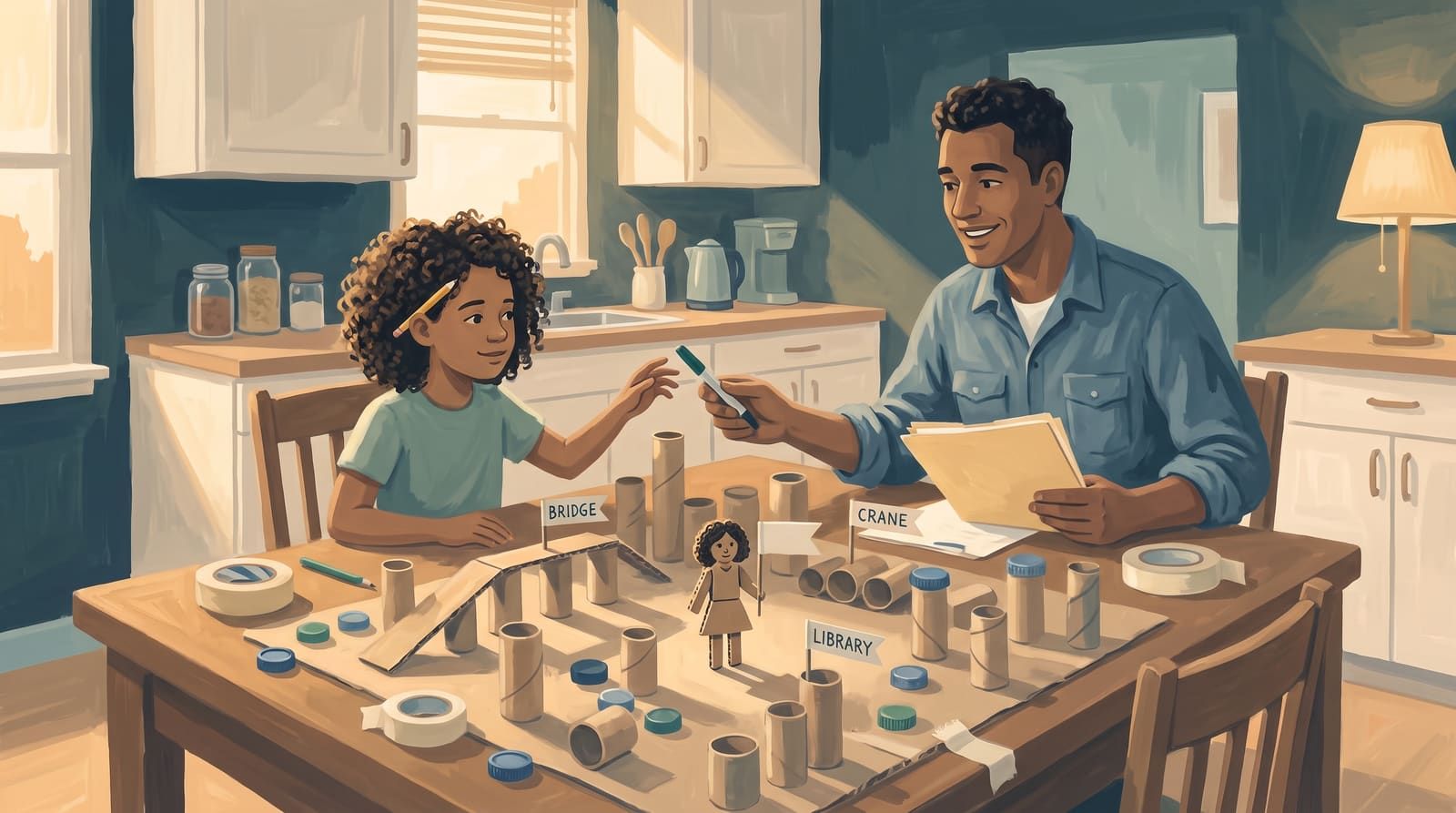
You have the report in a drawer, or the assessment date in your calendar. Your child is building something at the kitchen table, absorbed and happy, and you wonder whether a word like “autism” would spoil that. Maybe you have told yourself you will wait until they are older, or until they ask, or until you find the right words. And every month the right moment seems a little further away.
Waiting feels protective, but the evidence points the other way. Many children notice their own differences long before anyone names them, and research and autistic adults’ accounts suggest that learning early, in a matter-of-fact and positive way, is linked to better wellbeing and self-understanding than finding out late or by accident. What follows covers what the studies say about timing, why the tone of the telling matters so much, and what to actually say, first and then over the years.
Your child has probably already noticed
Not telling a child does not stop them from feeling different; it only takes away the explanation. Reid Knight, an autistic adult who found out from their own internet searches as a teenager, puts it bluntly: they have never met an autistic person who did not notice their difference early in life. The National Autistic Society makes the same point for parents, advising them to start talking about autism soon after diagnosis, or even before, because autistic children may already sense that they experience things differently from their peers.
What a child does with that feeling, when nobody explains it, is the worry. Knight noticed their difference through being bullied at school and at home, and without a word for it, assumed the fault was theirs. Marianne Eloise, a writer diagnosed at 27, describes the same pattern from the inside: she called herself evil, cold and weird, because she believed the worst things people said about her.
Some children say this out loud. Marci Wheeler, who writes guidance for parents, lists the questions that signal a child needs information: “What is wrong with me?”, “Why can’t I be like everybody else?”, or even “What is wrong with everyone?”. She adds that other children have the same thoughts and cannot put them into words. So the real choice is not between a label and no label. It is between a name you give them, with warmth, and one they make up for themselves.
What the research says about telling early
The studies on timing are few, but they lean in one direction. A participatory team of autistic and non-autistic researchers surveyed 78 autistic university students and found that those who learned they were autistic earlier reported higher quality of life and well-being as adults. The students themselves did not think parents should wait until adulthood, and said children should be told in ways that help them understand and feel good about who they are.
Parents’ reports point the same way. In a questionnaire answered by parents of 575 autistic young people aged 8 to 25, 81% said their child had been told, and many linked their child’s awareness of the diagnosis to concrete gains. Roughly two in three parents saw their child understand their own strengths and weaknesses better:
- Better self-awareness of strengths
- 69%
- Better self-awareness of weaknesses
- 68%
- Better self-advocacy skills
- 60%
Self-advocacy, the ability to say what you need, is the gain that shows up day to day. Knight, looking back on a meltdown at school, thinks that knowing earlier might have meant knowing to ask for a break. A child who has the word for their needs can ask for them; a child without it often just concludes they are failing at something everyone else finds easy.
Why finding out late can feel like relief
The same student survey turned up a twist worth understanding. Students who learned they were autistic at an older age felt more positive about autism when they first found out, even though their adult quality of life was lower.
Late-identified adults explain why. The relief is measured against years of confusion. Eloise describes being euphoric at her diagnosis: the same person as the day before, but now with words to explain herself and a community to find. Lyric Holmans, who was identified at 29 and writes for Neurodivergent Rebel, calls finding out “the magic word” that took the other words away, but remembers anger and frustration at the years of not knowing.
So a late diagnosis can feel wonderful precisely because the years before it were hard. That is not an argument for waiting. The relief is real, but it is relief from damage that earlier knowledge might have prevented.
Waiting also carries a cost to the relationship. Knight’s parents only told them after finding that their teenager had already worked it out online. Knight warns parents that a child who finds out later will realise the secret was kept from them, often while relatives and friends were likely told, and will feel like the only one who did not know.
Pride matters too
If timing were the whole story, the age a child is told would be all that counted. A study of 151 autistic adults suggests something more useful. How people felt about being autistic predicted their self-esteem: more dissatisfaction with being autistic went with lower self-esteem, and more pride went with higher self-esteem. In that study, the age of diagnosis itself did not predict self-esteem or wellbeing; the authors concluded that autistic identity, rather than recognition alone, may be what matters most for psychological health.
The two findings fit together. Learning early gives a child more years to build a settled sense of who they are, and the same study found that dissatisfaction eased as time since diagnosis grew. The authors are open that their sample was mostly well-educated people recruited online and that the design cannot show cause and effect, so treat this as a strong hint rather than a rule.
Who a child learns from matters too. In the parent survey, young people who sought information from support groups and other autistic people had better self-esteem and accepted their diagnosis more than those who learned only from other sources, with odds of good self-esteem about 2.7 times higher. For a parent, that shifts the goal. You are not only delivering a fact; you are helping your child find a version of being autistic they can be proud of, and people who live it.
When is your child ready?
There is no perfect age, but “as early as possible” is the default advice. Sara Woods, a clinical psychologist at the UW Autism Center, says it is generally best to tell a child early, with the timing and the way you do it shaped by their age, development and your own readiness to talk about it in a straightforward, positive way. The National Autistic Society agrees that there is no perfect time, and that helping a child understand themselves gradually and early can lead to greater self-esteem and self-awareness.
Waiting has its own risk. Wheeler notes that children told when older may be extremely sensitive to any hint that they are different, which is one more reason not to let the years run on.
You can also start before the word “autism” comes up at all. Wheeler suggests setting a positive tone about everyone in the family being different, with plain statements such as “Mommy has glasses and Daddy does not have glasses” or “Bobby likes to play ball and you like to read books”. When differences are ordinary at home, autism arrives as one more fact about a person, not as a verdict.
What helps
The advice from clinicians and the National Autistic Society is consistent. Before you start, learn enough about autism yourself to answer questions, and pick a calm moment in a place where your child feels comfortable. Then the first conversation can follow a simple shape, drawn from Woods’s tips:
A first conversation
-
Ask what they already know. Find out what your child has heard about autism and gently correct anything wrong. Tell them they may know more than you about some experiences.
-
Start with different kinds of brains. Explain that people’s brains work in many ways and that life would be boring if everyone were the same.
-
Name their strengths. Give real examples, such as building with Lego, playing an instrument or taking things apart and putting them back together.
-
Validate what is hard. Say that they have probably noticed some tasks are harder for them, or that they like to do things differently, and that this is okay.
-
Put a name to it. Explain that this mix of strengths and difficulties is called autism, that every autistic person is different, and that autistic people often share some things, such as a different way of making friends and their own kinds of interests.
Keep each talk short. The National Autistic Society advises small amounts of information at a time, honest and direct answers, and looking up what you do not know. A child may react badly at first or need time to take it in. Many autistic adults say knowing is better than going through life without knowing.
Treat it as a conversation that lasts for years. New questions come up as children grow, and Woods suggests keeping the door open and finding new materials as needed: for younger children, a story such as Ada Twist, Scientist by Andrea Beaty can open a talk about different ways of thinking, while older children may prefer to discuss brain differences directly.
Books written by autistic people may interest older children too. For keen readers, Wheeler points to books by autistic children and adults, written partly so autistic readers feel they are not alone.
Help them meet other autistic people. Given what the self-esteem research found, this may be one of the most useful things you do. The National Autistic Society recommends finding positive autistic adult role models and autistic peers your child can spend time with.
Give them control of the label. Woods advises telling children that autism is nothing to be ashamed of, but that they decide how to describe themselves and who to tell, and that this can change over time.
Giving your child the story first
The fear behind waiting is that a word will hurt. But the people who grew up without that word describe the hurt differently: years of thinking they were broken, then the anger of learning there had been an explanation all along. The kinder choice is to tell your child early, plainly and warmly, so the first story they hear about their difference is a true one, told by someone who loves them.
The research cannot promise outcomes, and every child is different. What it does suggest is that the date may matter less than what comes with it: a calm first talk, a parent who keeps talking, and a chance to meet other autistic people. Knight’s plea to parents is short: do not wait too long.
- National Autistic Society(opens in a new tab)
A guide for parents and carers on telling a child about their diagnosis, with tips and parents' experiences.
UK
- UW Autism Center(opens in a new tab)
Ten tips from a clinical psychologist for talking to your child about their autism diagnosis.
US
- Thinking Autism Guide(opens in a new tab)
An autistic adult's open letter to parents about why not to hide a diagnosis from a child.
Autistic-led
- Neurodivergent Rebel(opens in a new tab)
A late-identified autistic writer on what growing up without knowing was like.
Autistic-led
Get new articles by email
One short email when we publish something new. Evidence-informed writing on autism in adulthood, no spam.
Sources (9)
- Survey of 78 autistic university students on the age of learning one is autistic, well-being and Autism-Specific Quality of Life. Autism (SAGE).
- Corden, K., Brewer, R. and Cage, E. (2021). Personal Identity After an Autism Diagnosis: Relationships With Self-Esteem, Mental Wellbeing, and Diagnostic Timing. Frontiers in Psychology.
- Kiely, B., Adesman, A., Rapoport, E. and Gutman, A. (2020). Patterns and Outcomes of Diagnosis Disclosure to Youth with Autism Spectrum Disorder. Journal of Developmental & Behavioral Pediatrics.
- Reid Knight (2017). Parents: Don't Hide Your Children's Autism Diagnosis From Them. Thinking Autism Guide.
- Marianne Eloise (2020). I'm Autistic. I didn't know until I was 27. The New York Times, republished by Gulf News.
- Lyric Holmans (2023). Do I wish I could have been diagnosed Autistic sooner? Neurodivergent Rebel.
- National Autistic Society. Telling your child about their diagnosis: a guide for parents and carers.
- Sara Woods, PhD. Ten Tips for Talking to Your Child About Their Autism Diagnosis. UW Autism Center.
- Marci Wheeler, MSW. Getting Started: Introducing Your Child to His or Her Diagnosis of Autism. Indiana Institute on Disability and Community.
How we research and write our articles: Editorial policySources & methodologyMedical disclaimer