The Social Hangover: Why Autistic People Need Time Alone Afterwards
Why time with people can leave autistic adults drained, how it differs from introversion, and how to plan recovery.
OwnmindedPublished 9 min read
You are not imagining this
The dinner went well. You talked, you laughed, and you stayed until the end. On the way home, all you wanted was a dark room and nobody asking you anything. The next day, you still did not feel ready to speak.
Many autistic adults describe this pull toward solitude after time with people. It is often called social exhaustion or a “social hangover”. This article explains what is happening during and after socializing, how it differs from introversion or rejection, and what helps.
What is social exhaustion?
Social exhaustion is the drained, overloaded state that can follow time with other people. It often arrives after the event, not during it, which is why a day that felt fine can still leave you flattened.
One autistic person, writing on HeyASD, describes it as “heavy, flattened tiredness that rest doesn’t immediately touch, a nervous system that flinches at noise and light, words that won’t come, and a strong pull to be alone and silent.” That gives its main features:
- Deep tiredness: rest does not fix it straight away, the way it fixes ordinary tiredness.
- Lower sensory tolerance: noise and light that were fine before now feel like too much.
- Harder speech: words take more effort or do not come at all.
- A pull to be alone and quiet: solitude feels like the thing that will help.
Enjoying the event does not cancel the cost. Pleasant social time still takes effort, sensory load and masking, so the need to recover stays even after a good day.
What is happening in your body and mind?
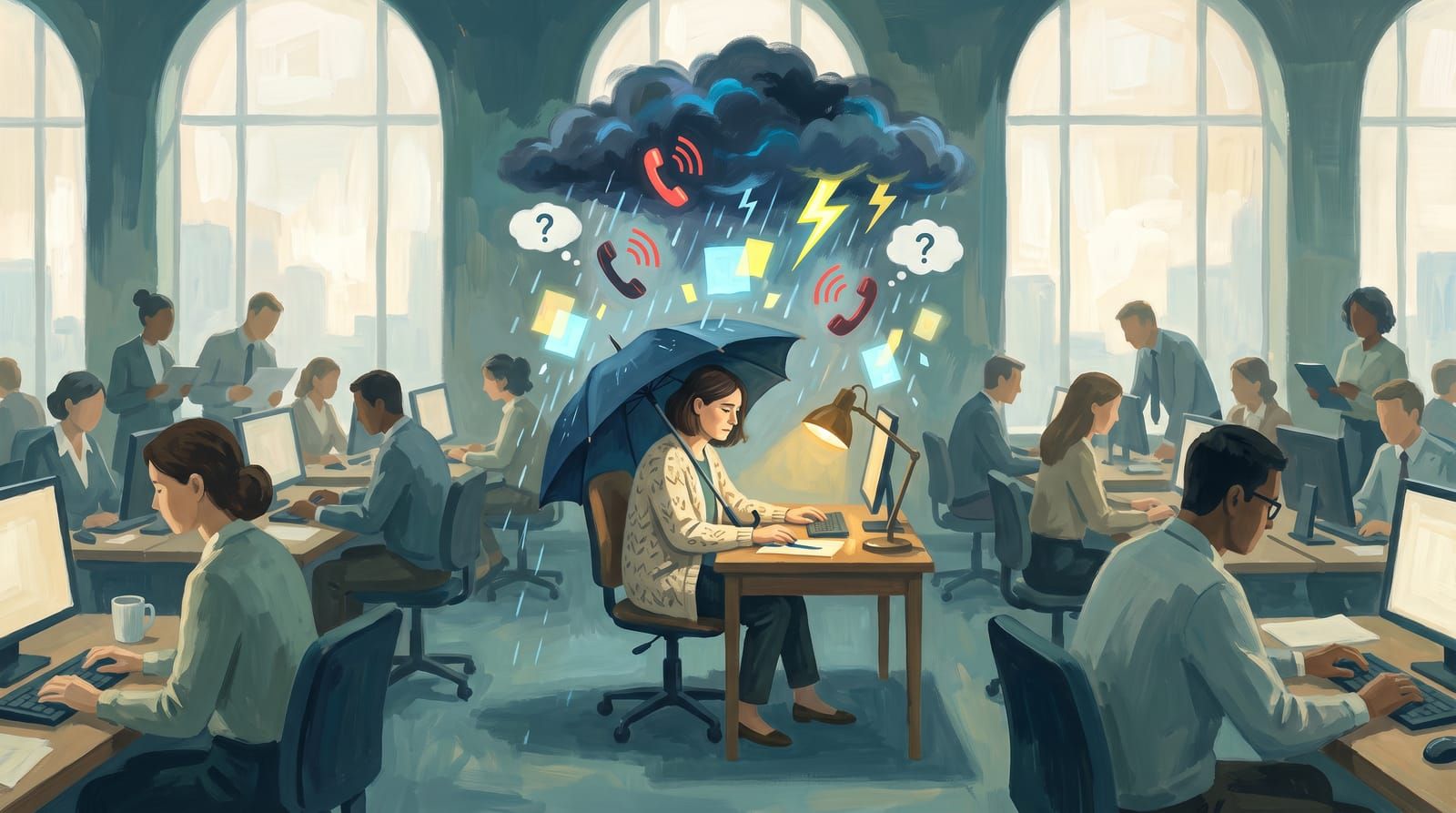
Socializing asks a lot of an autistic brain at once. Several kinds of work run side by side, and each draws on the same limited energy.
- Sensory load: a busy room means voices, music, lights, smells and movement arriving together, and many autistic people find this input hard to tune out.
- Processing: following a conversation means tracking words, tone, faces and turn-taking in real time.
- Executive effort: executive function is the brain’s planning and self-management system. It handles holding things in mind, switching topics and deciding what to say next.
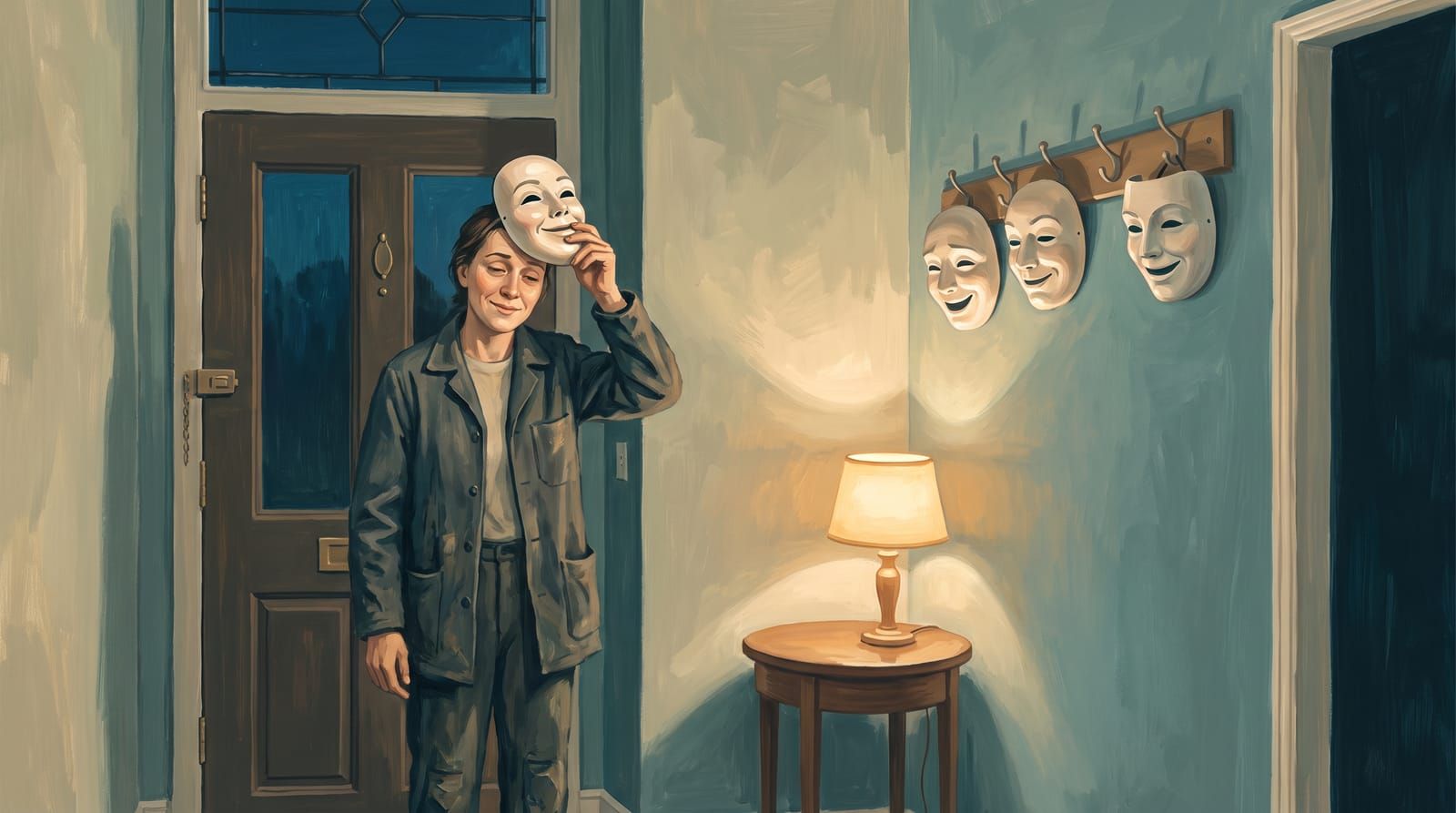
- Masking: hiding or suppressing autistic traits to fit in, such as forcing eye contact, holding back stims or rehearsing small talk.
These strands draw on each other. A noisy room does not only feel unpleasant. It also uses up the capacity you need to follow the conversation, and masking adds a further layer on top of both.
Why masking makes it so much harder
Masking is often the heaviest part of the load, and the one others see least.
Research backs this up. A 2025 study that tracked autistic adults’ masking and stress in daily life found that exhaustion and energy drain are the most commonly reported effects of masking.
The same study found that how often and where you mask matters:
- Frequency: masking frequently and consistently across different social settings was linked to a greater likelihood of stress than masking only now and then.
- Setting: masking in either formal settings (work, appointments) or informal ones (friends, family) was also linked to more stress.
- Both at once: the highest stress levels came from people who masked strongly in both formal and informal settings.
This helps explain why a relaxed evening with close friends can still be tiring. If you are masking there too, there is no setting where the load fully drops.
How long does a social hangover last?
Recovery time varies widely from person to person and from event to event. Some autistic adults recover after a short break, while others need a full evening or one to two days, depending on how intense the event was, the sensory environment and how much masking it took. One autism service provider puts the typical range at 24 to 72 hours.
Is needing to be alone a rejection of people?
No. Autistic people in recovery describe alone time as active recovery rather than social avoidance. They report that “quiet, reduced demands, sensory reduction, and solitude can be very restorative”.
Enjoying someone’s company and needing to recover from it can both be true at once. For partners, friends and family, that means someone leaving early or going quiet afterwards is usually managing their capacity, not sending a message about the relationship.
How is it different from introversion?
The two can look alike from the outside, and an autistic person can also be an introvert. But they are different things, and the reasons for seeking solitude differ too.
| Aspect | Introversion | Autism |
|---|---|---|
| What it is | A personality trait about managing energy | A neurodevelopmental difference affecting communication, behaviour and sensory processing |
| Main reason for solitude | Regaining energy | Avoiding sensory overload and managing social fatigue |
| Other reasons for solitude | None in particular | Preventing anxiety, processing social situations, restoring routine and predictability |
What helps
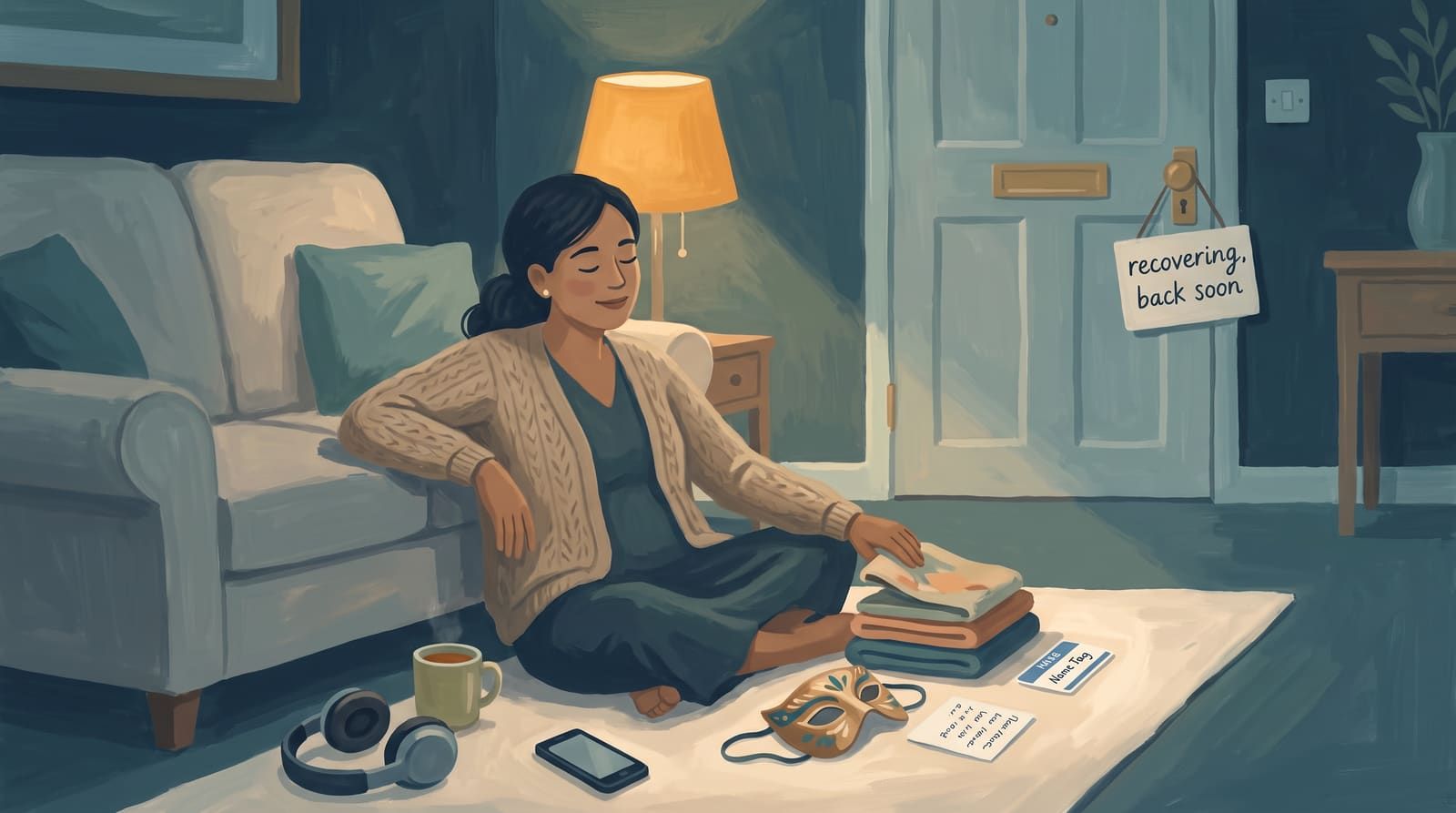
Recovery works better when it is expected and planned, rather than squeezed in once you are already overloaded.
1. Go somewhere quiet, dim and wordless
2. Build a predictable after-event routine
A consistent ritual after social events can aid recovery and reduce overwhelm. Scheduling low-stimulus days after big events helps too, as does keeping noise down while you recover.
3. Pace your calendar and ask for help
If a large event usually costs you a day or two, leave that time clear. Setting boundaries, asking for help and reducing overall demands can stop social exhaustion from building into autistic burnout.
4. Refill with what energises you
Jaime A. Heidel, who writes The Articulate Autistic, lists time in nature, deep engagement in special interests, and connecting with other autistic people, such as #actuallyautistic networks, as ways to restore energy after social burnout.
5. Take breaks during the event when solitude afterwards is not possible
Sometimes you cannot be alone afterwards. In that case, spread the recovery through the event instead of saving it for the end: three 5 to 10 minute sensory breaks during a social event can help prevent overload from building.
Summary
Needing to be alone after socializing is common among autistic adults, and it is about recovery, not rejection. Sensory load, real-time processing, executive effort and masking all draw on the same energy, and research links frequent masking across settings to higher stress. Recovery time ranges from a short break to a couple of days, and it helps most when it is planned: quiet, low light, no demand to speak, and a calendar with room to recover.
Resources
- The Autistic Advocate(opens in a new tab)
Kieran Rose's writing on autistic masking and its cost.
Autistic-led
- The Articulate Autistic(opens in a new tab)
An autistic writer on recovering from socializing.
Autistic-led
- Embrace Autism(opens in a new tab)
An explainer on social exhaustion in autistic adults.
- The Art of Autism(opens in a new tab)
Personal accounts of the social hangover.
Sources (8)
- Scheeren et al. (2025). Masking, social context and perceived stress in autistic adults: An ecological momentary assessment study. SAGE Journals.
- Simply Psychology. Are Autistic People Introverts?
- Kieran Rose, The Autistic Advocate. Autistic Masking.
- The Art of Autism. The Social Hangover: Autism and Social Events.
- HeyASD. The Autistic Social Hangover: Why One Good Day Out Costs You Three.
- BrightBridge ABA (2024). Managing Autism Social Exhaustion: Tips for Relief.
- Embrace Autism (2024). Social exhaustion in autistic adults.
- Jaime A. Heidel, The Articulate Autistic (2024). Many Autistic People Have to Recover from Socializing.