Why Five Minutes of Small Talk Can Drain an Autistic Person for Hours
Why a five-minute chat can drain you for hours, what research says about masking and fatigue, and what helps.
OwnmindedPublished 10 min read
You are not imagining this
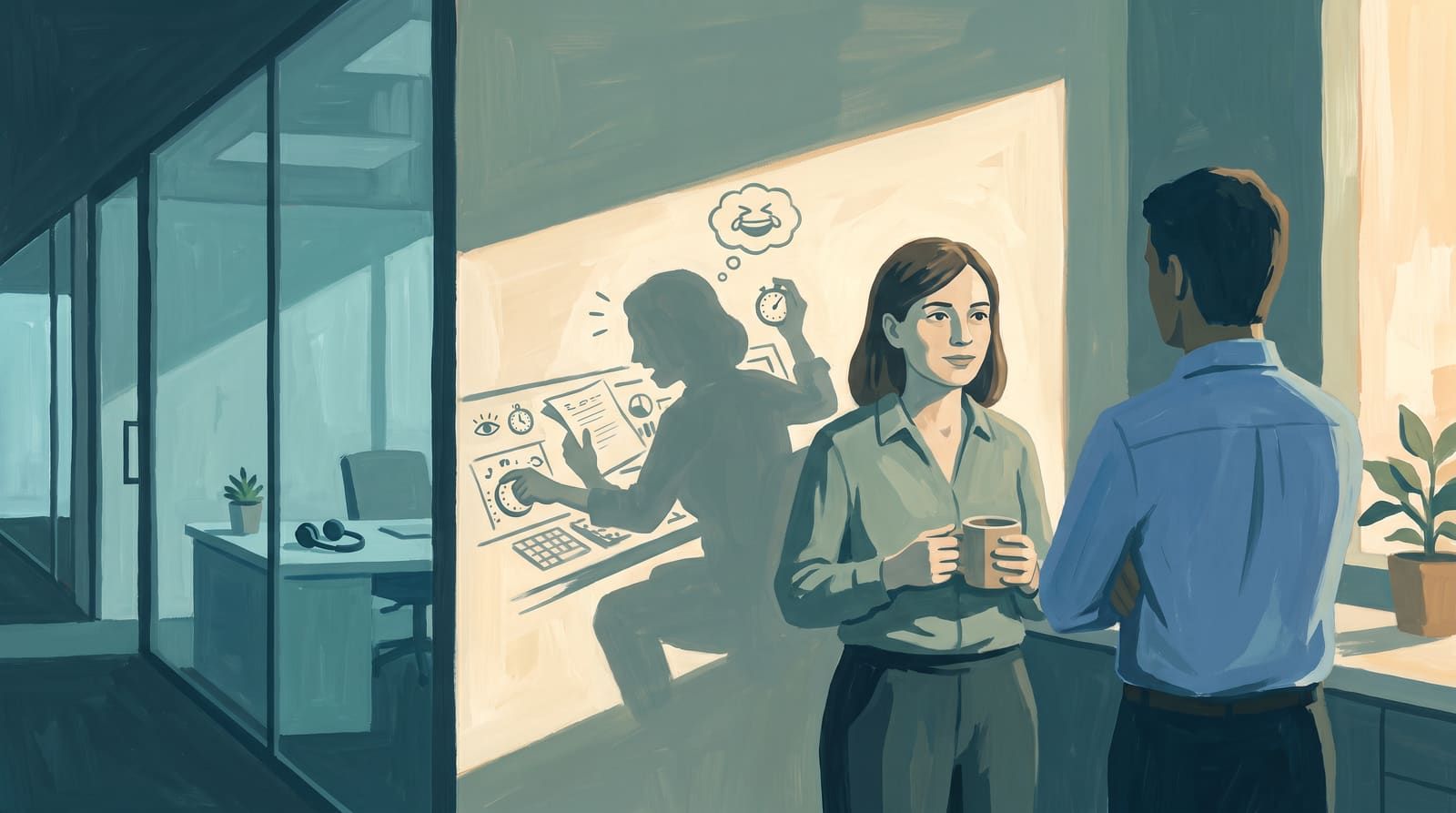
You meet a colleague by the coffee machine. You talk about the weather and the weekend for five minutes. It goes fine. Then you sit back down at your desk and cannot think straight for the next hour.
Many autistic adults describe small talk as draining, even when it looks easy from the outside. This is not a lack of social skill. It comes from the amount of hidden work a casual chat asks for. This article explains where that work comes from, what the research says about the fatigue, and what helps, both for you and for the people you talk to.
What makes small talk so hard?
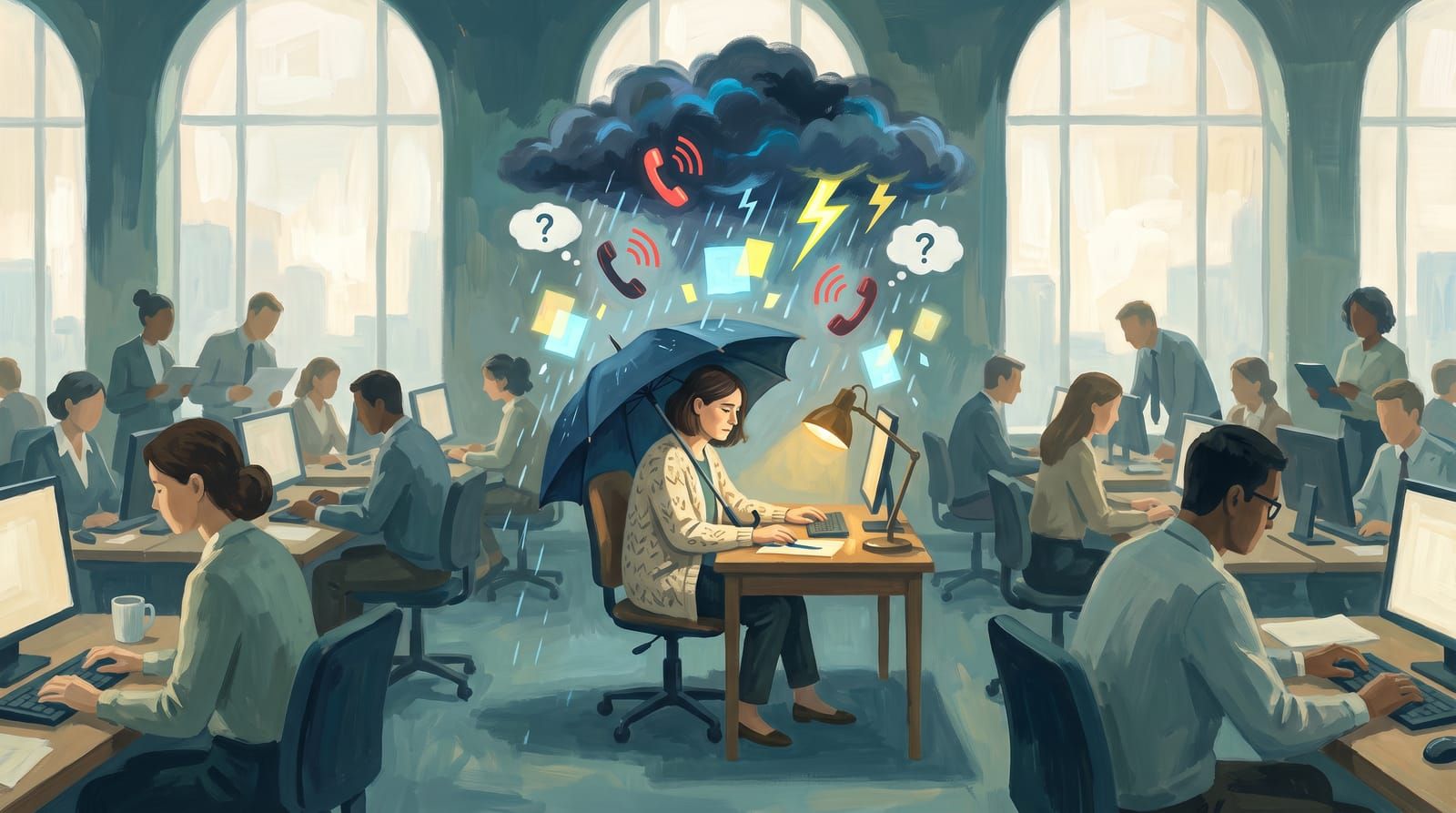
Small talk looks simple because the words are simple. The difficulty sits underneath them. Psychology Today describes small talk as asking autistic people to decipher and respond to social cues in real time, including small shifts in body language and tone.
The same source links this to pragmatic language, the ability to use language in socially meaningful ways rather than just to share information. Several demands pile up at once:
- Real-time cue reading: tone, facial expression and body language change quickly, and you have to catch and answer them as they happen.
- Pragmatic meaning: you have to work out what a remark is doing socially, not just what the words say.
- Pretending interest: many autistic people find it tiring to act interested in topics like the weather, because it adds a layer of hiding their real response.
Each of these is a separate job, and small talk asks for all of them at the same moment.
The hidden work of masking
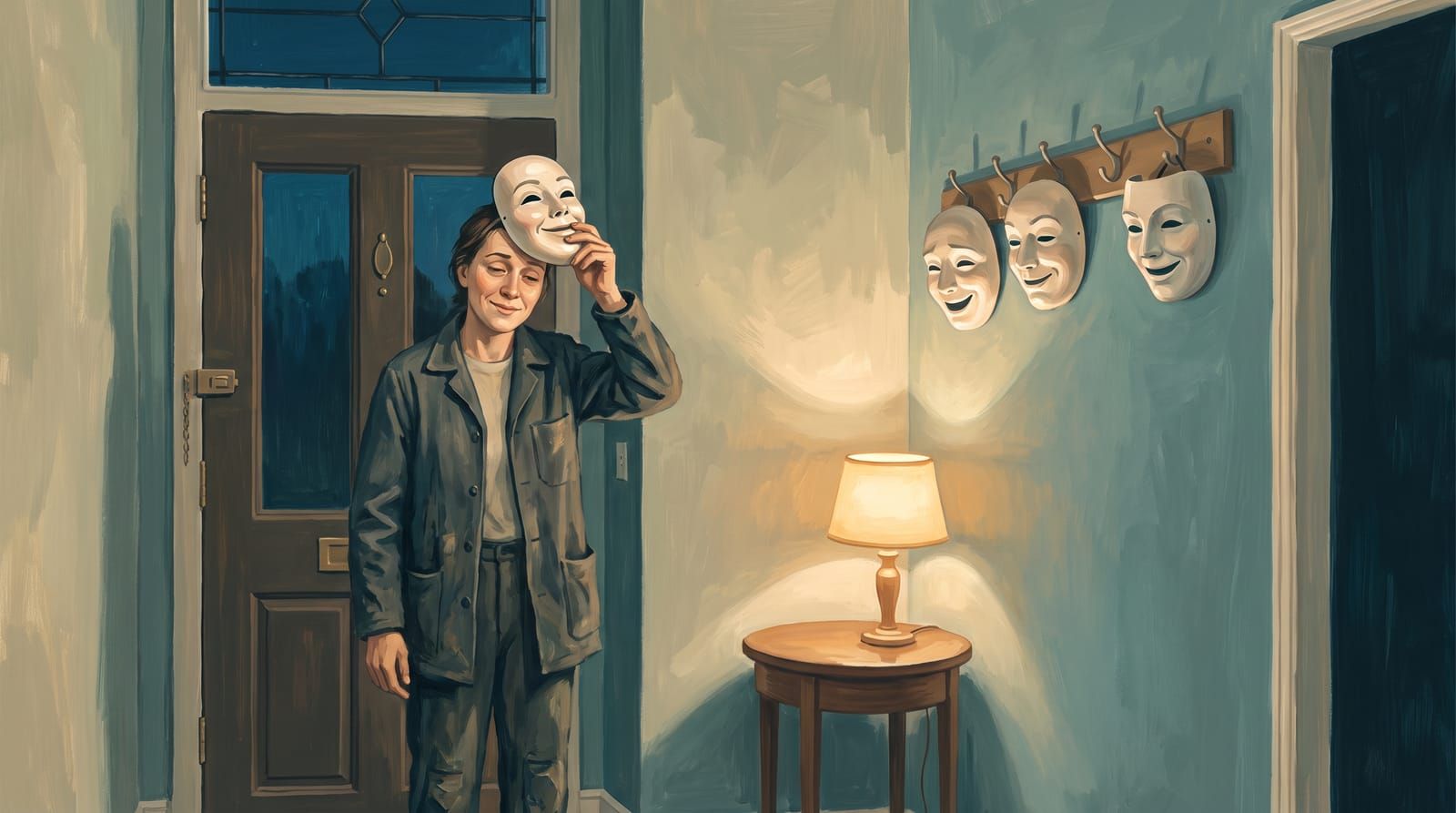
Masking, also called camouflaging, means changing your natural behaviour, consciously or not, so that you appear non-autistic. Small talk is one place where masking shows up.
The Dan Marino Foundation lists what masking during small talk involves: reading non-verbal cues, managing your facial expressions, monitoring eye contact, and calculating tone and timing, all at once. Many autistic people describe it as running a second operating system all day, with one part of the mind doing the task and another watching the performance.
| What the chat looks like | What you may be doing underneath |
|---|---|
| Chatting about the weather | Acting interested in a topic that does not interest you |
| A group laughs at a joke | Working out that a laugh is expected, then timing it |
| Listening to a colleague | Checking you are making enough eye contact |
| Answering a question | Calculating the right tone and timing |
| Talking in a busy room | Splitting attention between the speaker and the noise |
Embrace Autism puts the key point plainly: social exhaustion often comes not from the interaction itself but from the work of keeping up a socially acceptable version of yourself during it.
Why noisy places make it worse
Small talk rarely happens in a quiet, calm room. It happens in kitchens, corridors, parties and open-plan offices. Autistic people report that background noise, overlapping conversations, fluorescent lighting, crowds and unpredictable movement all add to the load while they try to keep a conversation going.
Many autistic people have sensitive senses. In a sensory-rich setting, attention is split between the person talking and whatever is bothering your senses. That split comes on top of the cue reading and masking, so the same chat costs more in a busy café than in a quiet corner.
Is it a lack of social skill?
Awkward conversations between autistic and non-autistic people are often blamed on the autistic person. The double empathy problem offers a different explanation. It proposes that communication breakdowns in mixed-neurotype conversations come from challenges on both sides, not only from autistic communication differences.
In other words, the mismatch runs in both directions. Leaving a chat drained does not mean you are bad at people.
What the tiredness feels like
Social exhaustion in autistic adults can be physical, cognitive and emotional at the same time, and it often lasts for hours or even days after an interaction. It tends to be worst after long or high-demand social situations, so a string of short chats across a busy day can add up.
Masking also has a recovery cost. Autistic people need time to recharge after periods of hiding or changing their natural behaviour, and busy lives often leave no room for it.
What research says about masking and fatigue
The tiredness is not just a feeling. Research reported by the Dan Marino Foundation found that camouflaging was linked to both stress-related symptoms and physiological stress markers in autistic adults.
Over time, masking without recovery can build into autistic burnout: intense exhaustion, increased sensory sensitivity and a reduced ability to manage daily tasks. Suggested contributors include sensory overload, camouflaging, unexpected demands, minority stress and lack of support. Small talk touches several of these at once.
What helps if you are autistic
The aim is not to become better at pretending. It is to lower the cost of small talk, mostly by cutting how much you have to mask.
1. Find the part that drains you most
Thrive Autism Coaching suggests treating small talk as several separate challenges rather than one big one. Eye contact, timing, topics and unwritten rules each cost different people different amounts. Once you know which part is heaviest for you, you can target that part.
2. Use a simple structure
A fixed pattern takes some of the real-time guessing away. Thrive suggests: a starter, a follow-up question, a brief share about yourself, then the next question. Having the shape in mind means you spend less effort working out what comes next.
3. Prepare scripts and self-advocacy lines
4. See what small talk is for
Thrive describes small talk as a form of social lubrication: a signal of goodwill and a way into deeper conversations, not an end in itself. Seeing it as a way in, rather than the whole conversation, can make it feel less pointless.
5. Calm your body before a chat
If social situations make you anxious, box breathing can help: breathe in for four, hold for four, breathe out for four, hold for four. It is a quick, structured tool you can use before or during a conversation.
6. Choose strategies you can keep up
Because social strategies can bring both benefits and fatigue, favour the ones that do not depend on masking. A strategy that works but leaves you drained every day is not sustainable.
7. Reduce masking, not just time with people
Neurodivergent Insights notes that masking continues even outside work and is one of the strongest predictors of autistic burnout. Recovery needs a lower expectation to mask, not just time off. Time alone helps you recharge, but the bigger change is having more places where you do not have to perform.
What helps from the people around you
The double empathy problem means small talk is a shared job. Colleagues, friends and family can take on part of the load by changing the setting and the expectations, rather than expecting the autistic person to adapt alone.
- Accept written follow-ups: if someone says they prefer email or messages after a chat, treat it as a reasonable request.
- Allow time to answer: some autistic people need time before they reply, and can say so if they know it is welcome.
- Lower the pressure to mask: recovery from masking-related exhaustion depends on a lower expectation to mask.
- Mind the setting: noise, crowds and harsh lighting add to the load of keeping a conversation going.
Summary
Small talk is tiring for many autistic adults because it asks for real-time cue reading, unwritten rules and masking all at once, often in noisy places. The double empathy problem shows that the awkwardness runs both ways, so the fatigue is not a personal failure. Research links masking to stress markers and burnout, and it shows that even helpful strategies can carry a cost. What helps most is lowering the need to mask, using simple structures and scripts, and having people around you who share the work.
Resources
- Embrace Autism: Social exhaustion in autistic adults(opens in a new tab)
Why social contact drains energy and how long it can last.
- Neurodivergent Insights: Autistic burnout(opens in a new tab)
How masking feeds burnout and what recovery involves.
- Thrive Autism Coaching: Autism and small talk(opens in a new tab)
Practical structures and scripts for autistic adults.
Sources (8)
- Psychology Today (2020). Can You Do Small Talk when You Have ASD? Psychology Today.
- Dan Marino Foundation. Autism Masking: Signs, Burnout, and Late Diagnosis.
- Embrace Autism. Social exhaustion in autistic adults.
- Research article. Double-Edged Effects of Social Strategies on the Well-Being of Autistic People.
- PMC (2023). Commentary on Autism and the double-empathy problem: Implications for development and mental health. PMC.
- Light On Anxiety. Masking Autism: What It Is and Why It's Exhausting.
- Thrive Autism Coaching. Autism and Small Talk: Advice for Autistic Adults.
- Neurodivergent Insights. Autistic Burnout: When Navigating a Neurotypical World Becomes Too Much.