Autism and Anxiety: When the Problem Is Uncertainty, Not Worry
Why not knowing what comes next is so closely linked to autistic anxiety, why therapy often needs adapting, and what helps day to day.
OwnmindedPublished 10 min read

Not knowing is the hard part
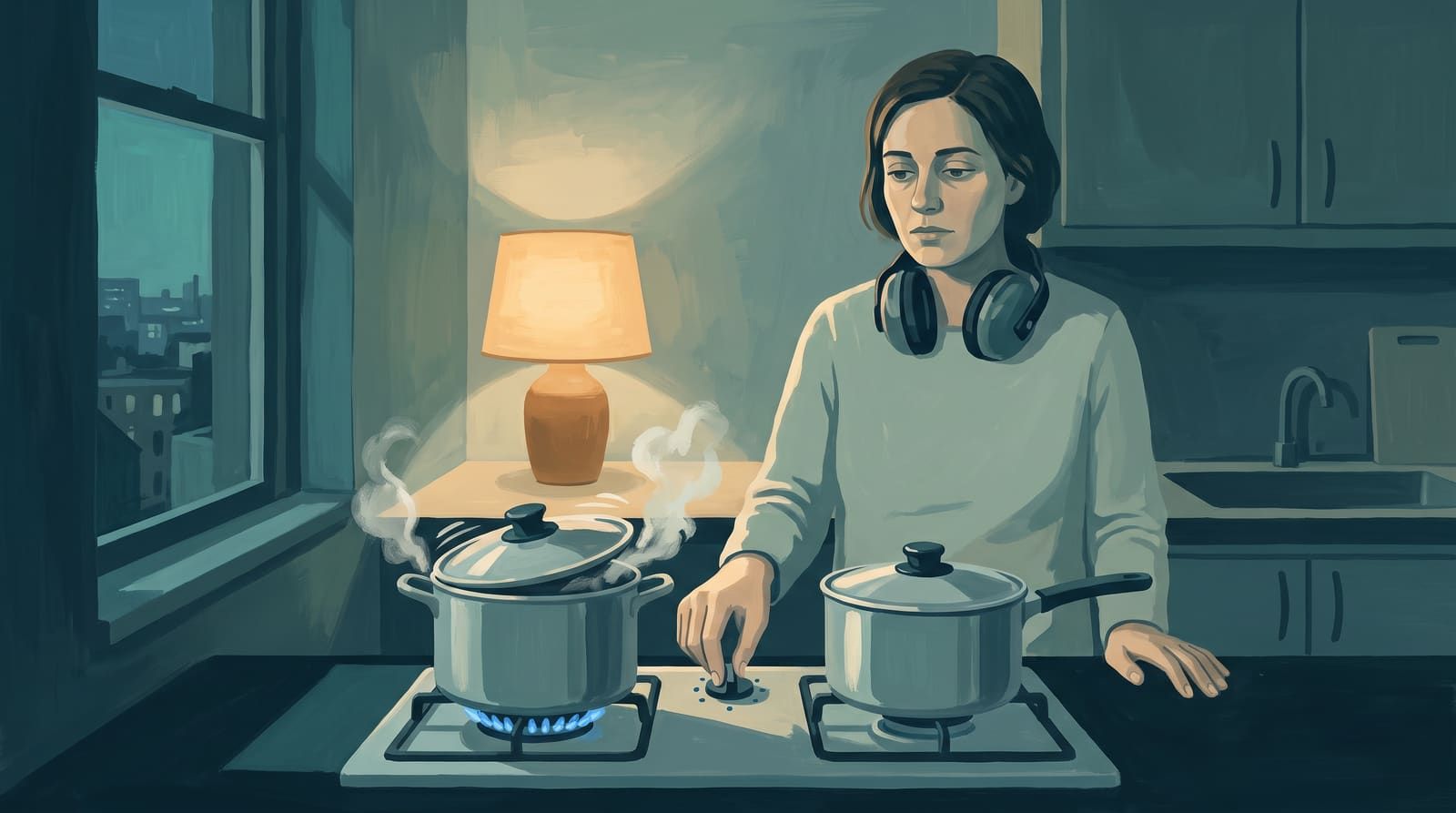
You are invited to visit someone, and your first question is how long it will last. Nobody can say, so you sit in the car a little longer before going in. Another day, a meeting moves rooms at the last minute, and the rest of the afternoon feels off balance.
For many autistic adults, anxiety is less about picturing a specific disaster and more about the unknown itself: not knowing what will happen, when, or for how long. Researchers call this intolerance of uncertainty.
This article explains what intolerance of uncertainty is, how it connects to anxiety in autistic people, why standard therapy often needs changing, and what practical steps help.
What is intolerance of uncertainty?
Intolerance of uncertainty means finding the unknown hard to bear, whatever the outcome turns out to be. The question in your head is less “what if it goes badly?” and more “I don’t know what is going to happen”.
A qualitative study, where researchers interview people in depth rather than count scores, asked 15 autistic adults about uncertainty in their lives. They described three levels of uncertainty, and the authors tied anxiety mainly to the last two.
| Aspect | Known | Known unknowns | Unknown unknowns |
|---|---|---|---|
| What it means | You know what will happen | You know there is a gap in what you know | Things you cannot predict or find out in advance |
| Can it be managed? | Nothing to manage | Yes | No, they cannot be made known |
| Linked to anxiety? | Less so | Yes | Yes |
The split is useful in practice: a known unknown can often be managed, while an unknown unknown cannot be found out in advance.
What does it look like in everyday life?
Autistic adults describe intolerance of uncertainty in plain, practical terms. On a National Autistic Society forum thread called “The not knowing”, members shared experiences like these.
Last-minute changes are a common trigger. Researchers at Aberystwyth University say many autistic adults report that a change such as a sudden room switch just before a lecture can make anxiety spike.
How closely is uncertainty linked to anxiety?
The clearest evidence comes from a 2020 systematic review and meta-analysis by Jenkinson, Milne and Thompson, which pooled results from earlier studies. Of the 10 studies with the right statistics, 9 found a significant link between intolerance of uncertainty and anxiety in autistic people.
They also add caution. There were only a small number of relevant studies, and their quality varied. A correlation also shows that two things go together, not that one causes the other.
Why might uncertainty hit autistic people harder?
There is no settled answer yet, but two ideas help explain it.
Learning to manage uncertainty may develop differently. A 2021 paper in Frontiers in Psychology by Normansell-Mossa and colleagues proposes this for people with more autistic traits. Their data fitted a developmental explanation better than one built around stress.
Anxiety itself makes gaps harder to fill. The Leicestershire NHS autism service notes that anxiety makes it harder to process information and “read between the lines”. The same page says familiarity, predictability and routine can make life feel safer and reduce anxiety.
Why standard anxiety therapy often needs adapting
Cognitive behavioural therapy (CBT) is a talking therapy that looks at links between thoughts, feelings and actions. Work with autistic young people has suggested several ways to adapt CBT.
- More structure and predictability: sessions follow a clear, expected pattern.
- Concrete and visual teaching: ideas are shown and made specific rather than left abstract.
- More family involvement: people close to the person take part.
- Using special interests: the person’s interests become part of how ideas are taught.
Programmes aimed at uncertainty
One approach is CUES-A, an eight-session programme focused on intolerance of uncertainty and adapted from a parent-delivered group programme for autistic children. It was tried with four autistic adults in a single-case study, where each person is tracked closely over time. The results suggest it is workable and show early signals, but they say nothing yet about how well it works.
Online self-help
A pilot trial led by Gaigg and colleagues assigned 54 autistic adults to online CBT, online mindfulness-based therapy or a waiting list. Only 23 of the people offered therapy stayed in it to the end: 14 in mindfulness and 9 in CBT. Those who stayed showed significant drops in anxiety that lasted at 3 months and partly at 6 months.
- Mindfulness-based therapy
- 14 of 19
- CBT
- 9 of 16
The authors call this preliminary. So many people dropped out that the results may not apply to everyone, and with only nine people in the CBT group, its effect cannot be separated from mindfulness.
What helps day to day
These steps come from autism services and charities. They work by making the unknown smaller or easier to plan around, and many depend on the people around an autistic adult as much as on the adult themselves.
1. Get warning of change as early as possible
2. Make plans visible
Aspire Ireland advises visual schedules, written or picture plans for daily routines, and advance notice of changes. The Leicestershire service also suggests showing changes visually.
3. Visit new places in advance
The NHS page recommends visiting new places in advance as one way to cope with change and transition, so the place is already familiar when it matters.
4. Plan B and plan C
The same page recommends planning a “plan B” and “plan C”. This suits unknown unknowns, which cannot be predicted: you cannot know what will go wrong, but you can know what you will do if something does.
5. Be part of the planning
Leicestershire NHS recommends including autistic people in planning and decisions. Being involved means you hold the information instead of waiting to be told, which removes a layer of not knowing.
6. Look for therapy that has been adapted
If you try therapy for anxiety, the adaptations listed above are worth asking about: clear structure, concrete and visual methods, and room for your interests. Approaches that focus on uncertainty directly exist but are still at an early, small-study stage.
What research does not know yet
The evidence on autism and uncertainty is growing, but several basic questions are open.
- More uncertainty, or less tolerance of it? No systematic review has settled whether autistic people face more uncertainty, are more intolerant of it, or both.
- Does adapted therapy work? The searches for this article turned up no adequately powered randomised trial, one big enough to give a reliable answer, of adapted CBT targeting intolerance of uncertainty in autistic adults.
- Do men and women differ? Aberystwyth University is using surveys and focus groups to study whether uncertainty drives anxiety in autistic adults and whether this differs between men and women. The study is ongoing, so there are no results yet.
Summary
Much autistic anxiety appears to be closely linked to intolerance of uncertainty: the unknown itself feels hard to bear, whatever the outcome. Research finds a strong link between the two, though the studies are few and cannot show cause. Standard CBT often needs adapting, and programmes aimed at uncertainty are promising but early. The most practical help changes the setting: early warning, visible plans, advance visits, backup plans and a real say in decisions.
Resources
- The not knowing(opens in a new tab)
A National Autistic Society community thread where autistic adults talk about uncertainty.
UK
- Autism: coping with change and transition(opens in a new tab)
Leicestershire NHS guidance on warnings, visual plans and backup plans.
UK
- Anxiety and autism(opens in a new tab)
Aspire Ireland's advice on visual schedules and advance notice.
Ireland
Get new articles by email
One short email when we publish something new. Evidence-informed writing on autism in adulthood, no spam.
Sources (8)
- Jenkinson, Milne and Thompson (2020). The relationship between intolerance of uncertainty and anxiety in autism: a systematic literature review and meta-analysis. Autism.
- Gaigg et al. Mindfulness-based and CBT pilot for autistic adults. City Research Online.
- Qualitative interview study on uncertainty in autistic adults. City Research Online.
- Normansell-Mossa et al. (2021). Frontiers in Psychology.
- Aberystwyth University (2026). Does uncertainty drive anxiety in autistic adults? University news.
- National Autistic Society Autistic Community forum. The not knowing.
- Leicestershire NHS autism service. Autism: coping with change and transition. NHS page.
- Aspire Ireland. Anxiety and autism. Aspire Ireland.
How we research and write our articles: Editorial policySources & methodologyMedical disclaimer