Meltdown or Shutdown: What's Happening When an Autistic Person Goes Loud or Quiet
How to tell a meltdown from a shutdown, what to do in the moment, and how recovery and burnout fit in.
OwnmindedPublished 12 min read
Loud or quiet, it starts the same way
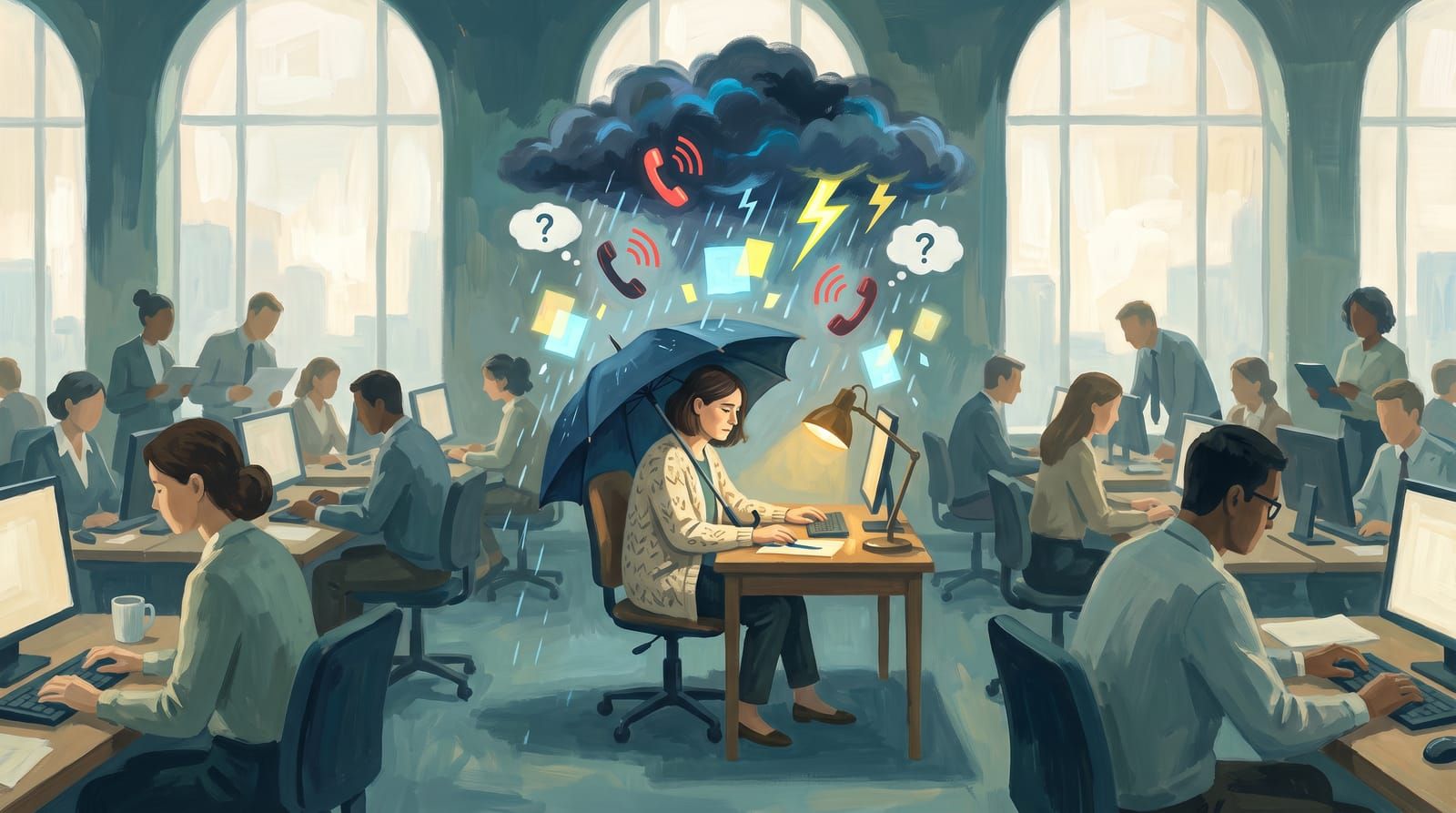
The day has been long, the shop is loud, and one more question is one too many. Some people start crying, shouting or pacing. Others stop talking, stare into the distance and seem to be somewhere else. Both reactions can come from the same place.
Meltdowns and shutdowns are two ways an autistic nervous system responds when it has more to process than it can handle. This article explains what each one is, how to tell them apart, why neither is a tantrum, what helps in the moment, and how recovery links to burnout.
What are meltdowns and shutdowns?
The words meltdown and shutdown come from the autistic community itself, not from clinical manuals, which is why they describe lived experience so closely .
- Meltdown: an intense outward response to overwhelm, with a loss of control over behaviour. It can include shouting, crying, kicking or flapping .
- Shutdown: an inward response where the person withdraws and switches off from overwhelming surroundings . They may talk less, respond less, or seem frozen.
- What they share: both are involuntary. They kick in at a crisis point, when the nervous system’s capacity to process is exceeded.
Both are common. In a University of Cambridge study of 504 people, 80% reported shutdowns and 71% reported meltdowns.
- Shutdowns
- 80%
- Meltdowns
- 71%
Why do they happen?
Meltdowns and shutdowns share the same triggers :
- Sensory overload: bright lights, loud noises and other input that will not switch off.
- Communication difficulties: not being understood, or feeling misunderstood.
- Unpredictability: an unfamiliar routine or a sudden change of plan.
- Social or emotional demands: too much people-time, or feelings that pile up.
Small stressors often build up across a day until one last thing tips the balance .
Ambitious about Autism also notes that many autistic people run out of resources by trying to push past stress instead of stopping, and that this leads to shutdowns.
What does each one look like?
Meltdowns and shutdowns both have physical, thinking and emotional parts. In a 2021 study, autistic young people described meltdowns with blurry vision, tense muscles, fast breathing and a flushed face, while shutdowns felt heavy and low on energy .
| Aspect | Meltdown | Shutdown |
|---|---|---|
| Direction | Outward, explosive | Inward, withdrawn |
| What others may see | Crying, yelling, pacing, flapping, lashing out | Staring, silence, slow or no replies |
| Speech | Loud or out of control | Mutism, stuttering, mixed-up words |
| How it can feel | Racing thoughts, panic, frustration | Heavy, far away, frozen |
| Body | Tense muscles, fast breathing, flushed face | Low energy, sometimes poor sleep and appetite |
Meltdowns
Meltdowns look different for each person. Some people cry or yell, others pace, flap or lash out, and some keep the distress mostly inside, with racing thoughts and panic .
Young people in the 2021 study described the loss of control in their own words: “You’re a passenger on a ride of destruction… and it’s like hitting a bunch of stuff.” Christie Welch, the study’s senior researcher, notes that their descriptions “in many ways align and in some ways differ from descriptions provided by autistic adults” .
Shutdowns
A shutdown can be easy to miss because it is quiet. Izzy Lively, an autistic adult writing for A Day in Our Shoes, lists common signs: speech difficulties such as not being able to talk, stuttering or using the wrong words; dissociation, feeling cut off from yourself or your surroundings, such as staring or withdrawing; loss of sleep and appetite; and stronger sensory sensitivity .
Ember describes it this way: “My shutdowns usually involve not wanting to talk and feeling like I’m moving through molasses—like everything takes more effort, as if I’m in a slow-motion video. I often end up in bed.”
When researchers asked autistic adults to describe shutdowns, six images came up again and again: being frozen, a computer crash, going inside myself, not being able to keep up, survival mode, and playing a role . Jessica C. Kitchens, writing in Autism Spectrum News, puts it plainly: “Shutdowns are an intrinsic aspect of the autistic experience, often serving as a protective mechanism rather than a dysfunction.”
Is it a tantrum?
No. Meltdowns and shutdowns are not tantrums or behaviour problems. They are involuntary neurological responses to being overwhelmed, and people do not choose them .
Embrace Autism describes both as coping responses the nervous system switches on at a crisis point, not behavioural choices the person can change .
What to do in the moment
The goal is to lower the load, not to correct the person. The same basics help with both meltdowns and shutdowns.
What not to do
- Do not ask questions or talk through what happened. Ambitious about Autism advises saving any discussion of triggers until the person has stabilised, not during distress.
- Do not add demands. Instructions and decisions take processing the person does not have right now.
- Do not treat it as a choice. It is an involuntary response, so blame only adds to the load.
What helps
Lowering the load
- Make the space quieter. A low-stimulation environment with dimmer light and less noise helps stop things from escalating .
- Offer sensory tools. Noise-cancelling headphones, dimmed lights and weighted blankets support both prevention and recovery.
- Try cold water. Embrace Autism suggests a cold splash on the face, wrists or back of the neck to help interrupt the body’s overwhelm.
If you are the autistic person, Ember’s approach to shutdowns is to stop resisting: “I don’t try to fight them anymore. I’ve learned that when I’ve run out of resources, I need to stop.”
How to lower the chance of the next one
Ambitious about Autism calls avoiding known triggers the best way to help .
- Track the build-up: notice the small stressors that stack up across a day, not just the final straw.
- Make things predictable: visual timetables, warnings before transitions and a steady structure reduce anxiety.
- Keep a recovery space ready: a quiet room with headphones, dimmed lights or a weighted blanket.
- Pace demanding tasks: Autism Spectrum News suggests Spoon Theory, a way of counting limited energy as a set number of spoons, and spacing out demanding tasks instead of doing them back to back .
Understanding your own pattern can make a real difference. Ember says: “I haven’t had a meltdown in a really long time. Once I understood what was causing them, I stopped letting things build up to that point.”
Recovering afterward
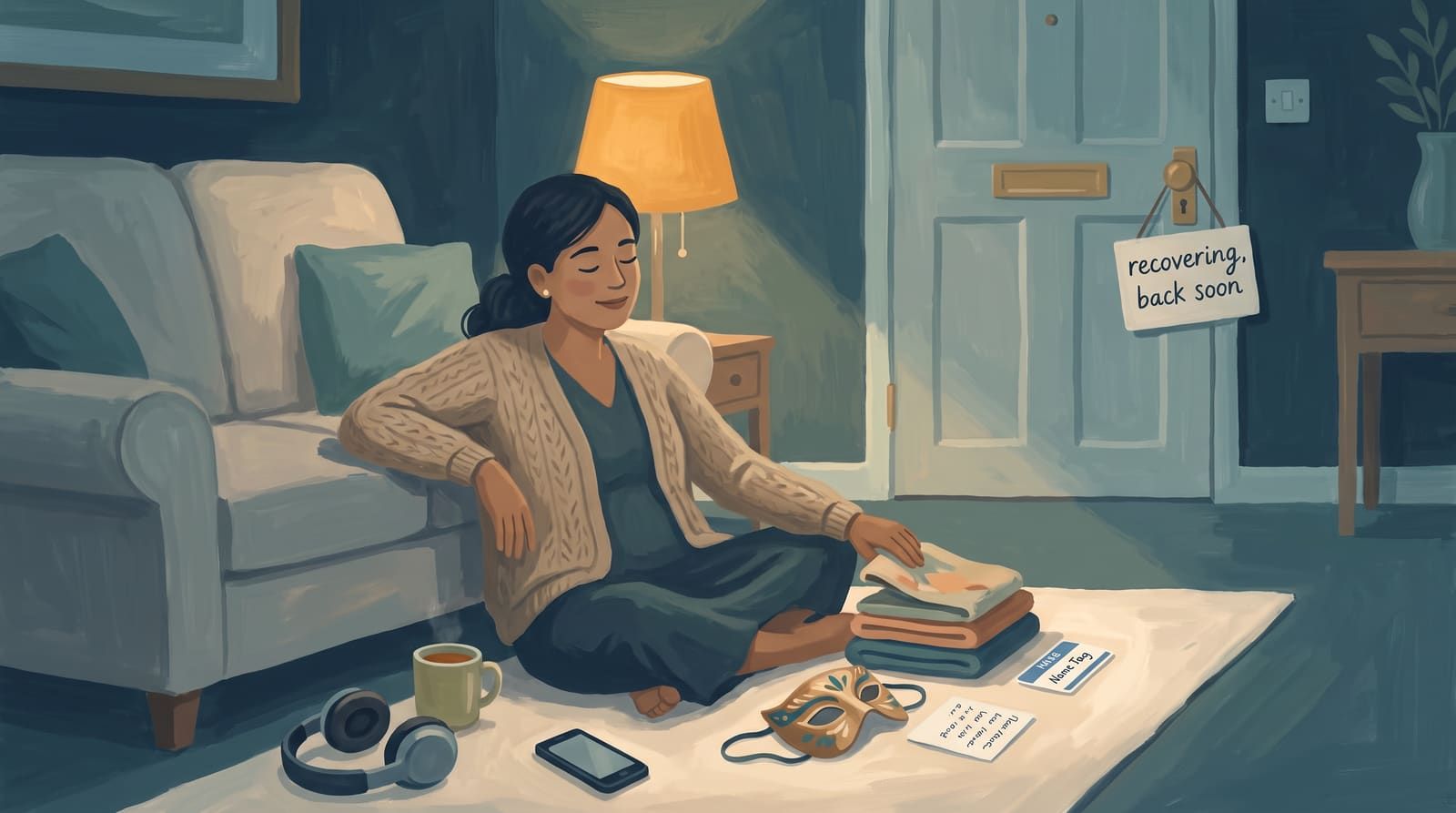
The effects can last for days. After a meltdown, many people feel physically exhausted and emotionally drained, and some are left with self-blame or even self-hatred that lingers . Ambitious about Autism advises allowing recovery time without extra demands.
Izzy Lively lists what helps after a shutdown :
- Rest: time to lie down or sleep.
- Fewer obligations: less on the to-do list while you recover.
- Deep pressure: a weighted blanket.
- Stimming: repetitive movements that help regulate the body.
- Calming input: music or a bath.
When meltdowns and shutdowns point to burnout
Repeated meltdowns and shutdowns can develop into autistic burnout, described as pervasive, long-term exhaustion with loss of function and reduced tolerance to stimuli . Izzy Lively puts the exhaustion at three months or more . The link can also run the other way: more frequent meltdowns or shutdowns may be a sign of burnout, often alongside losing skills and becoming more sensitive to sound, light or touch .
Signs to watch for:
- Episodes getting more frequent, alongside skills slipping and stronger sensory sensitivity.
- A shutdown that does not lift: Izzy Lively writes that shutdowns lasting over a month point to burnout.
- Needing to stop everything: Ember says: “Autistic burnout landed me in bed and off work for 6 weeks. I would go to work and need to get into bed at the end of the day.”
Ember adds that “taking time off and getting very honest about what I could and could not do has made all the difference.” For severe burnout, Autism Spectrum News mentions counselling and other professional support, and a leave of absence where that is possible . Our guide to autistic burnout in working adults covers what it is and how recovery works.
Summary
Meltdowns and shutdowns are two outputs of the same overload: one loud, one quiet. In the moment, reduce noise, light and demands, and save questions for later. Afterward, allow days to recover and treat a rise in episodes as a possible sign of burnout.
Resources
- Embrace Autism(opens in a new tab)
First-person accounts and practical ideas for meltdowns and shutdowns.
- Ambitious about Autism(opens in a new tab)
UK charity guidance on triggers, prevention and recovery.
UK
- A Day in Our Shoes(opens in a new tab)
Shutdowns explained by an autistic adult.
Sources (9)
- Welch, C. et al. (2021). What I Wish You Knew: Insights on Burnout, Inertia, Meltdown, and Shutdown From Autistic Youth. Frontiers in Psychology.
- Foran Lewis, L. et al. (2024). Shutdowns Are Like You're Stuck on the Blue Screen of Death: A Metaphor Analysis of Autistic Shutdowns. PMC/NCBI.
- Leicestershire Partnership NHS Trust. Understanding autistic meltdowns and shutdowns.
- Right Decisions / NHS Scotland. Autistic meltdowns/shutdowns guidance.
- Embrace Autism. Meltdowns and shutdowns.
- Unstrange Mind. Autistic Shutdown Alters Brain Function (citing a Cambridge study, 504 participants).
- Lively, I. (n.d.). Autistic Shutdowns Explained: From An Autistic Adult's Perspective. A Day in Our Shoes.
- Ambitious about Autism. Meltdowns and shutdowns.
- Autism Spectrum News. Navigating autistic shutdown and burnout through a neurodiversity-affirming approach.