Have You Tried Going to Bed Earlier? Autistic Sleep Is a Design Problem, Not a Discipline Problem
Autistic sleep is a body-clock and sensory problem, not a discipline problem. The fix is designing light, sound, and the last two hours of the day.
OwnmindedPublished 12 min read
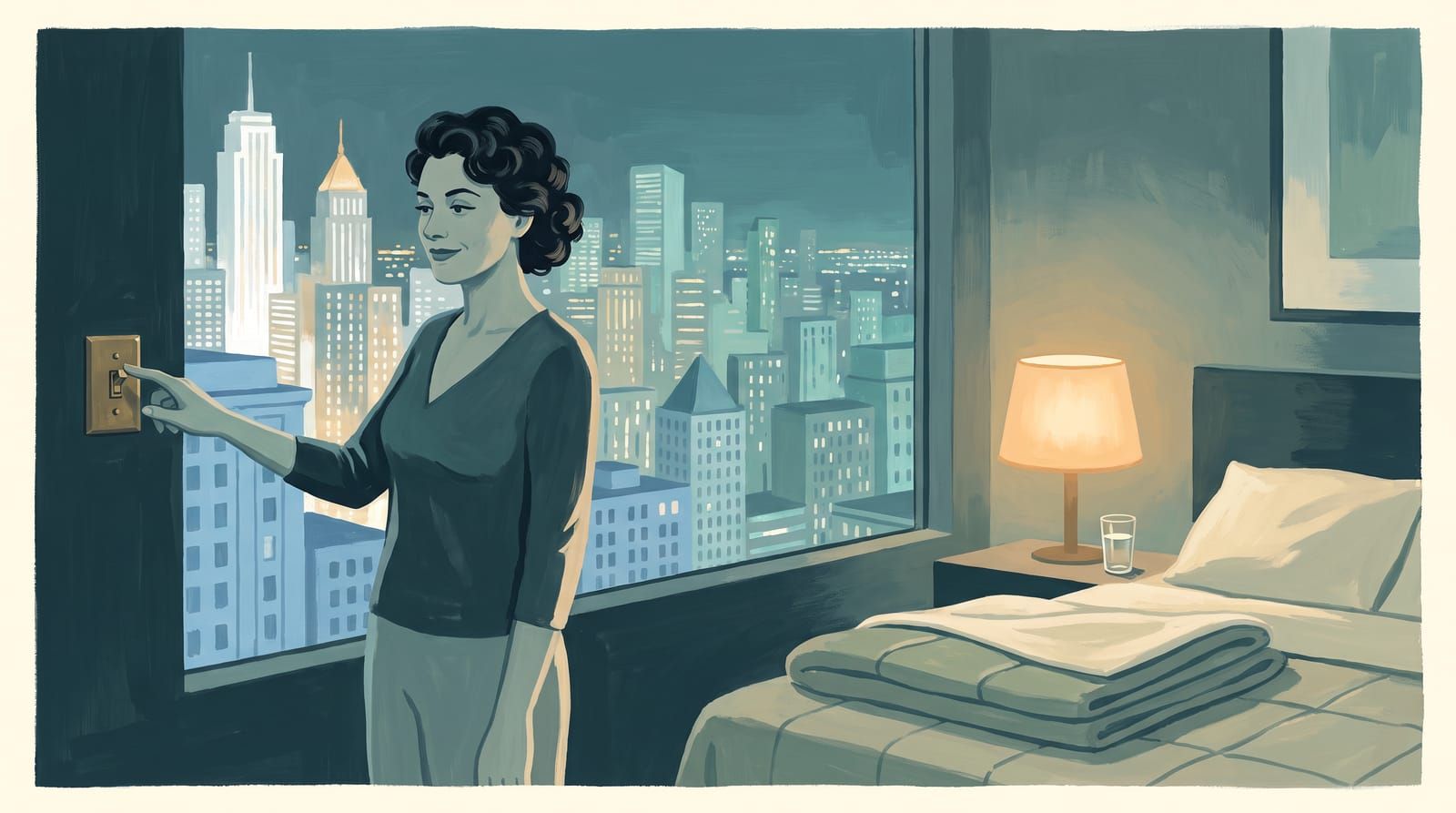
Everybody else has gone to bed. The house is finally the right volume, nobody wants anything from you, and you are wide awake — not tired-but-fighting-it, actually awake, the way you have been at 1am since you were fourteen. Tomorrow someone will ask whether you have simply tried going to bed earlier.
People have asked that for as long as you can remember. As one writer puts it: “People love to say, “why don’t you just go to bed earlier?”“
By the time someone offers that question, you have already tried it — tried it for a week, a month, a whole term, and lain in the dark doing arithmetic on how little sleep you are going to get while your body insists it is still 3pm inside. Advice that assumes the problem is effort blames you for a clock you did not wind. This article treats the problem as what it actually is — a design problem in light, sound, and the last two hours of the day — not another failed attempt at discipline.
The Clock Runs Late, and That Is Not a Failure
A late-running body clock is common, not proof of bad habits. As autistic author Paula Tilli writes: “Many autistic and/or ADHD individuals experience a naturally delayed circadian rhythm, and often identify as night owls.”
The National Autistic Society lists the same terrain in its sleep guide: irregular melatonin secretion, an atypical body clock, sensory sensitivity, and higher anxiety — all named as reasons autistic people sleep differently. Tilli adds the telling detail that people who tried to crush themselves into a conventional 11pm-to-7am routine told her it felt awful.
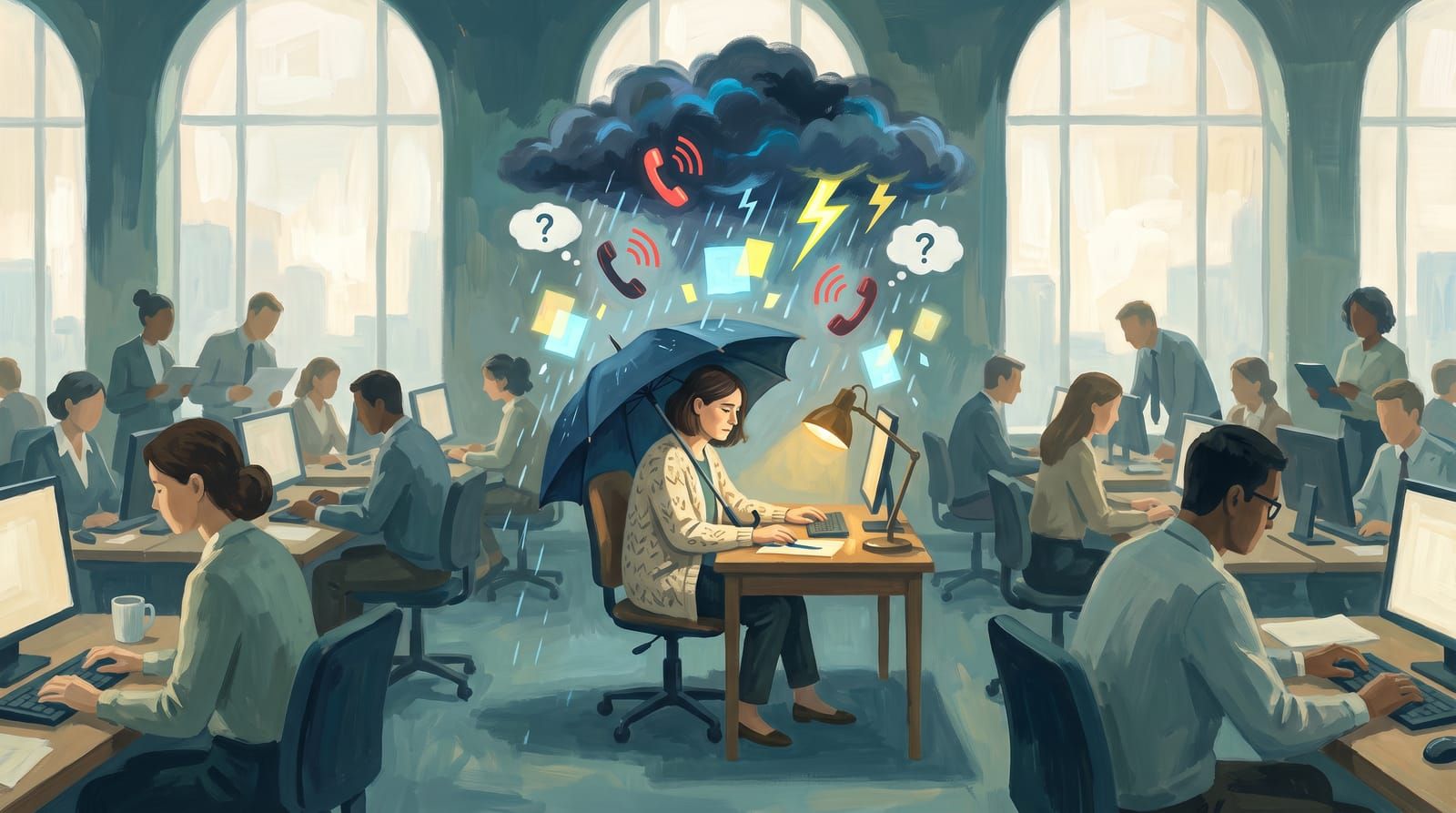
Notice what that list is not. It is not a list of choices. Melatonin timing, light exposure, sensory load, anxiety — every one of those is something that happens to you, in a body, in a world that runs bright and loud until it is tired of you. If your body clock runs a couple of hours behind the schedule the working world wants, then lying down at eleven is like arriving at a station two hours early: nothing has left yet. The trains were never late. You were just given the wrong timetable and told it was yours.
There is a second truth, quieter than the first. For a lot of autistic people the post-midnight hours are the only low-demand time in the day — nobody ringing, nobody needing anything, the volume finally down. That time is not stolen or wasted. It is where some of us do our thinking, our recovering, our actual living. Holding both truths at once is the whole point. You can protect the quiet hours you need and still want enough sleep. One does not cancel the other, and you are allowed to grieve a little while you sort out how to have both.
Why “Just Go to Bed Earlier” Was Never the Answer
Telling someone with a late-running clock to go to bed earlier is like asking them to change their own height. The advice assumes sleep is a decision you make — a matter of getting into bed and trying. For many autistic adults it has never once worked that way.
Worse, the failed attempts pile up into their own story. Each lie-awake-at-ten experiment that ends at 2am adds to the evidence you carry that you are “just not a sleeper.” That story is heavy, and it is wrong. The bedtime was the wrong tool, not the person holding it.
What actually moves the clock, in the accounts we can read, is environment and timing. Tilli changed her own lifelong night-owl pattern in her late thirties — not through resolve, but by redesigning light, food and routine over months and years, and she still has to maintain it every day. She is honest that the cost is real: her whole day now arranges itself around sleep, so she can fall asleep at nine and wake rested.
That honesty matters. A body clock that runs late does not get beaten once. It gets managed, the way you might manage a long commute — daily, deliberately, with days off built in. If you set it up once in January and stop in March, the night owl returns not because you failed but because the light and the meals and the rhythm were doing the work the whole time, and they need to keep being done.
The Numbers Say It Is Real, and It Peaks in Your Working Years
This is not imaginary, and it is concentrated exactly where life is busiest. In one lifespan survey, poor sleep was reported by 63.7% of autistic adults against 46.4% of non-autistic adults.
- Autistic adults
- 63.7%
- Non-autistic adults
- 46.4%
The gap was not spread evenly: it showed up in early adulthood and middle age — the working years — and among autistic participants, being female was the strongest predictor of poor sleep. Those are associations, not causes, drawn from self-report, so read them as “you are not the exception,” not as a verdict on your particular body. The pattern they sketch is recognizable: the decades with the most demands on your time — jobs, studying, caring for others, a sensory world you did not get to design — are the decades your sleep gives up first.
A smaller, closely matched study using questionnaires, diaries and actigraphy found that 27.8% of autistic adults met the criteria for insomnia, against 5.6% of non-autistic adults — roughly a fivefold gap.
- Autistic adults
- 27.8%
- Non-autistic adults
- 5.6%
And sleep does not stand alone. A large survey found that an anxiety diagnosis and an insomnia diagnosis both predicted poorer sleep to a similar degree — the racing brain is a sleep input, not a character flaw.
Put those findings next to each other and a picture forms. Poor sleep is the common case, not the exception. It clusters in the demanding decades. And it travels with anxiety — which means the night brain that replays the day’s conversations at volume is not a separate problem from the sleep problem. Treat one and you are partly treating the other.
Design the Light, the Sound, and the Last Two Hours
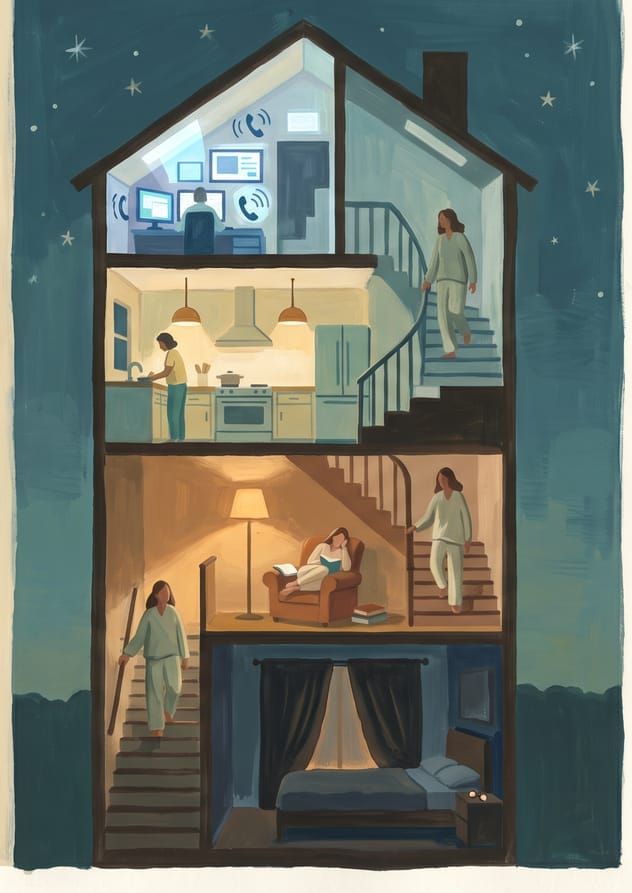
If the clock runs late and the day’s load has to drain before rest is possible, then the levers are environmental, and they are cheap to try.
Morning light first. The single most important move, repeated across the lived accounts, is real daylight soon after waking — outdoors, not by a window. Tilli spent two hours outside at sunrise and was specific about why the window doesn’t count: “I quickly realised that sitting by a window wasn’t enough.”
Why does morning light matter so much? Because the body clock reads light the way you read a clock face. Outdoor daylight, even under cloud, is hundreds of times brighter than indoor lighting, and a morning dose of it tells your internal clock when the day began — which, hours later, is what decides when your body starts its own wind-down. A window takes most of that signal away before it reaches you. The move is simple: get outside, soon after waking, and let the sky set the start of the day. She also cut caffeine entirely and moved her last meal about five hours before bed. Two hours outside is her regimen, not a prescription; ten minutes of daylight is a fair place to begin, and she later found an hour to ninety minutes, every other day, was enough. Attach it to something you already do: the walk to the letterbox, standing in the garden while the kettle boils.
Sound and texture are load-bearing, not cosmetic. The bedroom has to feel safe before sleep is possible — dark enough, quiet enough, the sheets tolerable against your skin, the temperature right. These details are not fussiness; they are the conditions your body requires to rest. Work through the senses one at a time: the label in the collar, the seam down the middle of the sheet, the streetlight through the curtain gap, the fridge hum that starts at 3am. Autistic sensory sensitivity is on the National Autistic Society’s own list of why sleep goes wrong, so this is not you being difficult — it is the actual mechanism.
That fan is a mask — a steady sound that covers the unpredictable ones — and it has worked every night for three decades. If a fan does that for you, the answer is not to wean yourself off it. The answer is to notice which sound it masks, and maybe give yourself more of that. The goal is a room your body reads as safe. It does not need to look restful in a catalogue.
Give the last ninety minutes a shape. A fixed, low-input wind-down you actually like — the point is less stimulation in the final stretch, not a moral lecture about screens. Pick a sequence and repeat it until the sequence itself becomes the signal: the same lamp dimmed to the same level, the same book or quiet video, the same order of small closing tasks. The routine is not a ritual because it is magic; it is a ritual because a body clock learns cues, and repetition is the cue. What you put in the last stretch matters less than that the last stretch exists — ninety minutes in which nobody can need anything from you and nothing new gets taken in.
When to Bring in a Clinician
Two things are worth taking to a professional.
The first is melatonin. The two lived voices in this article land on opposite sides of it: one could not tolerate it at all, the other calls it life-changing. That split is the lesson — efficacy, dose and tolerability vary a lot from person to person, and in the UK it is prescription-only. If you are considering it, that is a conversation with your GP, not a shelf decision.
The second is a sleep diary kept for two weeks. It turns “I can’t sleep” into something a clinician can actually read, because you can hand the page to a GP and let them see the impact for themselves. The National Autistic Society recommends it as a first step: “Keeping a sleep diary will highlight any unusual patterns of sleep and identify factors which may be influencing your ability to sleep.”
Keep it simple — bedtime, wake time, roughly how much you slept, and one line about the day. Two weeks is enough for the pattern to show itself, and having it on paper changes the conversation: you are no longer someone describing a vague problem, you are someone presenting data about your own body.
Where to Go Next
- National Autistic Society — Sleep guide(opens in a new tab)
Plain-language strategies and a starting point for the bedroom you actually need.
UK
- Scope — Keeping a sleep diary(opens in a new tab)
How to keep a sleep diary, with a free template to print.
UK
- Mind — Sleep problems(opens in a new tab)
For when the sleep problem is tangled up with anxiety and mental health.
UK
Start small and start tonight. Before you get into bed, make one change to the room — a darker corner, a sound that masks the street, a sheet that feels like nothing. Tomorrow morning, get outside for ten minutes. No earlier bedtime, no resolve, no scoreboard. The clock did not get set wrong in a week and it will not be reset in one either — but light in the morning and a room that feels safe at night are the two moves the evidence and the lived accounts agree on, and both are yours to make before anyone asks you whether you have simply tried going to bed earlier.