The 5pm Sensory Bill: Why Parenting Hits Autistic Adults Hardest at the End of the Day
Why family life can overload autistic parents, what they bring to parenting, and the home changes that lighten the load.
OwnmindedPublished 10 min read
You are not imagining this
The baby is crying, a toy is playing the same tune for the tenth time, and a small person is climbing on your back. You slept in two-hour pieces last night. By dinner, every sound feels like it is happening inside your head. Then you wonder why other parents seem to cope.
Many autistic parents describe this daily overload, and it has clear causes. Autistic people often process sensory input more intensely, and family life delivers a lot of it at once, with few chances to recover.
This article covers why parenting is so draining for autistic adults, who tends to be overlooked, what autistic parents do well, and the practical changes that reduce the load.
Why does family life hit the senses so hard?
Parenting creates several sensory demands at the same time, and they often go beyond a parent’s existing sensitivities . The main sources are:
- Sound: a baby crying, toy noises.
- Touch: breastfeeding, physical touch.
- Sight: visual stimuli.
Boudica Atheldene, a neurodivergent parent of three neurodivergent children and Peer Supporter at Autistic Parents UK, says overstimulation is neurobiological overload, not personal failure: “your brain is processing more information at once, often without the usual filters” .
The old coping tools disappear
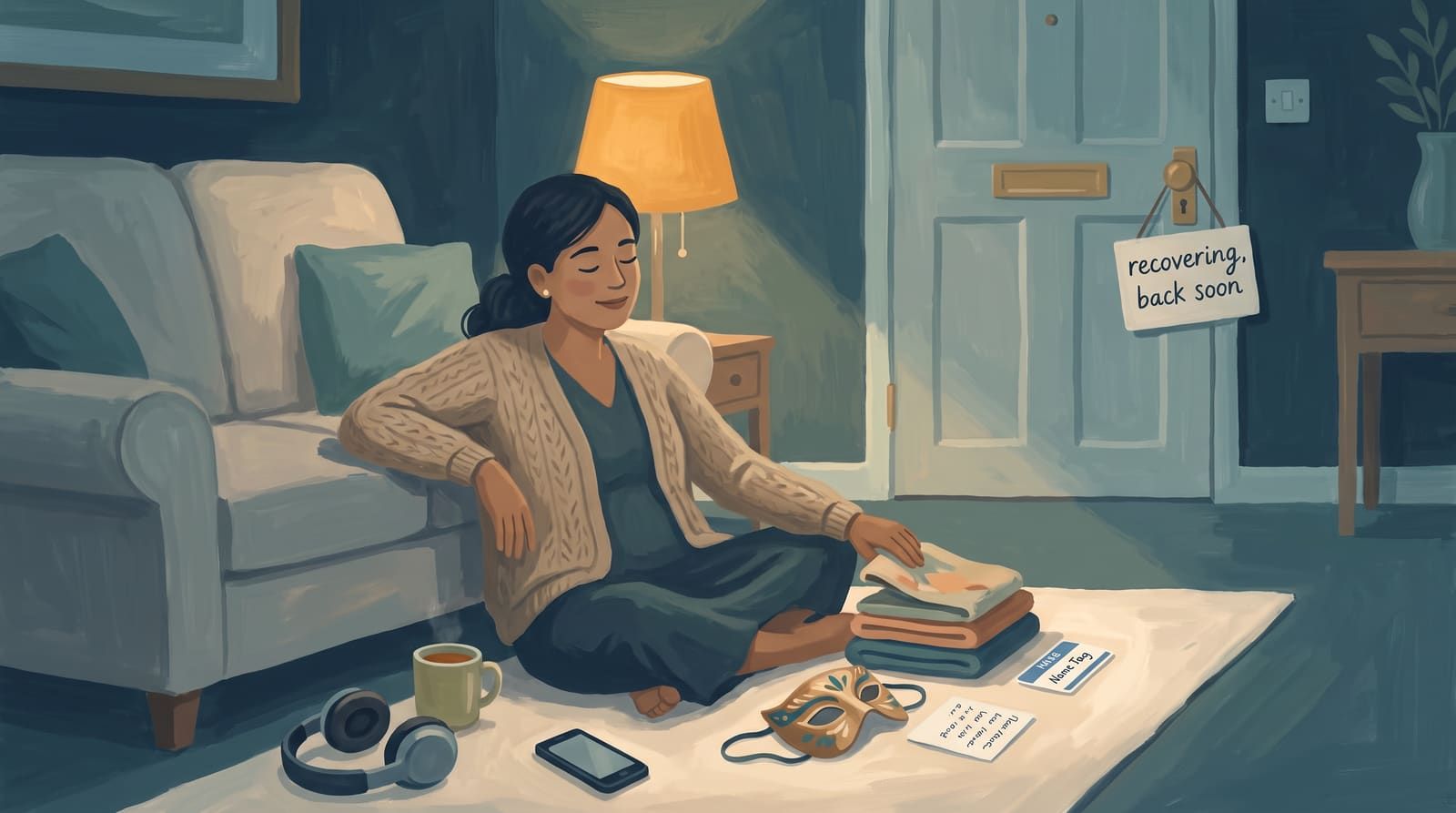
Before children, many autistic mothers managed overload with alone time, physical activity and focused interests. Parenthood often takes away access to all three, which leaves them without a way to come down from overstimulation .
Sleep loss and overwhelm that loops
Broken sleep from infant care adds to the exhaustion and affects mental health, making it even harder to stay regulated. Overwhelm can also pass back and forth: when a parent is dysregulated, a baby finds it harder to settle, which adds to the parent’s load in turn . This is a loop, not anyone’s fault.
What does the load look like day to day?
The same household can hold very different sensory needs. A parent who avoids stimulation may have a child who seeks it, or the other way round, and that mismatch can make overwhelm worse for both .
| Source of load | Everyday examples |
|---|---|
| Sound | A baby crying, toy noises |
| Touch | Breastfeeding, physical contact through the day |
| Sight | Visual stimulation around the home |
| Sleep | Night-time infant care |
| Mismatched needs | A sensory-seeking child and a sensory-avoiding parent |
| Lost coping time | No time alone, for exercise or for focused interests |
Who gets overlooked?
Most autistic mothers find out they are autistic after becoming parents, often when their child is diagnosed . That means many parents spend years struggling with sensory overload without a name for it.
Autistic traits are also common among parents of autistic children more broadly. A 2026 study found that 41% of fathers and 26% of mothers of autistic children showed high levels of autistic traits, compared with 15% of fathers and 8% of mothers in a comparison group.
- Fathers of autistic children
- 41%
- Comparison fathers
- 15%
- Mothers of autistic children
- 26%
- Comparison mothers
- 8%
The most common trait was difficulty with pragmatic language, the unwritten rules of social talk: 61% of mothers compared with 20% of mothers in the comparison group.
- Mothers of autistic children
- 61%
- Comparison mothers
- 20%
Mental health needs can go unnoticed too. Autistic mothers have higher rates of postpartum depression, anxiety and OCD, often alongside an ADHD diagnosis .
Support has not caught up. A synthesis of qualitative studies found that autistic adults report few supports designed for autistic parents.
What do autistic parents bring?
The same traits that make noise and touch hard can make someone a careful, observant and committed parent. The same synthesis found that autistic parents describe a strong emotional connection with their children, a deep need to advocate for them, and parenting as a key step in their own personal development .
The Autism Society of North Carolina lists several strengths autistic parents often show :
- Pattern recognition: noticing small changes in the home and in a child’s behaviour that others might miss.
- Built-in structure: visual supports, predictable routines, sensory accommodations and alternative ways to communicate.
- Curiosity about behaviour: asking what a child is trying to communicate, rather than only trying to stop the behaviour.
- Informed advocacy: learning how systems work.
Shared neurotype can help too. In a 2025 study of positive parenting experiences, one autistic parent raising an autistic child said, “I come better equipped than some of my neurotypical peers,” because of shared sensory and communication patterns .
Practical changes that reduce the load
These changes work on the setting and the demands, not on making yourself tolerate more. Sensory needs differ from person to person, so treat each idea as something to test and adjust.
1. Turn down the sound
Some autistic parents use noise-cancelling headphones or earplugs to take the edge off the day’s noise .
2. Build quiet into the day
Rather than waiting for overload, some parents get up early for quiet time and set breaks at fixed points in the day. Regular breaks, time alone and access to personal interests are all recognised self-regulation tools, and screen time can count as one of them .
3. Adjust the home
Ambitious about Autism lists environmental changes that reduce sensory load: dim lighting, noise-cancelling headphones, decluttered spaces and a designated safe space that supports regulation .
4. Make routines predictable and visible
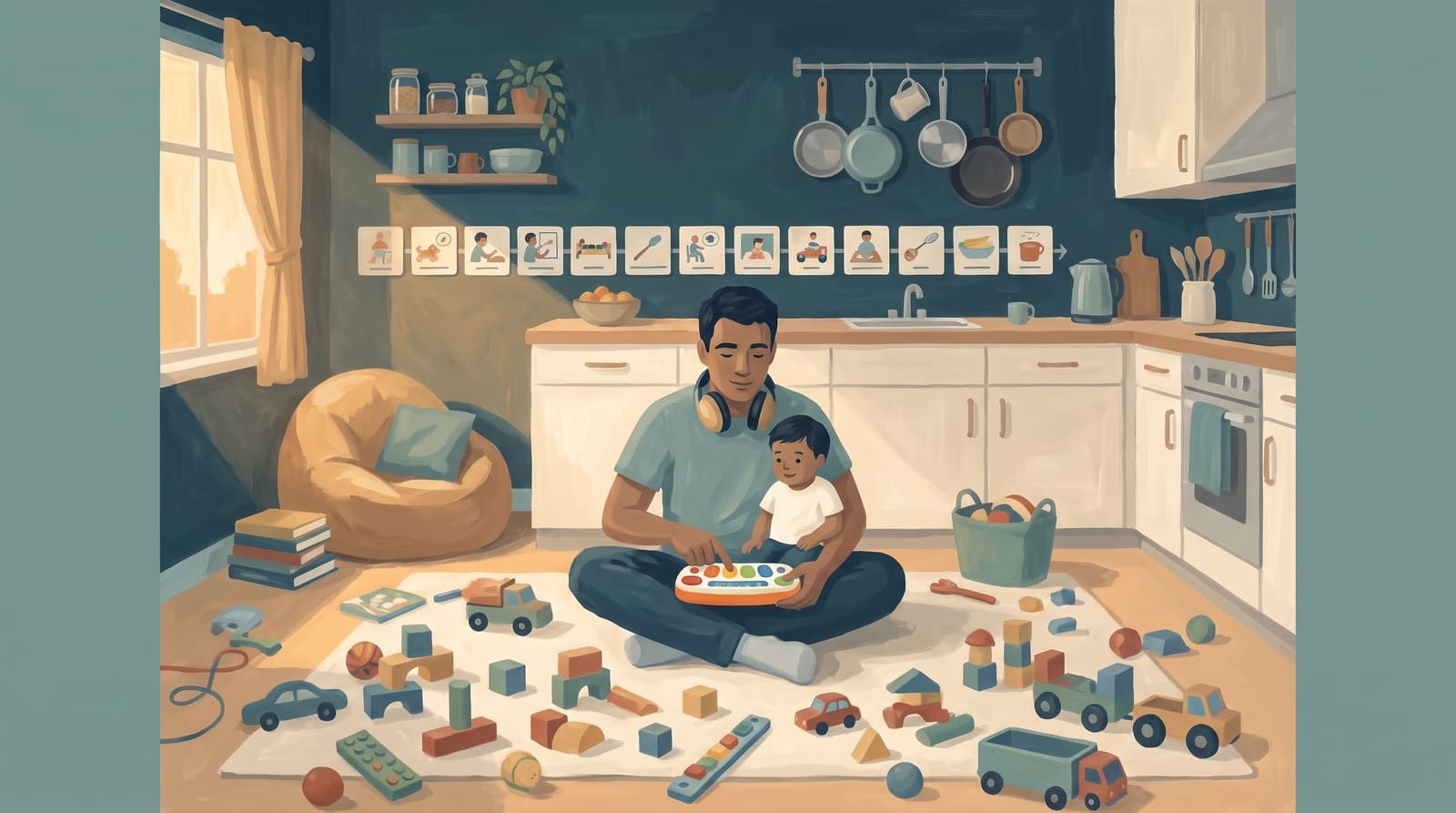
Predictable daily routines with visual supports, plus advance notice when something will change, reduce overwhelm and support self-regulation . Many autistic parents already build this kind of structure without being told to, which is one of the strengths listed above.
5. Help children name their own triggers
When sensory needs clash, it helps if everyone in the house can say what is too much. Teaching children to recognise their own sensory triggers and find their own coping strategies builds self-advocacy and independence .
6. Build a sensory village
Summary
Parenting asks autistic adults to handle constant sound, touch, visual clutter and broken sleep, often after losing the coping tools they relied on. Many only learn they are autistic after their child is diagnosed, and few supports are built for them. Autistic parents also bring real strengths: close attention, clear structure, curiosity about behaviour and determined advocacy. The load is not a personal failing, and it can be reduced by changing the home, the routine and the support around you.
Resources
- Autistic Parents UK(opens in a new tab)
Peer support groups, webinars, training and a resource library by autistic parents.
Autistic-ledUK
- Neurodivergent Insights: Autistic motherhood(opens in a new tab)
An explainer on sensory load, sleep and mental health for autistic mothers.
- Autism Society of North Carolina: Reframing parenting strengths(opens in a new tab)
Autistic parents on what they bring to family life.
US
- Ambitious about Autism: Sensory overload guide(opens in a new tab)
Practical ideas for a lower-sensory home.
UK
Sources (8)
- Psychology Today (2024). Understanding the Unique Challenges of Autistic Mothers. Psychology Today.
- Autistic Parents UK. It's Not Just You: Why Autistic Parents Deserve Sensory Support – and a Sensory Village. Autistic Parents UK.
- Neurodivergent Insights. Autistic Motherhood and Daily Life. Neurodivergent Insights.
- Frontiers in Psychiatry (2026). Parental broad autism phenotype traits and executive function in families of children with autism spectrum disorder. Frontiers.
- Systematic review and meta-synthesis of qualitative evidence on the autistic parenting journey. PubMed.
- Autism Society of North Carolina. Reframing Parenting Strengths: What Autistic Parents Bring to the Table. Autism Society of NC.
- Heyworth, M., McMahon, C., Tan, D.W., & Pellicano, E. (2025). Parents' Positive Experiences Parenting Autistic Children. Autism in Adulthood.
- Ambitious about Autism. Sensory Overload and Autism: A Guide for Parents. Ambitious about Autism.