Autistic Special Interests Are Not Obsessions: How to Tell the Difference
What autistic special interests are, how they differ from OCD, what they do for wellbeing, and when one is really causing harm.
OwnmindedPublished 15 min read
“He’s obsessed again”
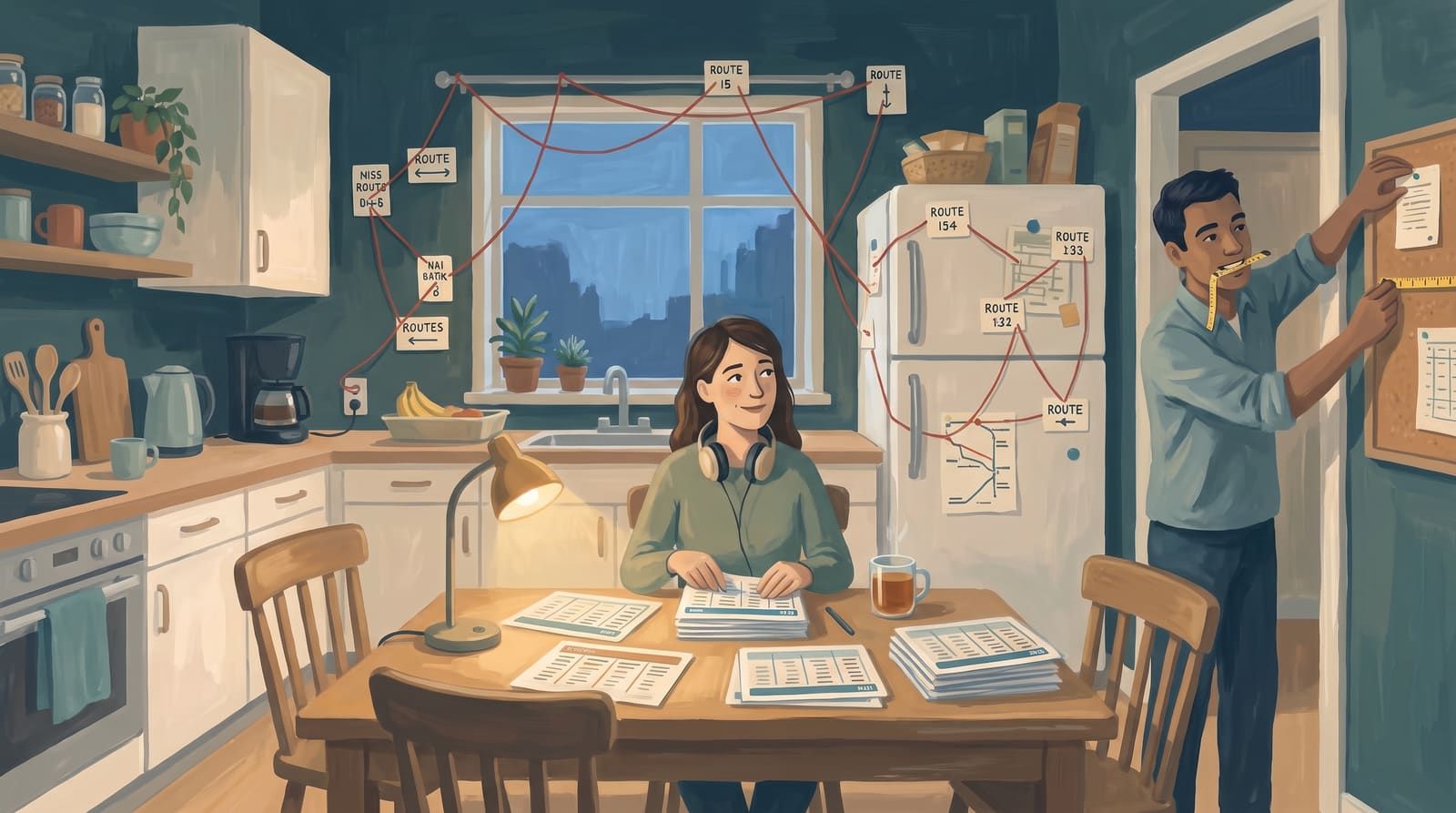
You have heard it said across a kitchen table or in a school meeting: they are obsessed with trains, or maps, or one video game. Maybe it was said about your child, your partner or you. The word lands as a diagnosis, and it carries a quiet instruction to cut back.
“Obsession” is usually the wrong word for an autistic special interest, and using it leads to the wrong fix. Autistic adults describe their interests as part of who they are and as the thing that keeps them steady, while research links them to calm and wellbeing. Interests can cause trouble, but the trouble often comes from intensity with nothing around it, from OCD borrowing the interest, or from how other people react. Knowing which is which changes what you do next.
How common are special interests?
Intense interests are not a rare quirk; they are close to the norm in autism. Studies using dedicated questionnaires put the share of autistic people with restricted interests at 75% to 88%, and most have more than one kind. In a 2018 survey of autistic adults, about two thirds reported a special interest, with topics such as computers, autism, music, nature and gardening, and most had several.
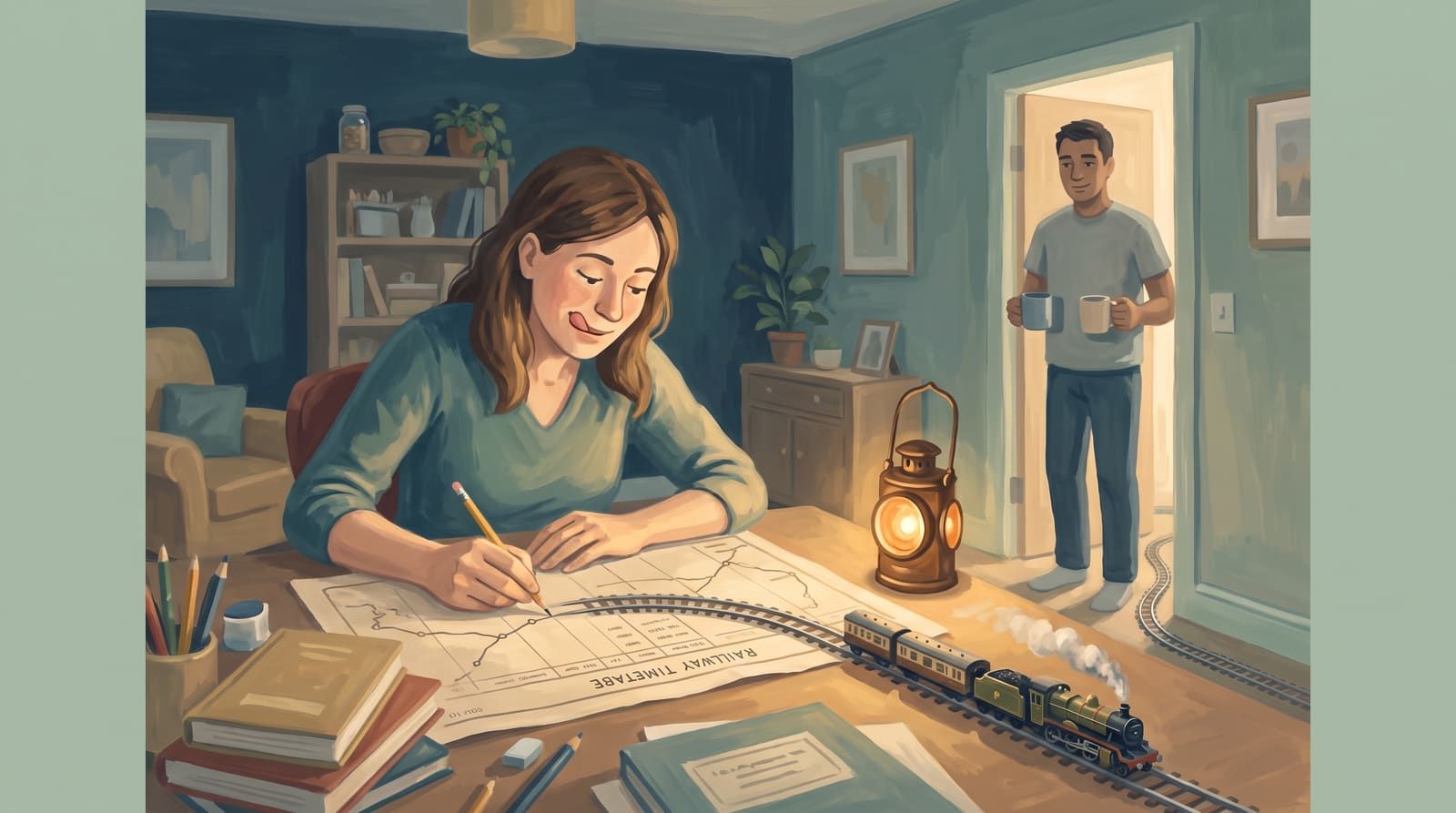
The topics themselves are often ordinary. Researchers describe two broad kinds: interests in everyday subjects such as maths, art, TV shows or video games that are unusually intense, and interests in less usual subjects such as road signs, dates or train timetables. Sensory fascinations, like bright colours or spinning objects, belong in the same family.
What marks an interest out is usually depth and pull, not subject. That matters, because it is easy to call a child’s love of video games ordinary and a love of bus routes strange when the two may work in the same way. It may also explain why a clinic observation can miss them: in one study of autistic children and teens, about 75% of 237 parents said their child had a restricted interest, yet more than half of the children and teens were rated as showing none on a standard clinical observation item. The people who live with the interest see it most clearly, which is why their description of what it does carries weight.
A hobby you can pause, an interest you cannot
Many autistic adults describe a special interest as something they need, not something they choose. Thøger Kari Hass, an autistic writer diagnosed at 34, draws the line simply: a hobby can be put on hold when life gets busy or stressful, and a special interest works the other way round. He describes the interest as a place where he sets the rules, in contrast to a social world whose rules feel vague to him.
That is why an interest often flares exactly when things are hardest. For Hass, when social contact and changes of plan wear him down, the way to avoid a full meltdown is quiet, fewer stimuli and time with his interest. To an onlooker it can look like avoidance. To the person, it is recovery.
The research has caught up with this account. In a study comparing 60 autistic and 122 non-autistic adults, Mareike Bayer and Isabel Dziobek found that autistic people relied on their interests more to regulate emotions and to cope in exhausting situations. Experts once read interests mainly as a way to escape anxiety, but newer work suggests they are rewarding in their own right.
Autistic adults themselves mostly agree. In a 2017 study of 80 autistic adults, nearly all called their interests calming, and some used the word “lifeline”.
- Called them positive
- 65 of 80
- Called them calming
- 74 of 80
- Said children's interests should be encouraged
- 77 of 80
If an interest is how someone gets back to baseline, then taking it away removes a tool, not a habit. That is the first reason the word “obsession” misleads. The second is that real obsessions exist, and they feel very different from the inside.
What makes an obsession different?
The clearest test is how the thing feels to the person doing it. In an interview study of 15 autistic adults with symptoms of obsessive-compulsive disorder (OCD), Hannah Long, Kate Cooper and Ailsa Russell at the University of Bath found a sharp split. Participants saw their repetitive behaviours and interests as part of who they are, while OCD conflicted with how they saw themselves and kept anxiety going. The emotions differed too: OCD brought negative feelings, while interests came with many different ones.
The table sets out the contrast those participants described.
| Aspect | Focused interest | OCD |
|---|---|---|
| Sense of self | Part of who I am | Conflicts with how I see myself |
| Feelings while doing it | Many different emotions | Mostly negative emotions |
| Link to anxiety | Often a way to manage it | Keeps it going |
| Wanted by the person | Yes | No |
From the outside, the two can look alike. Lining up objects might be a “just right” compulsion, or it might be someone organising the items of their interest the way they prefer. So watching the behaviour tells you little; asking how it feels tells you a lot.
The two can also tangle. Participants described OCD latching onto their routines and interests, turning something neutral into something negative and pulling interests into the content of obsessions. The paper’s title captures it: autism is the arena and OCD is the lion.
For a parent, partner or the autistic person, this gives a better question than “is this too much?” Ask whether the interest still feels like yours and still brings a range of feelings, or whether it has started to feel driven, anxious and unwelcome.
When intensity becomes the problem
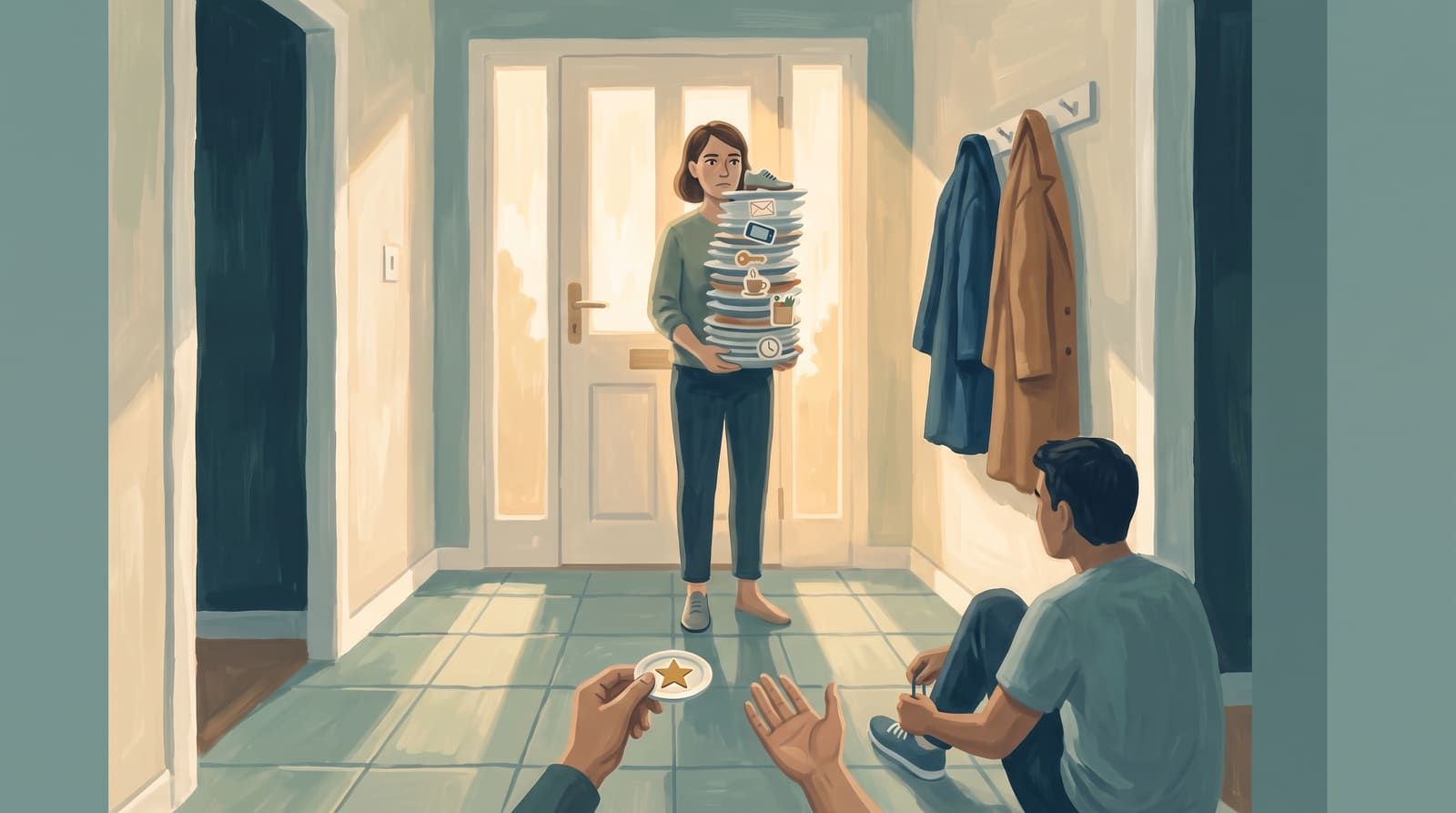
Even without OCD, an interest can tip from helpful to costly. The research points to a balance: both too much intensity and too little time are linked to poorer mental health. The 2018 survey found that being motivated by an interest went with higher wellbeing, but very intense engagement went with lower wellbeing. A 2023 University of Bath thesis comparing 120 autistic and 126 non-autistic adults found the same two-sided pattern.
Part of the reason may be attention. An experiment by Foss-Feig’s team found that images of a child’s own interest made the brain’s attention-directing network far more active in autistic children, and the children with the strongest response were those whose parents reported the most day-to-day difficulty. In plain terms, an interest can pull an autistic child’s attention harder, which may be one reason it interferes with daily life.
These findings are links, not proof of cause, and they cut both ways. An interest that is intense might be a sign of stress rather than its source, as Hass’s account of reaching for his interest under strain suggests. What the data do not support is cutting the interest off: in the Bath thesis, autistic adults reported more distress and more disruption to daily life when they could not engage in their interests. The aim is a shape around the interest, not a smaller interest.
The harm that comes from other people
Much of what goes wrong with special interests happens around them, not inside them. In the Bayer and Dziobek study, autistic adults relied on their interests more than non-autistic adults did, and also faced more stigma and negative reactions for having them. A survey of 72 autistic adults in the Journal of Vocational Rehabilitation found that bullying over an interest was linked to more depression, anxiety and stress, and that having no one in your life who supported it was linked to more stress.
Some adults in that survey reported hiding their interests. One wrote that it hurts when people mock the interest or refuse to listen. The same thing starts early. Teachers and therapists often discourage interests in the belief that they distract from schoolwork, and in a 2000 study a boy fascinated by calendars described how it felt when his interest was dismissed.
So when an interest seems to be “causing problems”, it is worth checking where the problem actually sits. Teasing, shame and a lack of anyone to share it with are harms the people around the interest can change.
From lifeline to livelihood
Interests do more than calm; they build knowledge, and that knowledge can carry into school and work. Researchers note that some interests can support educational and job success because of the expertise people build. In a 2017 survey by Kristie Patten’s team at New York University, 62% of respondents said their interests had helped them succeed, and 86% were working or studying in a field that used the interest.
Yet many autistic adults never get that chance. The vocational survey found interests were rarely used in people’s jobs, and those not employed in their interest reported more depression. The authors warn that a matching job alone is not enough: a supportive workplace and individual accommodations matter too.
What helps
Across home, school and work, the same idea recurs: work with the interest and build structure around it, rather than rationing it.
For parents
Naomi Hazlett, an occupational therapist writing for Autism Ontario, suggests treating an interest as a way into self-care, school, fun and friendship. Her examples include ranking Star Wars characters from good to bad to talk about helpful and unhelpful behaviour, and playing Dungeons & Dragons to practise turn-taking. When an interest is swamping the day, she recommends structure set out in advance.
Adding structure around an interest
- Agree the time first. Say before you start how long you will spend on the interest before moving to something else.
- Name the steps. Make clear what the steps are and when the activity is finished.
- Build in breaks. Put pauses between stretches of talking about or doing the interest.
- Check the listener. Help your child notice whether the other person is interested, and when it is their turn to talk.
Setting the frame before you begin is the core of the approach. The point is predictability for the child, not a cap on the interest.
For teachers
Some teachers worry an interest will distract, but Shari Boylan, a special-education master teacher at P.S. 32, argues the interest is on the child’s mind regardless. Educators are now working interests into the curriculum rather than discouraging them.
For partners and family
A shared understanding can turn an argument into a plan. Hass says his wife came to see that he sometimes needs his interest during family hours to get through the week, and that he now rarely reaches the edge of meltdown.
For employers
The vocational study’s advice is to look for a person’s interest when shaping their role, and to pair that with a supportive workplace and individual accommodations. Deep, odd knowledge can be exactly what a team lacks: Van Kirk, profiled by The Transmitter, once solved a serious security problem for a client by spotting a tiny anomaly in reams of code.
Room, not removal
“Obsession” asks one question: how do we make this smaller? Autistic adults and the research point to better ones. Is this interest still the person’s own, or has OCD moved in? Is it getting a fair shape in the day, neither swallowing everything nor being squeezed out? And are the people around it helping, or adding the shame and bullying that make things worse?
Most of the time, the answer is to make room: time, structure and someone who listens. That is not indulgence. For many autistic people, it is how they stay well.
- Autism Ontario(opens in a new tab)
Canadian autism charity whose parent handouts include ways to use special interests in everyday life.
Canada
- The Mighty(opens in a new tab)
Community publishing site where autistic writers, including Thøger Kari Hass, describe their special interests in their own words.
Get new articles by email
One short email when we publish something new. Evidence-informed writing on autism in adulthood, no spam.
Sources (9)
- Uljarević, M., et al. (2021). Towards better characterization of restricted and unusual interests in Youth with Autism. Autism, 26(5), 1296–1304.
- Long, H., Cooper, K., & Russell, A. (n.d.). 'Autism is the Arena and OCD is the Lion': Autistic adults' experiences of co-occurring obsessive-compulsive disorder and repetitive restricted behaviours and interests. Autism.
- Hass, T. K. (2017). The Necessity of Special Interests for Me as a Person on the Autism Spectrum. The Mighty.
- Grove, R., Hoekstra, R. A., Wierda, M., & Begeer, S. (2018). Special interests and subjective wellbeing in autistic adults. Autism Research, 11(5), 766–775.
- Bayer, M., & Dziobek, I. (n.d.). Special Interests in Autism: Functions, Benefits, and Challenges. DOI 10.1177/13623613261471572.
- Hernandez Mancilla, N. (2023). Understanding relationships between restricted repetitive behaviours and mental health in autistic people without intellectual disability. Doctoral thesis, University of Bath.
- Laber-Warren, E. (2021). The benefits of special interests in autism. The Transmitter (Spectrum).
- Journal of Vocational Rehabilitation (n.d.). Special interests, employment and mental health of adults with ASD (DOI 10.3233/JVR-221218). IOS Press.
- Hazlett, N. (2024). Navigating Autistic Perspectives and Leveraging Special Interests for Everyday Enrichment. Autism Ontario.
How we research and write our articles: Editorial policySources & methodologyMedical disclaimer