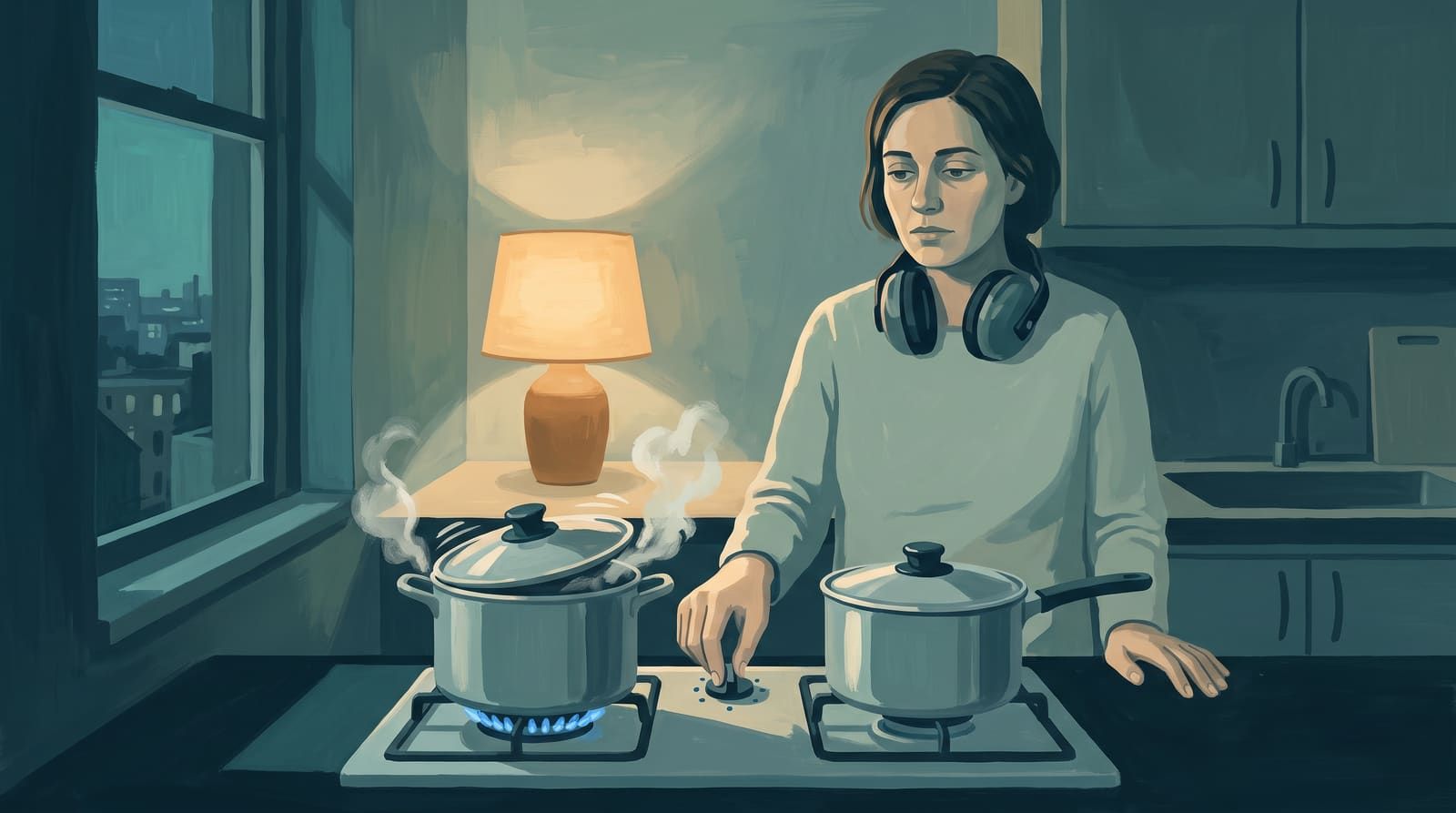
PDA and Demand Avoidance: When 'Can't' Gets Mistaken for 'Won't'
What demand avoidance and PDA mean, why the label is disputed, what seems to drive it, and why less pressure works better than rewards.
OwnmindedPublished 14 min read
The request that stops everything
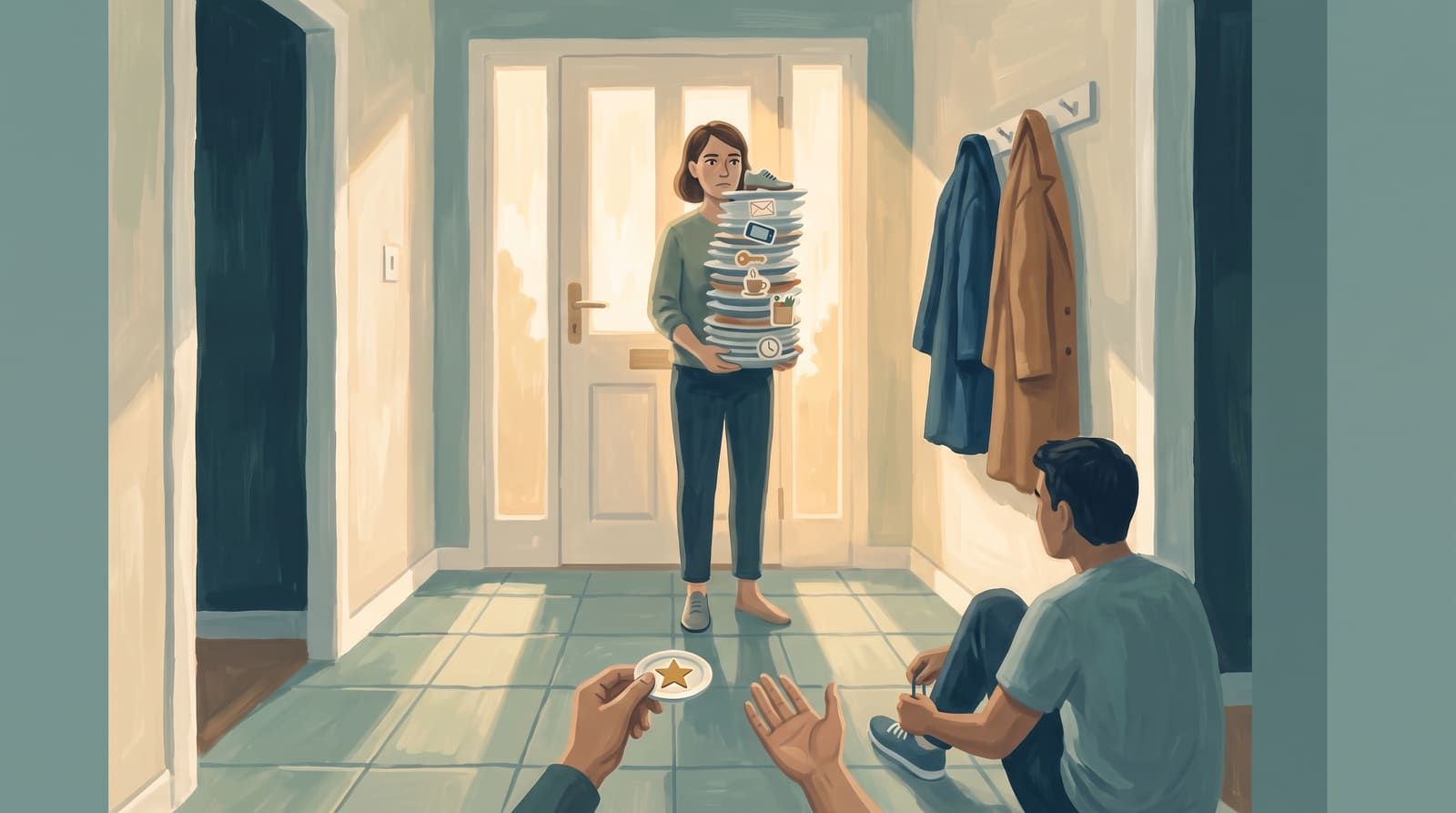
Someone asks you to put your shoes on, send one email, or start the thing you were actually looking forward to. Something in you locks. The harder the push, the tighter the lock, and the person asking reads it as stubbornness while you feel close to panic.
That pattern has a contested name, PDA, but the experience behind it does not depend on the name. The research on demand avoidance points to anxiety and a need for certainty and control, and autistic writers describe it as a drive for autonomy rather than a wish to defy. Whatever the label, the support that helps looks very different from conventional reward-and-consequence approaches.
Where PDA came from, and why it is disputed
PDA stands for pathological demand avoidance, and it began as one clinician’s observation rather than an agreed diagnosis. In the 1970s, Elizabeth Newson noticed that some children referred to her clinic resembled autistic children but differed from them in consistent ways. She coined the term in 1980, after identifying 21 children who showed many autistic traits alongside good eye contact, imaginative play and social ease. The central feature, in Newson’s criteria, was a need to avoid everyday demands to reduce anxiety.
Four decades on, the label has no place in the manuals clinicians rely on. A 2024 scoping review notes that PDA does not exist in the DSM-5 or ICD-11, that there is no consensus on its validity or features, and that research has been largely confined to the UK.
The doubts go back to the foundations. Newson’s original study has been criticised for circular reasoning, because she defined her groups first and then studied them. Much later research uses a questionnaire built on the features from that same paper, and neither that questionnaire nor a second assessment tool has yet been further validated. So a family told their child “has PDA” is hearing a description, not a settled medical category.
The debate is not only about evidence. People who agree the experience is real still disagree about where it belongs.
Views differ
A distinct profile
A profile within autism
For you, the useful takeaway is that the name matters less than the pattern. Some autistic writers, Enright among them, read the same letters as “persistent drive for autonomy”, which shifts the emphasis from a disorder to a need.
What demand avoidance feels like from the inside
The defining feature is not avoiding hard or boring tasks; it is avoiding demands as such, including the ones you set yourself. Enright describes avoidance that reaches the basic tasks of daily living and even things a person wants to do. That is what separates it from ordinary reluctance, and why “just do it, you like this” so rarely works.
Diane Gould, founder of PDA North America, frames it as a question of capacity. Demands pile up across a day, so what someone can manage varies with the demands of that particular day. She adds that many PDA people mask to fit in, which means teachers and professionals can miss that support is needed at all.
Adults describe the same pressure in plain terms. In a 2022 University of Bath survey study, adults with high demand avoidance spoke of anxiety as their main emotion and of losing control as catastrophic.
If the experience is that intense, the obvious question is what is setting it off.
Anxiety, uncertainty and the need for control
The strongest research lead is intolerance of uncertainty: finding the unknown so hard to bear that you work to remove it. In a 2019 study, Lisa Stuart and colleagues surveyed parents of 214 children and teenagers with diagnosed or suspected PDA. Both anxiety and intolerance of uncertainty predicted demand avoidant behaviour. The authors concluded that avoidance can be read, in part, as an attempt to make life more predictable so that anxiety eases.
The interviews showed what that looks like day to day. Parents described repeated questioning, verbal negotiation and avoidance, and there were few reports of aggression as a default response. The strategies shifted with the size of the demand: taking control, withdrawing into fantasy, and meltdown.
Seen this way, the repeated questioning and negotiating parents describe may be a child trying to make a demand feel safer. The Bath researchers go a step further and describe avoidance as a learned coping mechanism: escaping a demand brings back a sense of control and relief, which makes avoiding more likely next time. They also note the cost, since avoiding demands is likely to increase anxiety in the long run.
The word “control” carries a lot of weight here, and Enright argues it is often heard as manipulation. Swap it for autonomy, and the same behaviour reads as someone protecting their right to decide. For a parent or manager, that reframe changes the goal: you are no longer trying to win, you are trying to lower the threat.
Why rewards and consequences tend to backfire
If avoidance is driven by anxiety and a need for control, then adding pressure makes it worse, and most standard behaviour tools are pressure in disguise. A sticker chart is a demand with a prize attached; a consequence is a demand with a threat. Jilly Davis, a PDA Society trustee and trainer, puts it bluntly for schools. Davis adds that praise is itself an implied demand.
Research points the same way. Incentives do not reduce avoidance in people with high demand avoidance, which is one of the ways it is thought to differ from oppositional defiant disorder. The same paper cites earlier work suggesting that approaches recommended for autism, such as routine and structure, can be counterproductive where demand avoidance is clear.
Gould explains why behaviour plans fail with an image of a raised baseline. People with a PDA profile go from 0 to 60 so quickly because they are already sitting at 50. She also points out that concerning behaviour is often the person’s attempt to comply.
This is not a call for no expectations at all. It is a swap: the same goals, reached by a route that adds less pressure. The table below sets the usual tools beside the alternatives that PDA charities and educators suggest.
| Aspect | Usual approach | PDA-informed alternative |
|---|---|---|
| Instructions | Direct requests and commands | Indirect language, thinking aloud, suggesting rather than expecting |
| Rewards | Standard sticker or points chart | Personalised to what the person finds rewarding, given straight away |
| Praise | Praising the person | Acknowledging effort and admiring the outcome |
| Routine | Set by the adult | Planned by the person, with room for spontaneity |
| When things escalate | Consequences or threats | Spot early signs, divert, de-escalate |
None of these ideas is new. Newson herself advocated approaches built on novelty, humour and variety rather than compliance.
What helps
The common thread across every source is to lower the sense of threat and hand back real choice. Gould calls it a mindset rather than a strategy: respect and connection come first, and trust has to be earned. For adults, the Bath researchers suggest that a “low-demand, low-arousal approach”, first recommended for children, may be a useful starting point.
At home
Gould’s guidance for families centres on making demands lighter and the relationship stronger:
- Choose your priorities.
- Use indirect language, including thinking aloud.
- Let the person plan their own schedule and routines.
- Share tasks, and show you are equals rather than above them.
- Explain the deep why; something that does not make sense may be impossible to start.
- Resist consequences and threats, and say less rather than more.
Underneath the list is a simple test Gould offers: every task has a cost, so it has to be worth the stress and energy it takes. That helps you decide which battles are worth having at all.
At school
Davis recommends collaboration, focusing on the end goal rather than how the student gets there, and offering genuine choices about when, where, how and with whom they work. She also suggests watching for signs of overload and diverting long before a crisis, since outward behaviour usually sits on top of emotional, social and sensory strain.
At work, and for yourself
Adults can apply the same logic to their own days. Sophia K, writing about her own experience of PDA at work, notices that rigid managers make her defend her autonomy harder, and suggests carving out space for it even in structured jobs. Her suggestions include:
- Ask for flexible hours wherever possible.
- Set up your workspace so it feels comfortable and your own.
- Build in breaks where you alone decide what to do.
- Use noise-cancelling headphones or other boundaries when you need them.
She also recasts tasks as choices that serve your own goals, so “I have to attend this meeting” becomes “I choose to attend this meeting to contribute my insights”. The task stays the same; what changes is who owns the decision, which is exactly the part that demand avoidance protects.
A drive to protect, not a will to defy
PDA may never make it into a diagnostic manual, and the research behind it is still contested and mostly British. But you do not need the label settled to act on what the evidence and lived accounts agree on. Demand avoidance tracks anxiety, uncertainty and lost autonomy, so pressure feeds it and safety eases it.
That shifts the work away from the person and onto the setting: fewer and softer demands, real choices, and adults who earn trust instead of enforcing compliance. Gould sums up the realistic aim: you cannot always make things better, but you can avoid making them worse.
Resources
- PDA North America(opens in a new tab)
Guidance on defining and supporting PDA for families, educators and professionals.
North America
- Neuroclastic(opens in a new tab)
Autistic writing, including an explainer on where the idea of PDA came from.
Get new articles by email
One short email when we publish something new. Evidence-informed writing on autism in adulthood, no spam.
Sources (9)
- Haire, L. et al. (2024). Scoping review of research methods used to study PDA in children and adolescents. Frontiers in Education.
- differentnotdeficient (2019). What is Pathological Demand Avoidance (PDA)? Neuroclastic.
- Stuart, L., Grahame, V., Honey, E. & Freeston, M. (2019). Intolerance of uncertainty and anxiety as explanatory frameworks for extreme demand avoidance in children and adolescents. Child and Adolescent Mental Health.
- ACAMH. Intolerance of uncertainty underlies demand avoidance behaviours in children. ACAMH research digest.
- Enright, J. (2022). Autistic PDA: A Persistent Drive for Autonomy. Neurodiversity MB.
- White, R. et al. (2022). Understanding the Contributions of Trait Autism and Anxiety to Extreme Demand Avoidance in the Adult General Population. Journal of Autism and Developmental Disorders.
- Sophia K. Thriving with Persistent Drive for Autonomy: PDA in the workplace. Neurodiverging.
- Gould, D. Defining & Supporting PDA. PDA North America.
- Davis, J. and Quantrill, G. Understanding PDA. Teachwire.
How we research and write our articles: Editorial policySources & methodologyMedical disclaimer