School Can't, Not Won't: Why Some Autistic Children Cannot Go to School, and What Helps
Why some autistic children cannot attend school, how it differs from truancy, and what helps at school and at home.
OwnmindedPublished 10 min read
You are not imagining this
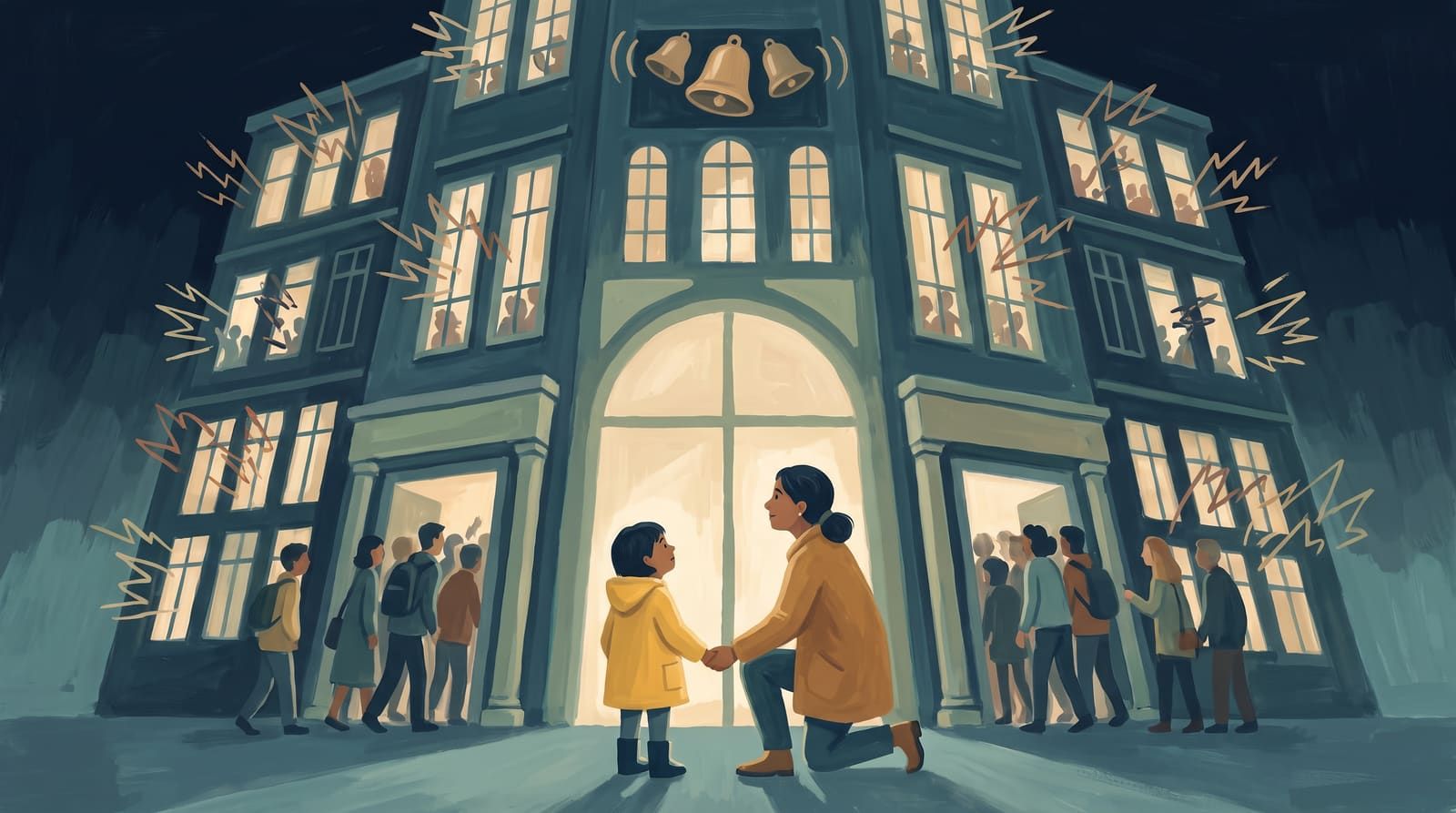
It is a school morning. Your child is dressed, but they cannot get out of the door. Their stomach hurts, they are shaking, and another email about attendance is waiting in your inbox.
Many autistic children reach a point where they cannot go to school, even though they want to. People call this “school can’t” to separate it from “school won’t”. This article explains why it happens, what the evidence says about burnout and anxiety, and what adults at home and at school can change.
What does “school can’t” mean?
“School can’t” describes a child who wants to attend and learn but is unable to. Ella, a 12-year-old autistic student, put it this way: “I WANTED to learn something. I didn’t want to learn nothing. I just couldn’t.”
Schools and researchers use several names for the same pattern:
- School refusal: the older term. Critics say it implies wilful disobedience and places the blame on the child.
- Emotionally based school avoidance (EBSA): severe difficulty attending school because of significant emotional distress. It better reflects a child who cannot manage overwhelming conditions.
- School can’t: a phrase used to name the inability directly.
How is it different from truancy or defiance?
Truancy means deliberately skipping school. Among autistic students, truancy is almost non-existent. A 2020 study of the types of non-attendance in autistic students found that most missed days fell into other categories.
| Type of non-attendance | Share of autistic students’ non-attendance |
|---|---|
| School refusal (EBSA): distress makes attending too hard | 43% |
| Non-problematic absence | 32% |
| School exclusion | 9% |
| School withdrawal | 9% |
| Truancy | Almost none |
Other research points the same way. In a 2023 study of school distress, 94.3% of attendance problems were underpinned by significant emotional distress rather than behaviour, and 92.5% of children with school distress had clinically significant anxiety.
This matters for what adults do next. If the problem is seen as defiance, the response is pressure and consequences. If it is seen as distress, the response is support and adjustment.
Why is school so hard for some autistic children?
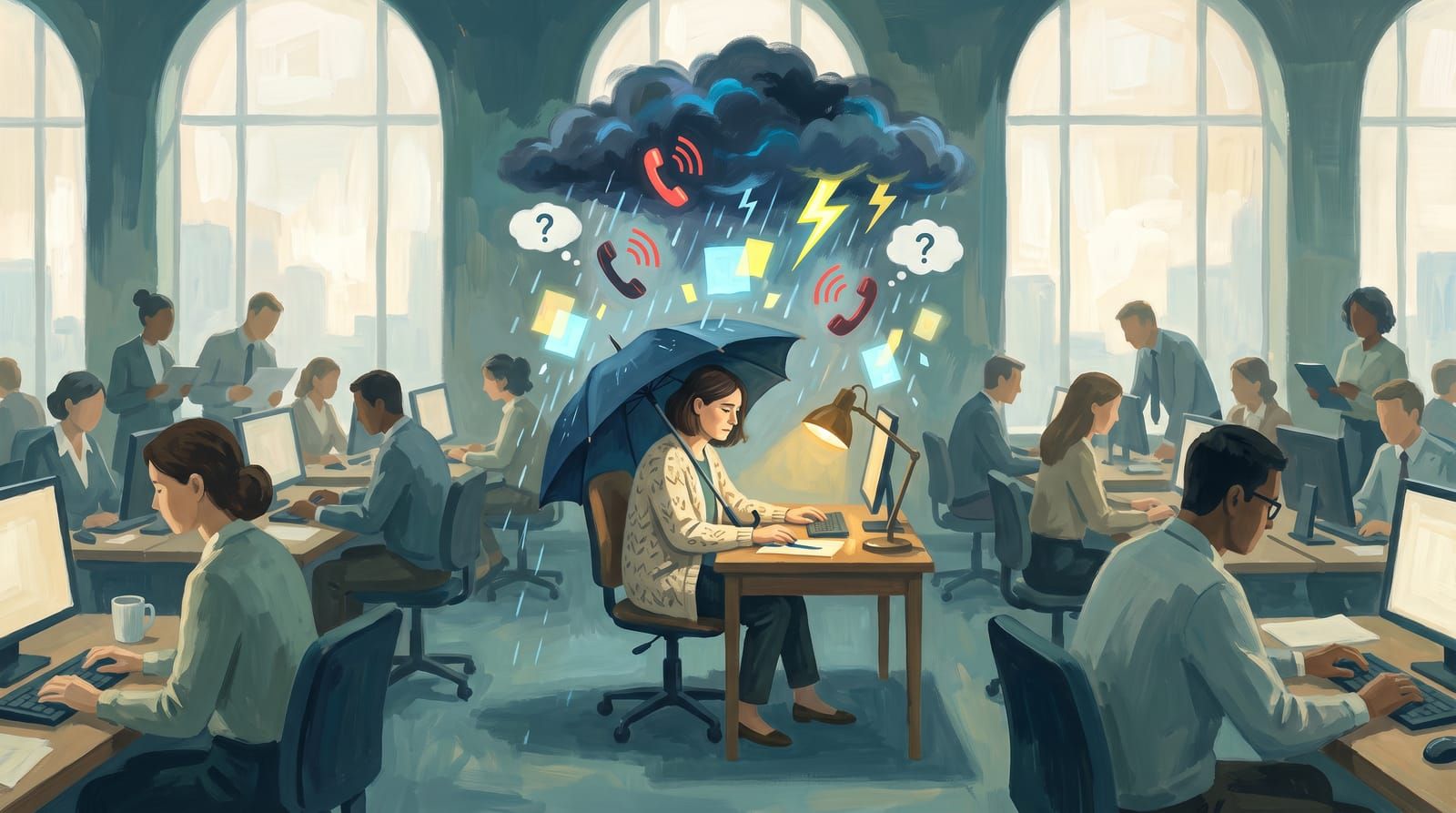
A school day stacks several kinds of load on top of each other. Autistic students describe the drain in their own words.
- Sensory overload: loud noise can block learning altogether. Ella described classmates shouting as “like a huge wave of sound, that completely overwhelmed the center of my brain and irritated it.”
- No filter: Leonie, 15, said: “due to my autism I couldn’t filter the stimuli around me. And I perceived everything more intensely.”
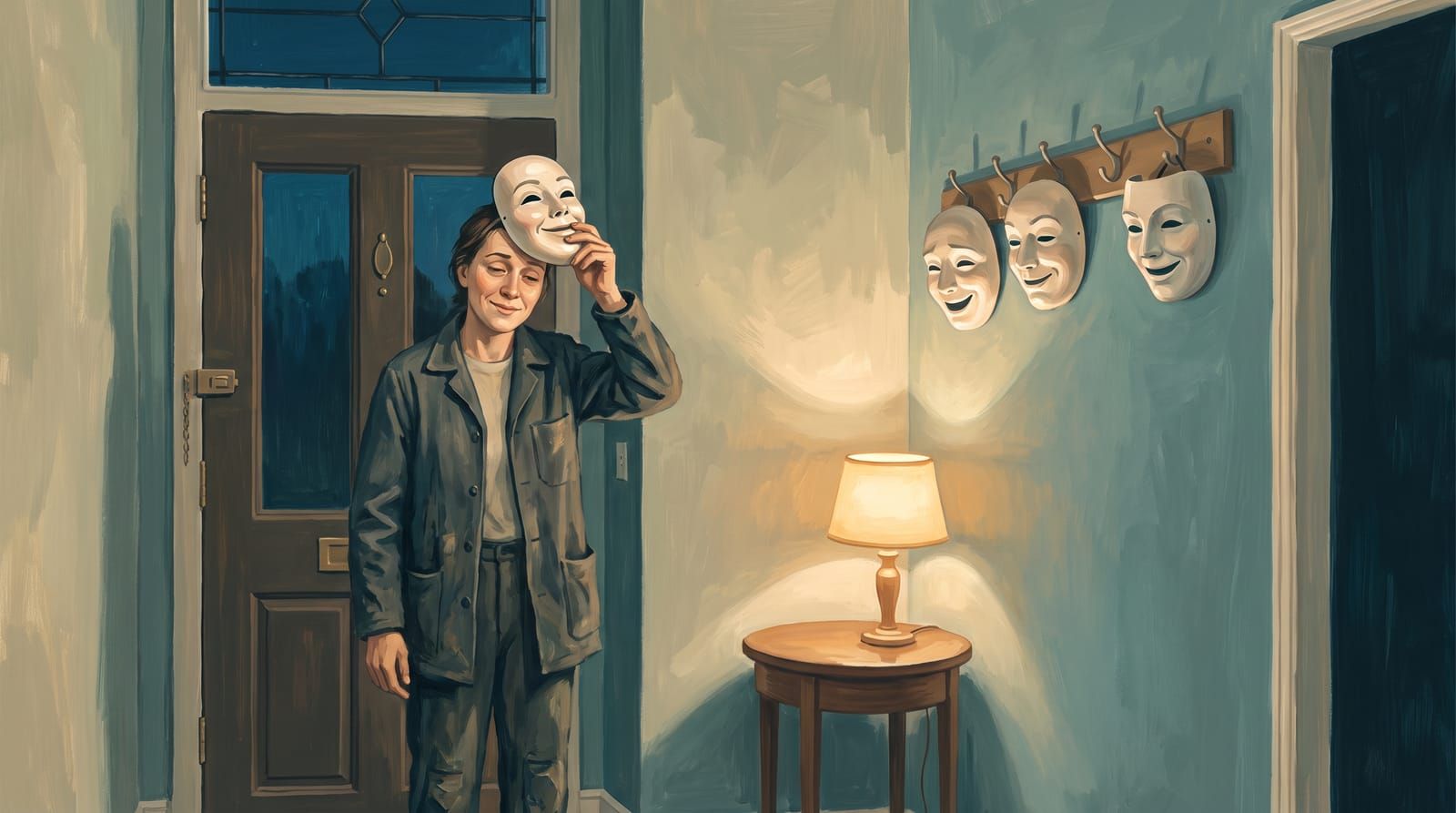
- Masking: many students hide their autistic traits to fit in. They describe feeling out of place, having to pretend all day, and a school day made up only of stress.
- Social demands: feeling out of place and having to pretend add to the sensory load.
Masking is exhausting because it is constant and invisible. The Stimpunks Foundation describes it as a trap: burnout drains the energy a child needs to appear acceptable, so the longer they mask, the less able they become to attend.
Sensory needs stand out in the numbers too. 61.6% of autistic children with school distress had sensory processing difficulties, compared with 36.8% of non-autistic neurodivergent children with school distress.
- Autistic children
- 61.6%
- Non-autistic neurodivergent children
- 36.8%
Could it be autistic burnout?
Autistic burnout is best known in autistic adults, but the same signs show up in autistic children who cannot attend school.
Leicestershire Partnership NHS Trust’s autism guidance reports that autistic children who are unable to attend school show the same set of signs.
- Chronic exhaustion that goes on and on.
- Loss of skills and interests: things your child could do or enjoyed before become hard or stop.
- Increased sensory needs: input they used to manage becomes too much.
- Social withdrawal from other people.
- Mood dysregulation: big, fast changes in emotion that are hard to calm.
- Physical symptoms in the body, not only distress in the mind.
Ann Memmott, an autism advocate, makes the same point about exclusion: “We cannot simply exclude autistic pupils for entering meltdowns. Meltdowns are part of autism for a good number of autistic young people… the way to achieve safety is to stop hurting the autistic children.”
What the evidence says about scale
The 2023 school distress study found that autistic children were far more likely than non-autistic peers to experience school distress, with odds more than 46 times higher. Of the children currently in school distress, 83.4% were autistic.
For autistic children, the distress also started earlier, at an average age of 7.9, and lasted longer, about four years on average. Yet only 32.8% of children with school distress received any support from school, which the authors describe as a systemic failure of services.
What helps at school
The starting point is to change the environment before trying to change the child. Carney and colleagues, who developed a neuro-affirming absence resource for Scotland’s National Autism Implementation Team, call this an “environment-first” approach: adapt the setting, and plan adjustments ahead of time rather than reacting to crises.
1. Adjust the sensory environment
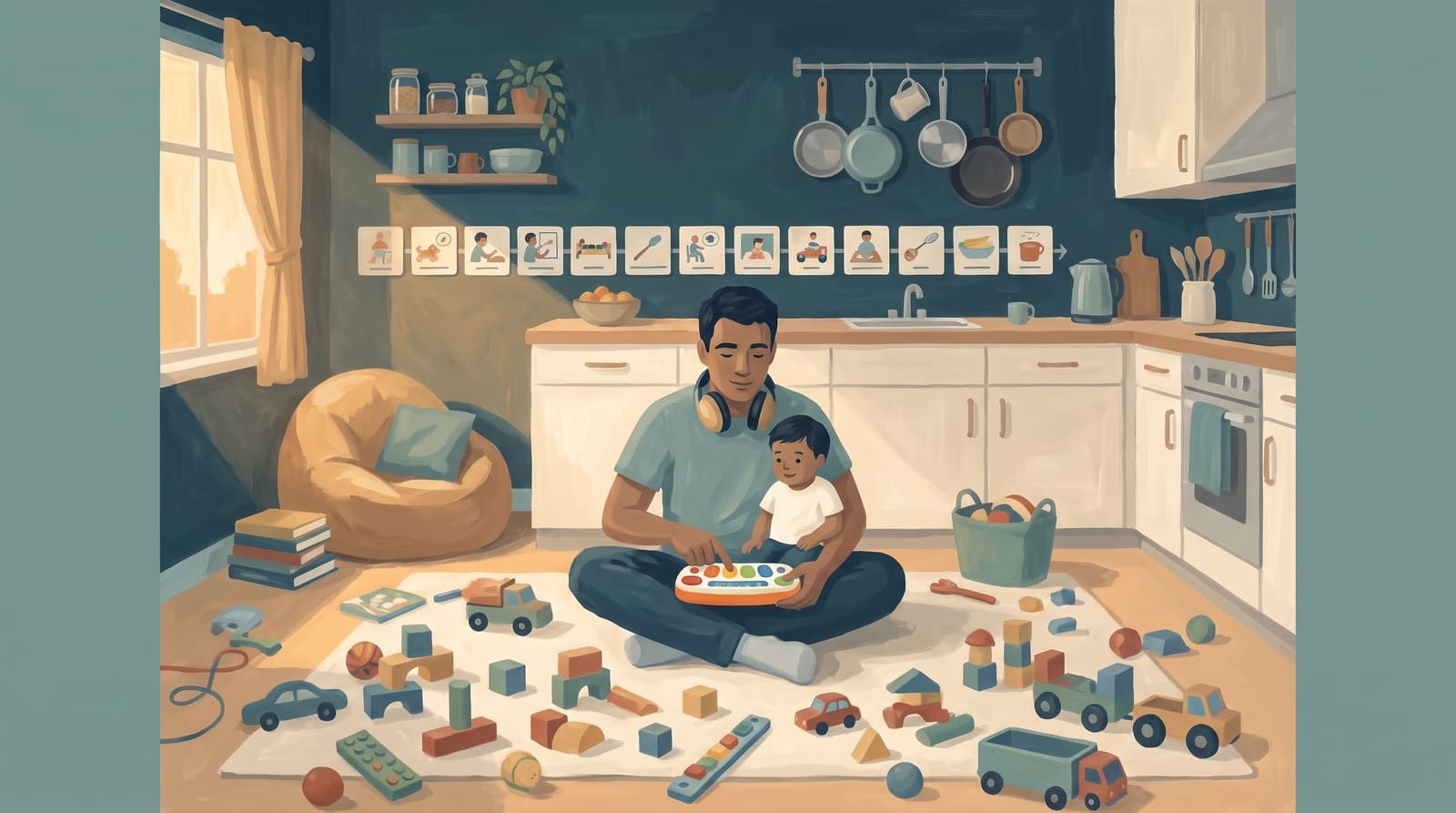
The National Autistic Society suggests checking lighting and noise levels, allowing ear defenders or other sensory tools, and providing a calm, quiet place or alternative workspace.
2. Make the day predictable
The National Autistic Society suggests visual supports such as timetables, and staff support at transitions between lessons, so your child is not left to manage each change alone.
3. Offer flexible breaks
Breaks can include access to preferred activities or a quieter area. Carney and colleagues add planned movement breaks, which help children regulate and can link physical activity with better school experiences.
4. Give your child two key adults
The same resource recommends two consistent key adults in school for each learner. This gives continuity and means your child does not have to repeat their needs to, or adjust to, a stream of different staff.
5. Build on interests, not rewards
Carney and colleagues favour connecting learning to the child’s own interests over external reward systems. Interests can make academic work more engaging and meaningful.
Practitioners who tried this guidance at a 2022 National Autism Implementation Team webinar called it “feasible and practical” and committed to dropping stigmatising labels such as “school refusers”.
What helps at home
At home, the National Autistic Society suggests a few tools to help your child name what is getting in the way.
- Fear scales: a visual scale your child uses to rate different school events, which shows which parts are hardest.
- A worry book: a place to record daily worries, then talk through possible solutions together.
- Stress thermometers: a visual way to show how stressed they feel.
- Stress-reduction routines: exercise and visual regulation systems that help your child calm down.
A gradual return, on your child’s terms
The charity also suggests specific rewards for smaller steps, such as putting on the uniform or reaching the school gate, rather than only counting full days in class. Each of those steps is part of the return, not a failure to complete it.
Summary and resources
Most autistic children who cannot go to school want to learn. The barrier is overwhelm, anxiety and often burnout, not defiance, and truancy among autistic students is almost non-existent. What helps is an environment-first approach: sensory adjustments, predictability, key adults, flexible breaks, tools that help your child name their worries, and a gradual return at a pace they can manage.
- National Autistic Society(opens in a new tab)
Parent and carer guidance on attendance problems, with practical tools for home and school.
- Authentically Emily(opens in a new tab)
An autistic writer on emotionally based school avoidance and why the language matters.
Autistic-led
- Stimpunks Foundation(opens in a new tab)
Writing on burnout and the cost of masking.
Autistic-led
- Leicestershire Partnership NHS Trust, Autism Space(opens in a new tab)
Why an autistic child may struggle to attend school.
UK
Sources (8)
- Frontiers in Education (2025). "I wanted to learn something. I just couldn't": Autistic students' perspectives on emotions as drivers of absenteeism and attendance. Frontiers.
- Emily Katy (n.d.). Emotionally-Based School Avoidance in Neurodivergent Children and The Discriminatory System of Prosecution. Authentically Emily.
- Totsika, V., Hastings, R. P., Dutton, Y., Worsley, A., Melvin, G., Gray, K., Tonge, B., & Heyne, D. (2020). Types and correlates of school non-attendance in students with autism spectrum disorders. Autism.
- Authors unnamed (2023). School distress and the school attendance crisis: a story dominated by neurodivergence and unmet need. Frontiers in Psychiatry.
- Stimpunks Foundation (n.d.). Autistic Burnout: The Cost of Masking and Passing. Stimpunks.
- Leicestershire Partnership NHS Trust Autism Space (n.d.). Understanding why an autistic child may struggle to attend school. NHS.
- Carney et al. (2024). A brief neuro-affirming resource to support school absences for autistic learners: development and program description. Frontiers in Education.
- National Autistic Society (n.d.). Attendance problems: parents and carers guidance. National Autistic Society.