The Double Empathy Problem: Why Autistic Social Difficulty Runs Both Ways
What the double empathy problem is, what the research shows, and what it changes for autistic people, families, clinicians and workplaces.
OwnmindedPublished 12 min read
You are not imagining this
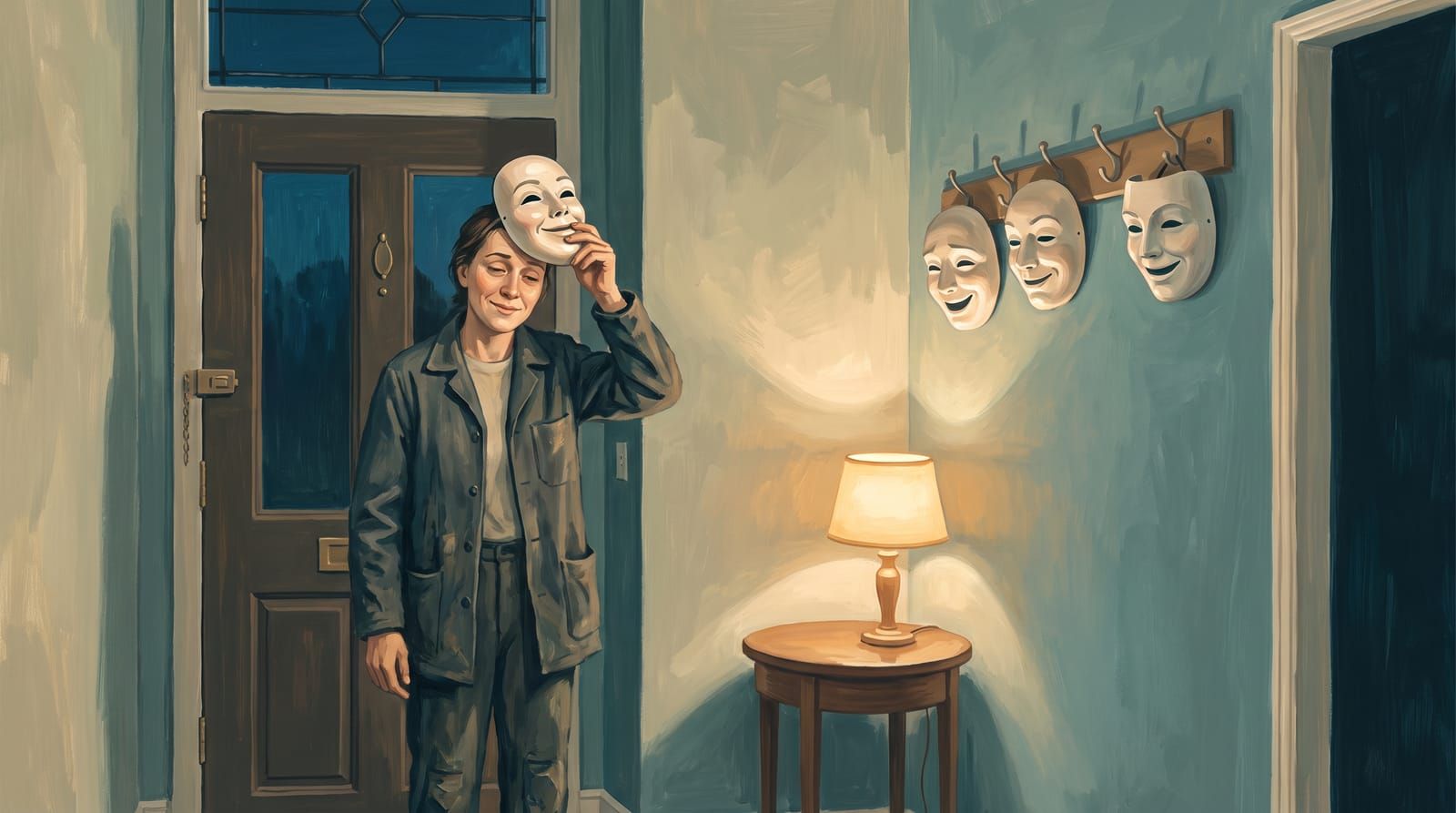
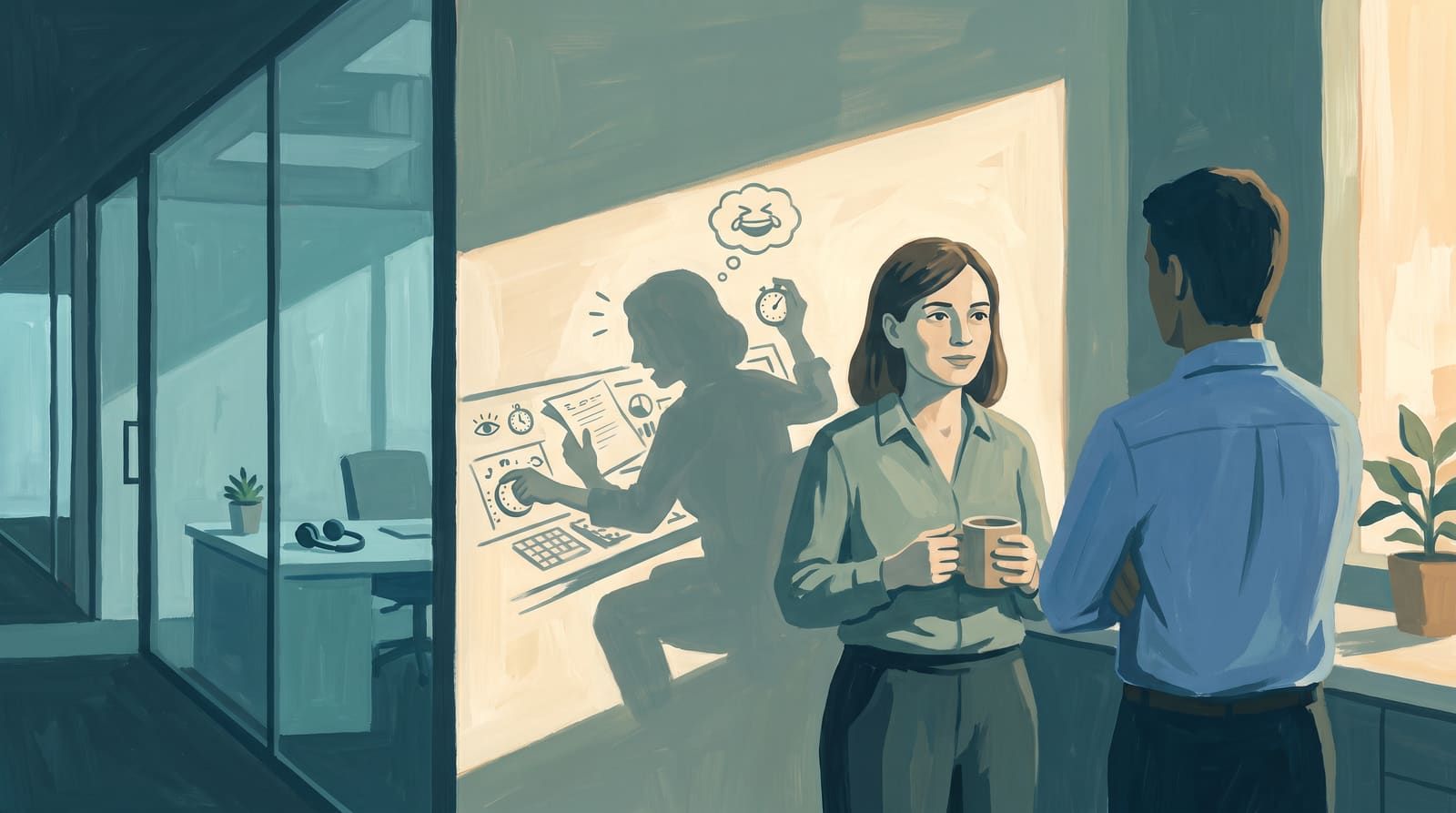
You explain something clearly, and the other person hears something else. You get told you seem rude or cold when you felt neither. Then you talk to another autistic person and the conversation just flows. Some autistic people know this pattern well.
A common explanation has been that autistic people lack empathy or cannot read other minds. The double empathy problem offers a fairer account. This article explains what the idea is, what the research says for and against it, and what it means for daily life.
What is the double empathy problem?
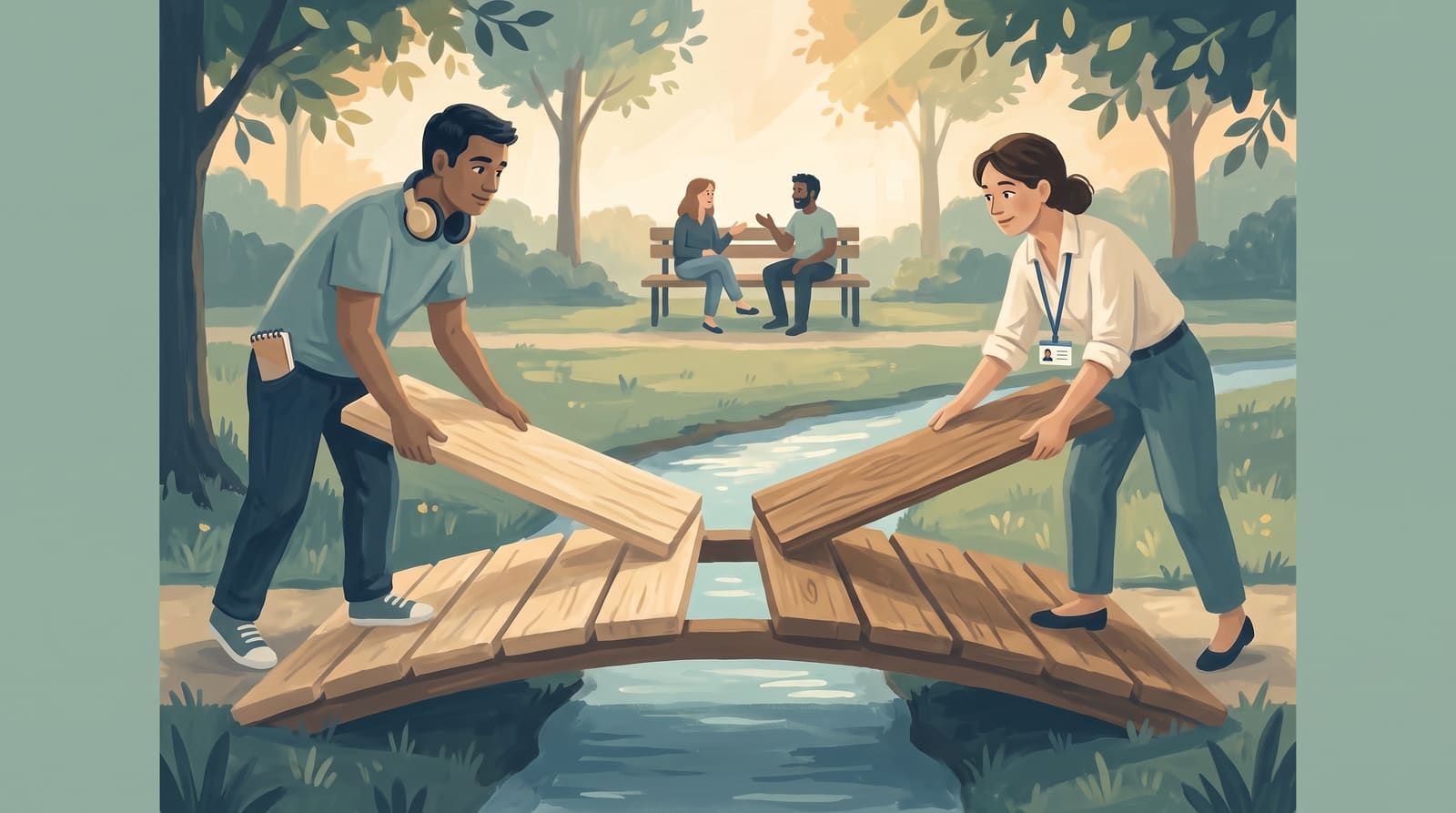
The double empathy problem was set out by Damian Milton, an autistic researcher and lecturer at the University of Kent, in 2012. It says that communication breakdowns between autistic and non-autistic people run in both directions, rather than sitting only with the autistic person.
The National Autistic Society describes it as a theory that communication and empathy difficulties are mutual: each side may struggle to understand the other, and the problem is not caused by autistic thinking alone. Its main features are:
- Two-way mismatch: each side may struggle to understand the other.
- Shared responsibility: a misunderstanding belongs to the interaction, not to one person.
- Smoother connection within a group: many autistic people describe easier conversations with other autistic people.
Milton says the idea fits what autistic people have long reported: “As a theory, it matches autistic phenomenology coming from insider accounts.” Phenomenology here means lived, first-person experience.
Why does the mismatch happen?
The older view rests on “theory of mind”, the ability to work out what someone else is thinking or feeling. The deficit story says autistic people struggle with this, so social problems start with them. The National Autistic Society article says accounts like this offer only partial explanations at best.
The double empathy view adds the other side. Non-autistic people have blind spots too: they can misread autistic people’s facial expressions and mental states, and form negative first impressions of them.
Donna Williams, author of Autism: an inside-out approach, named the problem with the old view in 1996. Autism, she wrote, “has been judged from the outside, by its appearances, and not from the inside.”
This does not mean every autistic person communicates the same way, or that autistic people never find social life hard. Many do. The point is that difficulty in a conversation is shared, so the explanation cannot sit with one person alone.
What does the research show?
The idea started from lived experience, and studies have since tested it in a few ways.
How non-autistic people see autistic people
Experimental studies by Sheppard and colleagues, Heasman, and Sasson found that non-autistic people struggled to read the emotions of autistic participants or formed negative first impressions of them.
Rapport between matched and mixed pairs
Rapport is the sense that a conversation is going well and you are in step with the other person. In a 2020 study of 72 adults, people in pairs that matched (both autistic or both non-autistic) rated their rapport at 407.1 out of 500 on average, while mixed pairs rated it at 351.3.
In a second part of that study, 78 observers watched videos of the conversations. They gave autistic pairs an average rapport score of 364.25, non-autistic pairs 331.99 and mixed pairs 275.43. Mixed pairs were rated lowest, below both matched groups.
- Autistic pairs
- 364.3
- Non-autistic pairs
- 332
- Mixed pairs
- 275.4
The researchers wrote that “autistic people experience high interactional rapport when interacting with other autistic people.”
Passing on information
In a telephone-game study, a message passed along a chain of eight autistic people kept its accuracy as well as one passed along a chain of eight non-autistic people. The message broke down quickly only in mixed chains.
A 2025 registered report, a study whose methods are reviewed and fixed before the data come in, tested this with 311 people. It found no difference in how well information passed along matched and mixed chains, so that prediction was not supported. In the same study, non-autistic chains reported higher rapport, and telling people the chain’s diagnostic make-up improved rapport.
| Question tested | What studies found |
|---|---|
| Do non-autistic people read autistic people accurately? | Often not; they misread emotions and form negative first impressions |
| Do matched pairs feel more rapport than mixed pairs? | Yes in a 2020 study, by both self- and observer ratings |
| Who has the highest rapport? | It depends on the study: non-autistic pairs in 2020 self-ratings, autistic pairs in 2020 observer ratings, non-autistic chains in 2025 |
| Does information pass less well in mixed groups? | Yes in a telephone-game study; no difference in the 2025 registered report |
| Does disclosing diagnosis help? | It improved rapport in the 2025 study |
How sure can we be?
The evidence is encouraging but not yet strong. The Transmitter calls it “not yet rock solid”, noting that much of it rests on anecdotal reports and small studies.
The 2020 rapport study lists its own limits:
- An unvalidated measure: rapport was scored on a scale built for the study.
- Known diagnoses: partners knew whether the other person was autistic.
- A narrow sample: everyone had a typical-range IQ, many were women, and each mixed subgroup had only 12 people.
The two parts of that study also disagreed. In self-ratings, non-autistic pairs scored highest; observers rated autistic pairs highest. The 2025 authors suggest that a more varied group of participants and differences in method may explain why their results differ from earlier work.
How is this different from “autistic people lack empathy”?
| Aspect | Deficit view | Double empathy view |
|---|---|---|
| Where the problem sits | In the autistic person | In the interaction between people |
| Who struggles to understand | The autistic person | Both sides |
| Key explanation | Impaired theory of mind | Mutual difficulty understanding each other |
| Who is asked to change | Mainly the autistic person | Everyone involved |
| How autism is judged | From the outside, by appearances | Including insider accounts |
The difference matters because of who carries the cost. Milton notes that in assessment and treatment, “The emphasis is purely on the autistic person to change, a lot of the time”.
Why does this matter in everyday life?
The National Autistic Society says misunderstanding and stigma can affect mental health, employment, education, services and experiences of the criminal justice system.
Autistic adults describe the same thing. In a 2022 study, 25 autistic adults aged 22 to 65 said misunderstandings were common across their lives and touched every area, with serious effects on mental health. Acceptance from non-autistic society was rare.
What helps?
For autistic adults
- Treat a misunderstanding as shared. A conversation that went wrong is not proof that you lack empathy; non-autistic people misread autistic people too.
- Spend time with other autistic people. Many autistic people describe smoother connection, more rapport and more openness with each other.
- Consider disclosure where it feels safe. In the 2025 study, knowing the group’s diagnostic make-up improved rapport. It is a personal choice.
- Seek assessment if you are unsure. In one NHS area, Cambridgeshire and Peterborough, the route is to talk to your GP, who refers you on; the adult clinic there does not accept self-referrals.
For families
- Question the “no empathy” label. If your child is said to lack empathy, remember that the other person in the conversation may be missing things too.
- Make room for autistic friendships. Connection with other autistic people can feel easier.
For clinicians
- Do not rely on theory of mind alone. It explains autistic social experience only in part.
- Check your own first impressions. Studies show non-autistic people can misread autistic emotions and judge autistic people negatively on first meeting.
- Share the work of change. Support that asks only the autistic person to adapt leaves the other side of the mismatch untouched.
For workplaces
- Make simple adjustments. Noise-cancelling headphones, quiet spaces and flexible timetables are often simple and cheap.
- Fix hiring. Write clearer job descriptions, ask less ambiguous interview questions, use quieter and more familiar interview settings, and focus on job skills over social skills.
- Train managers and colleagues. The National Autistic Society’s “Understanding autism in the workplace” course helps staff understand autism and make reasonable adjustments.
- Use UK funding. Access to Work can pay for practical support such as home working and travel costs; apply within 6 weeks of starting a job.
Summary
The double empathy problem says that social difficulty between autistic and non-autistic people runs both ways. Research supports parts of it: non-autistic people often misread autistic people, and matched pairs can build strong rapport. Other parts, such as information getting lost between groups, are not settled. In practice, it means sharing the work of understanding instead of asking autistic people to do all of it.
Resources
- National Autistic Society: The double empathy problem(opens in a new tab)
An explainer for professionals by Damian Milton.
UK
- University of Sheffield: Autism in the workplace(opens in a new tab)
Links to Access to Work, the Buckland Review of Autism Employment, Autistica's Neurodiversity Employers Index and an employer booklet developed with autistic adults.
UK
- CPFT: I think I may be autistic(opens in a new tab)
How adult assessment referrals work in one NHS area.
Cambridgeshire and Peterborough, UK
Get new articles by email
One short email when we publish something new. Evidence-informed writing on autism in adulthood, no spam.
Sources (8)
- National Autistic Society (n.d.). The double empathy problem. National Autistic Society.
- Crompton, C. J., Sharp, M., Axbey, H., Fletcher-Watson, S., Flynn, E. G., & Ropar, D. (2020). Neurotype-Matching, but Not Being Autistic, Influences Self and Observer Ratings of Interpersonal Rapport. Frontiers in Psychology, 11:586171.
- Crompton, C. J., Foster, S. J., Wilks, C. E. H., Dodd, M., Efthimiou, T., Ropar, D., Sasson, N. J., Lages, M., & Fletcher-Watson, S. (2025). Information transfer within and between autistic and non-autistic people: a registered report. Nature Human Behaviour, 9(7), 1488-1500.
- The Transmitter (n.d.). Double empathy, explained. The Transmitter.
- Camus, Macmillan, Rajendran & Stewart (2022). I too, need to belong: Autistic adults' perspectives on misunderstandings and well-being. Preprint, Center for Open Science.
- Pensive Creature (2022). Dear Autism Professionals: We Aren't 'Mind-Blind.' Substack.
- University of Sheffield (SHARL) (n.d.). Autism in the Workplace: Resources and Guidance. University of Sheffield.
- Cambridgeshire and Peterborough NHS Foundation Trust (n.d.). I think I may be autistic. CPFT.
How we research and write our articles: Editorial policySources & methodologyMedical disclaimer