When University Finally Fits: Autistic Students Running Their Own Term
Higher education can be the first place an autistic student runs their own routine — but only when adjustments are written down before term.
OwnmindedPublished 11 min read
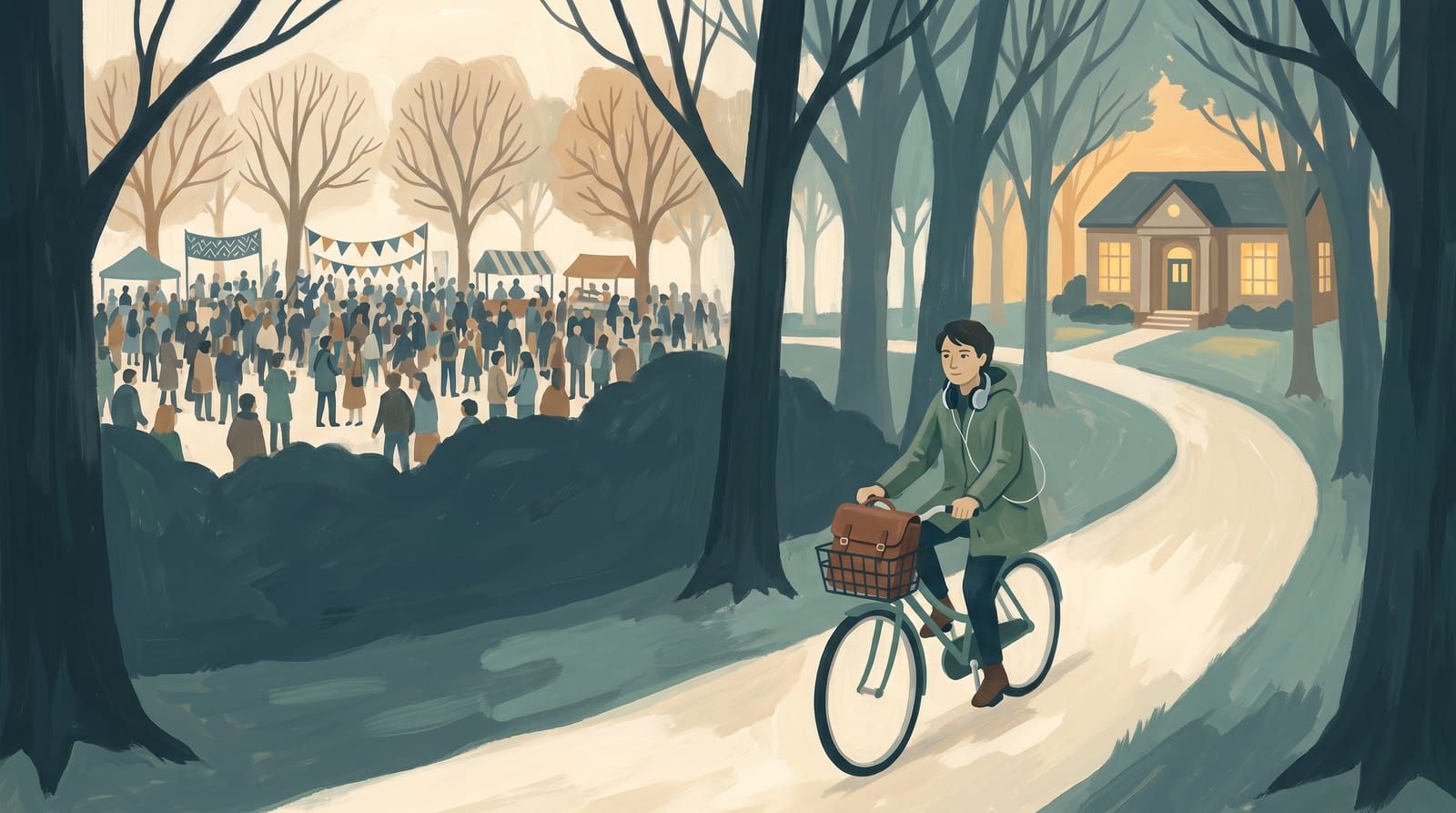
Freshers’ week in the quad, and everyone is talking at once. You are holding a drink you didn’t really want and trying to work out whether you belong. Somewhere in the crowd of strangers, over music that is too loud, the week that was supposed to be the best of your life is already asking you to perform a version of yourself you can’t sustain.
Katy Vos knows the feeling. Writing about her time at Durham, she remembers her first term as a “whirlwind of excitement and fear”.
But then the term settles, and a quieter thing starts to happen. For the first time, nobody is deciding when you eat, when you are alone, or how you learn. The building still costs you — the lights, the noise, the crowds, the unwritten rules. But the timetable is finally yours. What follows is about that rare, precious thing, and about how easily it slips away when nobody writes it down.
The relief of running your own timetable
Researchers who interviewed twelve autistic students at one UK university kept hearing the same word: control. Their whole study is titled “I have more control over my life”, because that sentence turned up in interview after interview.
Teresa, one of the students, spelled out what the change meant in practice: “it really suits me ’cause I have control of exactly, when I can do what, like I do really like that flexibility you get”. That is the quiet revolution of university for many autistic people. School decides your day for you, minute by minute, and surrounds you with the same fixed set of faces whether you get on with them or not. University, for all its chaos, hands the steering wheel back. You choose when to eat, when to be alone, which room is yours to retreat to.
There is a difference, though, between having control and using it. A timetable that lets you cluster your on-campus days leaves whole days at home for the deep work and the recovery. A library desk booked at the hour the building is empty costs less than one booked at noon. A gap in the calendar with your recharge time in it has the same weight as a lecture. The students in the study were clear that the flexibility itself made the work possible; the lesson is to spend that flexibility deliberately, in advance, rather than improvising your way into a week that spends you back.
For people who have spent years being told to fit, the freedom to build a day that actually fits is not a luxury. It is the point. And it is worth saying — because nobody says it — that the people who thrive at university are rarely the ones who never struggle. They are the ones who treat the wobble as a signal to adjust the plan, not a verdict on whether they belong there.
Relationships are the hinge the whole thing turns on
The same study found that the experience did not hinge on the campus or the course nearly as much as on people. The authors were blunt: relationships held the whole thing together. Supportive ones made university work. Stigmatising ones made it markedly harder.
The difference often came down to one thing: whether the tutor or lecturer understood autism. When a member of staff got it, students relaxed. When they didn’t, a single careless comment was enough to make a student wonder whether asking for help was safe at all. This is not a nice-to-have layered on top of good teaching. In this evidence it is one of the main levers that decides whether the fit holds or quietly collapses.
You don’t need every member of staff to understand you. You need one. Find the tutor who answers email like a human being, the lecturer who puts slides up early without being chased, the disability adviser who does not make you explain yourself twice. Those people become your infrastructure. When something goes wrong later — a missed deadline, a sensory disaster in an exam room — it is a hundred times easier to walk into the office of someone who already knows your name than to begin from zero in a crisis.
The same logic runs in the other direction. When it comes to flatmates and course-mates, you get to choose how much you disclose, to whom, and when. Some students open with a plain sentence — “I process sound differently, so if I leave a loud kitchen it’s nothing personal” — and find it buys years of peace. Others keep the word autism in reserve and simply state preferences. Both are fine. What matters is that you decided, instead of waiting for a bad night to decide for you.
When the building is still against you
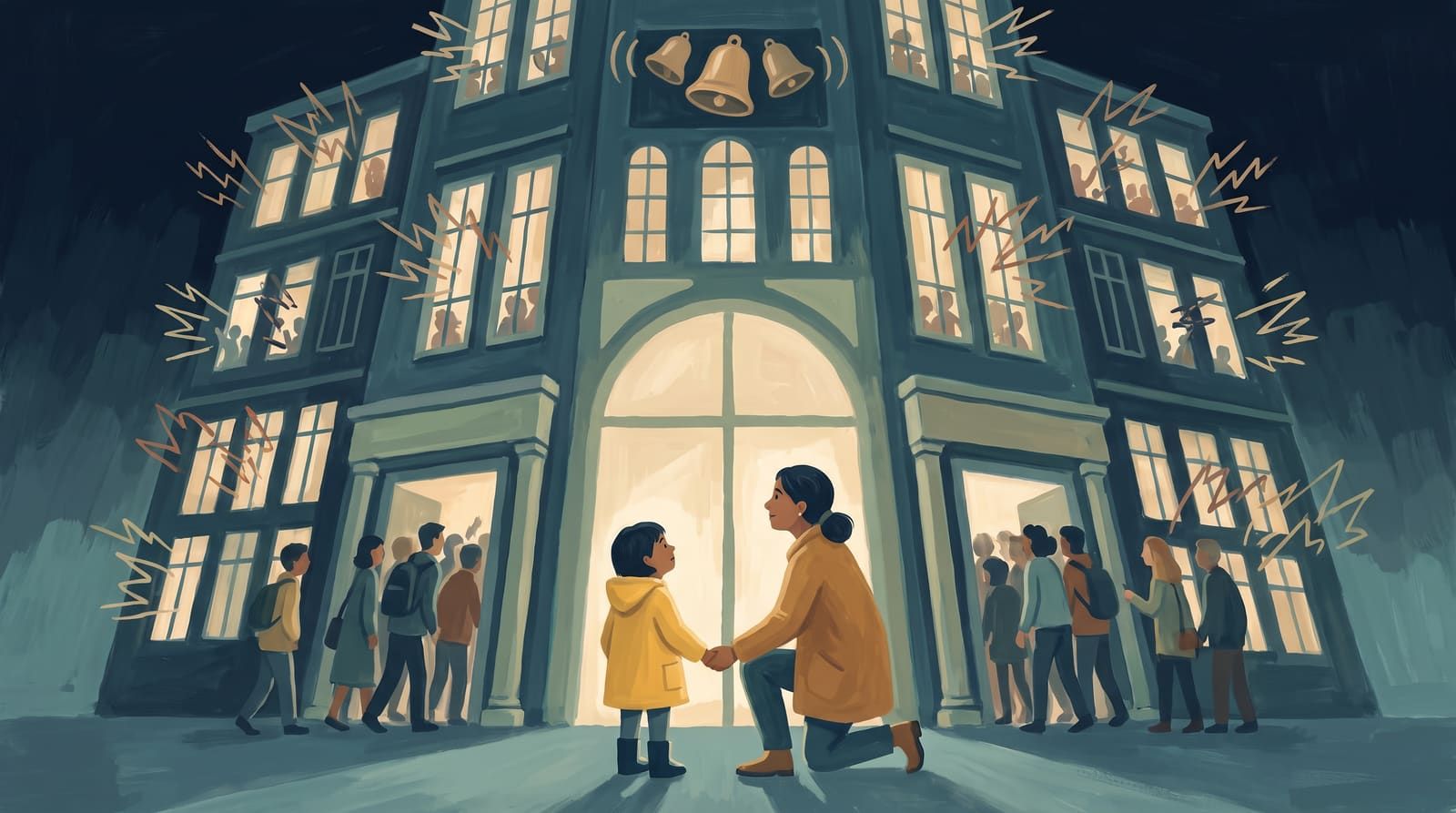
Not every university is set up to let that fit form. An autistic student’s autoethnography of his first three days at a South African university describes exactly the opposite of control. He arrived to find no signs, a packed lecture hall that triggered his first sensory overload in years, and a benchmark test he was asked to sit with no extra time — told, instead, to come back another day.
Writing it up later, he called those three days “a cocktail of excitement but, at the same time, left me feeling overwhelmed and lost”. The lesson is not that this student lacked ability. It is that the environment — the crowd, the missing signage, the refusal to name an adjustment — decided his first week for him, in the one system where he was supposed to finally get a say.
Read his account as a list of things nobody arranged, and you have a list of things you can arrange for yourself. He didn’t know where anything was — so visit the campus before term, even once, even just to walk the route from your accommodation to your first lecture hall and find the quiet corner of the library. He was funnelled into the biggest hall at the busiest hour — so check your timetable early and work out which rooms those are, and whether a seat by the door or an alternative sitting is available. He was handed a test with no arrangements — so make sure your exam adjustments exist on paper before your first assessment. None of this is fair. The institution should have done all of it. But the unfairness of a system is not a reason to leave your first week to chance within it.
You don’t have to do the standard freshers’ week
The good news, if you are about to start, is that much of what feels mandatory simply isn’t. Chris Bonnello, an autistic former teacher, puts it plainly: the loud, drink-led version of student life is not the syllabus. “None of these ‘university life’ descriptors are on the final exam,” he writes. Staying in to play Mario Kart with your friends while others go out is not doing it wrong. “These are your years of further education,” he adds, “and they should be experienced on your terms.”
There is a better search to make during freshers’ week than the one the fairs push at you. The big, loud societies cost the most to join and yield the least return on that cost. The group built around a shared activity — chess, climbing, a craft, coding, a language — does the social work for you. You are never stuck for what to say, because the activity is saying it. Bonnello’s own shortcut to belonging was a taekwondo society full of people who had never thrown a kick before — common ground, not charisma. And if the society you need doesn’t exist, most universities let you start one with a room booking and a poster.
The deeper reframe is this: if you assume the norm is the measure, the parts of university that don’t fit read as personal failure. If you treat the norm as optional, you give yourself permission to skip the loud parts and find the one place where you can actually breathe.
Put the floor under the fit: write it down before term
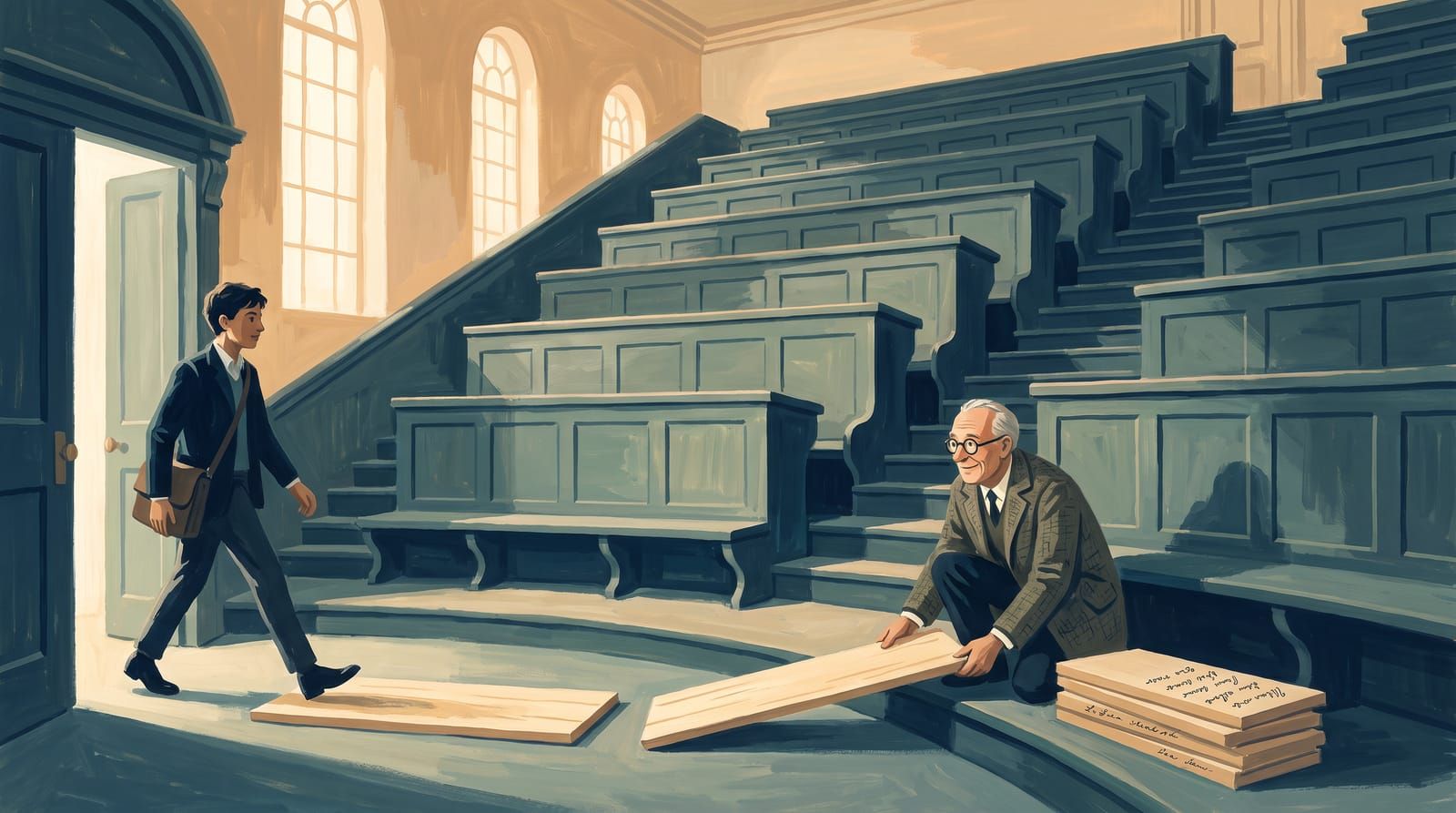
Here is where it gets concrete. A fit that is only felt has no floor under it. Adjustments are not favours you ask for once you’re drowning. They are environment design — the difference between a room that lets you learn and a room that spends your energy for you.
The students in the UK study were already asking for exactly this. One wanted an “initial consultation” before term. Another described needing “more information in advance, a better map…a bit of general information”. The instinct is the same one this piece is trying to hand you: make the fit predictable, in advance, in writing.
So write the list. Advance lecture slides. A low-sensory seat or a quieter space. Permission to record. Extended deadlines. Exam arrangements. Name each one plainly, as access you are entitled to rather than a favour you are hoping for. Keep it short — three to five items, one sentence each. Then send it to your disability adviser before you need it, before the first deadline, before the first meltdown in a crowded hall. A fit that exists on paper is one you can point to in November. A fit that only exists in your head is one you will have to reconstruct, exhausted, from scratch.
There is a second audience for that list, and they are easier to reach: your lecturers. Once your adjustments are registered, most universities will circulate a summary — but a short, polite email from you in week one does the job faster. Five lines: who you are, that you’re registered with the disability service, the two or three adjustments that affect their module, and a thank-you. Ask for the reply in writing. A written yes survives the week ten staff changeover and the forgetful seminar leader alike. And if someone says no or goes quiet? Ask what the process is, in writing, and follow it up. The disability service exists for this.
One honest caveat before you send it: none of the voices in this piece are students who left. The people who found university unbearable are mostly missing from the studies and the essays, and their absence should stop anyone — including you — from concluding that university suits autistic people as a rule. What the evidence does support is narrower and more useful: for the students who stay, control and written adjustments are what hold the fit together. Build those, and you have done your part. The institution still has to do its share.